Get Full Government Meeting Transcripts, Videos, & Alerts Forever!
Get email alerts on the Str Permit Continuance topic
No spam. Unsubscribe anytime.
Board continues hearing on 125 Glass Avenue short-term rental permit after staff questions about residency
Summary
A San Antonio Board of Adjustment hearing on an owner-occupied (Type 1) short-term rental permit at 125 Glass Avenue was continued to June 16 after staff raised questions about whether the applicant is generally present at the property and other documentation issues.
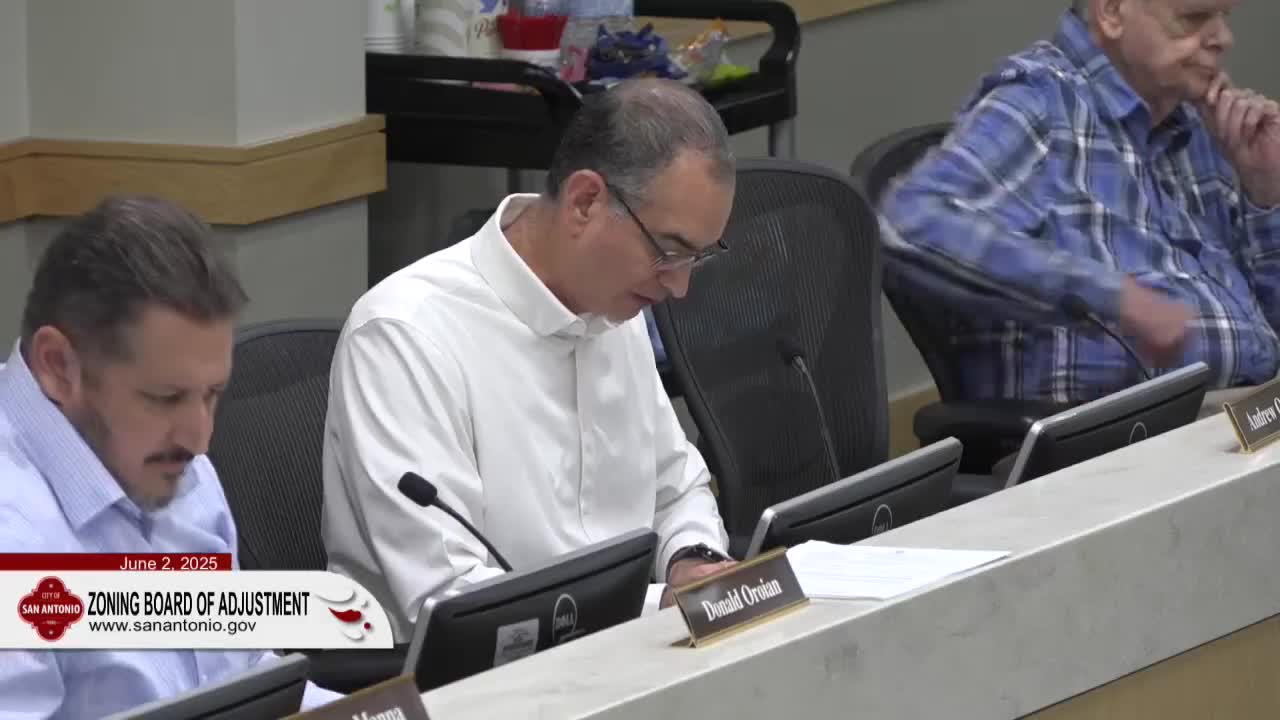
The San Antonio Board of Adjustment on June 2 continued an appeal by an applicant seeking a Type 1 (owner-occupied) short-term rental permit for 125 Glass Avenue to the board’s next meeting on June 16, after staff and several commissioners said additional documentation was needed to verify the applicant’s residency and other outstanding items.
What staff said: Juan Alvarez, a planner with Development Services, told the board the property has a history of compliance problems going back to 2018, including investigations and unpaid hotel-occupancy taxes that were paid by a subsequent owner. Alvarez said staff received an application that claimed the operator would be generally present at the property but also noted conflicting information in the application and an online listing that appeared to promote the entire house for short-term rental use.
Applicant’s response: Alyssa Thomas, who filed the Type 1 application, said the property is her primary residence and that she had submitted a lease and updated driver’s license showing the Glass Avenue address. Thomas said she intends to live at the property “four to six nights a week” and that she had previously worked in STR operations for a management company. She said some application details were incomplete due to unfamiliarity with the Type 1 submittal requirements and requested additional time to provide documentation.
Why the board continued the matter: Commissioners asked for clearer proof of “generally present” residency (utility bills, lease details tied to occupancy, mail delivery, or other documents) and for staff to verify ownership and contact records. Several commissioners suggested a short continuance so staff and the applicant could reconcile the application materials and verify whether the right permit type (Type 1 vs. Type 2) had been requested.
Meeting action: The board voted to continue the case to the June 16 meeting and instructed staff to identify the specific documents the applicant should provide before the continued hearing. Alvarez and others noted staff would work with the applicant to confirm occupancy claims and outstanding code items.
Why it matters: Type 1 permits are intended for owner-occupied properties or where an operator actually lives on site. If the board ultimately finds the applicant is not generally present, the property may require a Type 2 permit (not allowed in some block faces without a special exception) or could be subject to enforcement action for prior unpermitted rental activity.
Ending: The applicant was given two weeks to work with staff to provide documentation. The board scheduled the case to return at the June 16 meeting.