Get Full Government Meeting Transcripts, Videos, & Alerts Forever!
Get email alerts on the Water Resources topic
No spam. Unsubscribe anytime.
Lawmakers hear $30 million water funding ask; agency seeks staff to manage growing water-district workloads
Summary
The Idaho Department of Water Resources and the Idaho Water Resource Board briefed the legislature on agency finances, ARPA funds, committed projects and a request for five new water‑administration positions and $30 million ongoing for water projects, while describing ongoing recharge and aquifer management work on the Eastern Snake Plain.
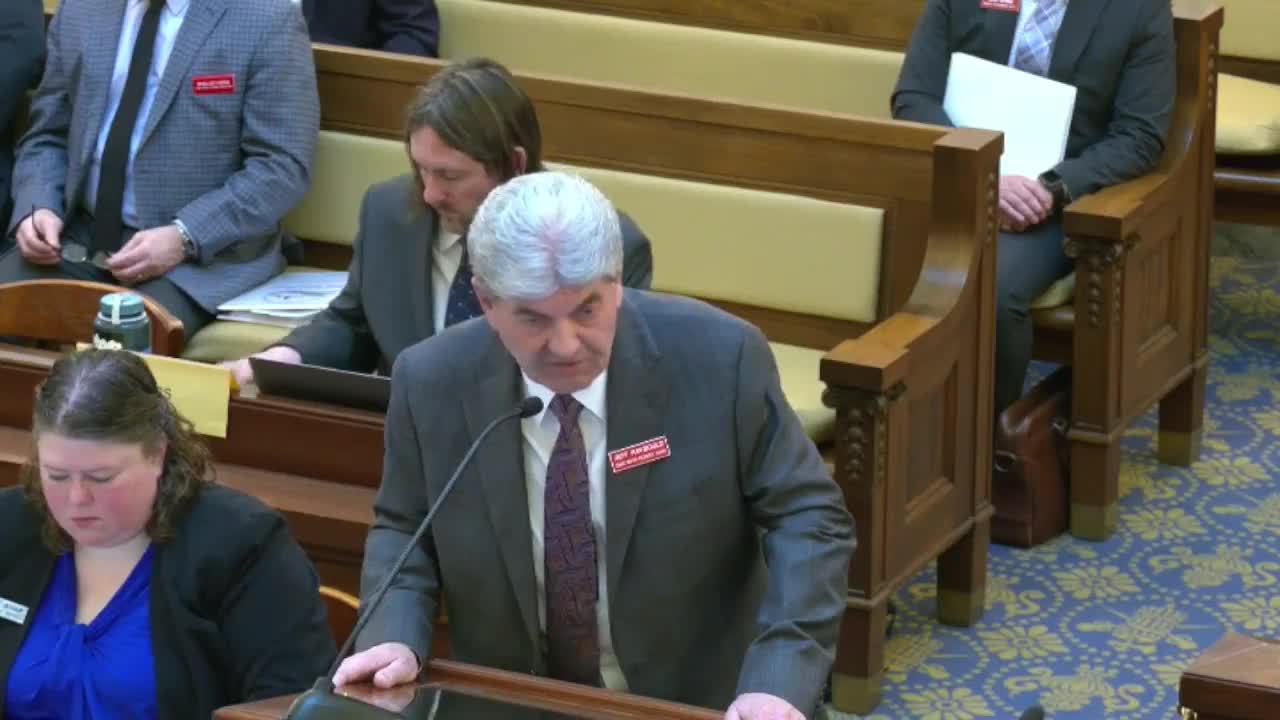
The Joint Finance-Appropriations Committee heard March testimony from the Idaho Department of Water Resources and the Idaho Water Resource Board on the department's budget, project pipeline and staffing needs. Department Director Matt Weaver and Board Chairman Jeff Raybould told the committee the agency is managing hundreds of millions of dollars in project commitments while seeking new staff and an ongoing general‑fund increase.
The presentation showed a water management account with an ending fiscal‑year 2024 balance of about $293,000,000, revenue to date this fiscal year of roughly $38,000,000 and expenditures of about $11,200,000, leaving an uncommitted balance around $29,000,000 after committed project funds of about $290,000,000, budget analyst Janet Jessup said. "That leaves us with an uncommitted fund balance of about $29,000,000," Jessup told the committee.
Why it matters: committee members pressed agency leaders on how quickly large, multi‑year water projects can move from planning to construction and on whether available funds are being spent efficiently. Lawmakers questioned a governor's recommendation included in materials for a $30,000,000 ongoing transfer to the water management fund and a department request for five new full‑time positions to create a Water Administration Bureau.
Director Weaver said demand for water‑district creation and administration has outpaced the department's current capacity. "Currently right now we are not meeting the demand to create and support water districts across the state," Weaver said. He asked the committee to consider five positions—including a bureau chief and technical records specialist—that would pair with about 11 existing staff now doing that work.
Agency and board leaders outlined where money already committed is planned to go. Chairman Raybould listed a range of projects supported by board commitments and ARPA money, including supplemental funding for the Mountain Home Air Force Base water supply pipeline, funding tied to the Anderson Ranch dam raise, a pipeline related to Dworshak (Dworshak) Dam and fish‑hatchery supply, Bear Lake carryover/storage work, Priest Lake water management, loans and grants to canal companies and groundwater‑to‑surface conversion projects. "It's going in lots of different places," Raybould said, listing those projects and others.
Committee members sought more detail about timing. Raybould and Weaver described typical multi‑year timelines: engineering, environmental review and stakeholder coordination frequently delay cash draws even when board commitments exist. Raybould said the board often disburses money in stages as work is completed or engineering milestones are reached.
On recharge and the Eastern Snake Plain Aquifer (ESPA), Weaver said the state and private actors have achieved a combined order‑of‑magnitude of roughly 600,000 acre‑feet per year of aquifer management activity from 2016–2024: "state sponsored recharge was able to average 268,000 acre feet a year," he said, adding private recharge averaged about 116,000 acre feet and pumping reductions about 212,000 acre feet over the period. The board and department are considering increasing an ESPA average annual recharge target from 250,000 acre‑feet to 350,000 acre‑feet to help balance the aquifer, Weaver and Raybould said.
Weaver and Raybould also described loan and grant programs administered or supported by the board. Raybould said roughly $23,000,000 is outstanding in the revolving development account and about $20,000,000 of water‑management account funds are out as loans. Many board awards are structured as reimbursements tied to project progress rather than upfront, he said.
The committee asked about a recent infusion of federal ARPA (American Rescue Plan Act) state fiscal recovery funds that have increased the department's apparent operating expenditures in fiscal 2023 and 2024; Jessup emphasized that some ARPA allocations were one‑time and some ongoing when appropriated. The department's presentation noted $50,000,000 of ARPA funding was appropriated as one‑time and another $50,000,000 was made ongoing in a prior session; planners expect those monies to be expended over multiple years.
No formal committee vote occurred during the hearing. The department's requests and the governor's recommendation will return for formal consideration in the legislative budget process.
Committee members requested follow‑up materials: a project list showing funded and unfunded projects and more detail on timing and committed amounts. Weaver and Raybould said they would provide the requested lists and that many projects remain in engineering and pre‑construction phases, which slows cash outflows even when board commitments exist.
Looking ahead, Weaver framed the staffing request as narrowly targeted to meet statutory and settlement‑related obligations, including requirements under a recent Eastern Snake Plain settlement. "The enhancements included in my budget addressed these priorities by establishing funding for staff to carry out hard work in water district creation and support and establishing ongoing funding for water infrastructure and water sustainability projects," Weaver said in closing.