Get Full Government Meeting Transcripts, Videos, & Alerts Forever!
Get email alerts on the School Playgrounds Accessibility topic
No spam. Unsubscribe anytime.
Sumner County School Board allocates $250,000 toward inclusive playground upgrades after parents press for ADA‑compliant play areas
Summary
After more than an hour of public comment from parents and special‑needs advocates, the Sumner County School Board voted to reserve $250,000 from capital funds for inclusive playground improvements and asked district staff to form a planning group and return with detailed recommendations.
SUMNER COUNTY, Tenn. — The Sumner County School Board voted Wednesday to allocate $250,000 from its capital budget toward upgrades to make elementary‑school playgrounds more accessible to children with mobility challenges, after more than a dozen parents and educators described barriers they and their children face on campus play areas.
The move follows a sequence of public comments that urged the district to do more than the minimum required under the Americans with Disabilities Act and Section 504 of the Rehabilitation Act of 1973 to ensure play equipment, surfacing and routes to play areas are usable by children using wheelchairs or other mobility devices. The board approved the $250,000 allocation in a roll‑call vote that carried with 10 yes votes and 1 no vote (King voted no).
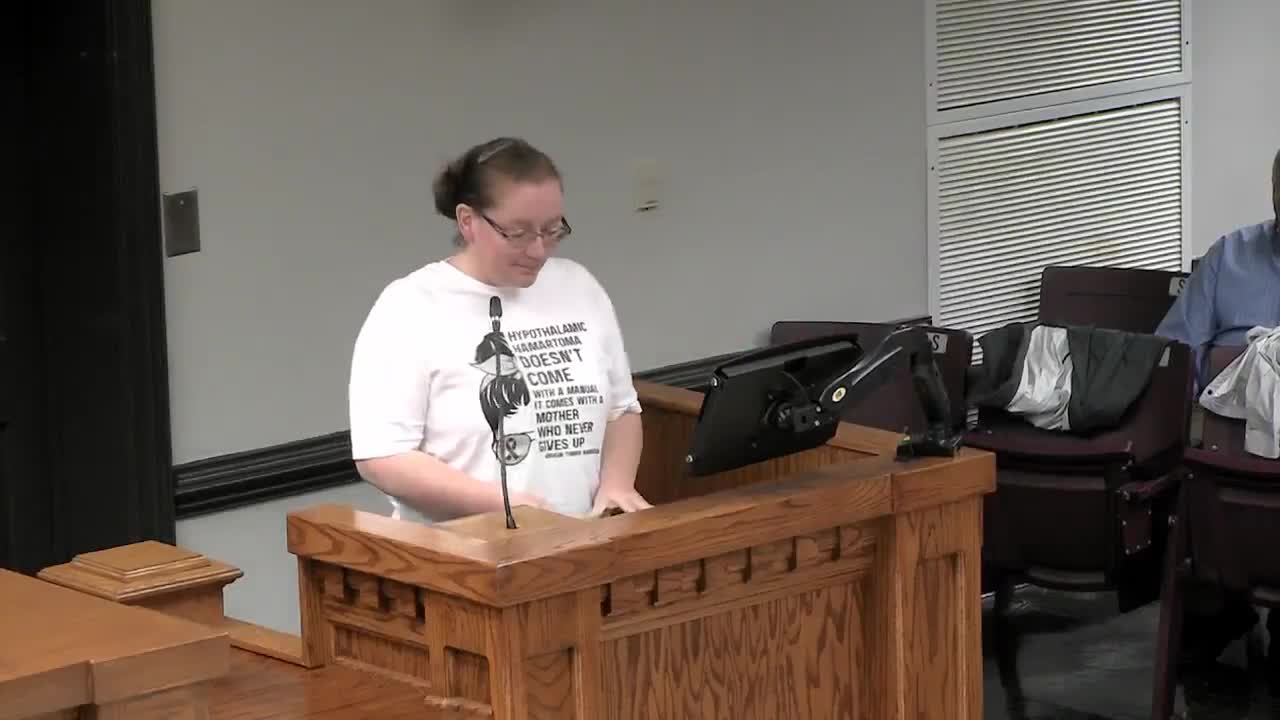
Parents and teachers who spoke during the public‑comment period said many playgrounds still have deep wood mulch, gaps between sidewalks and tracks, steep hills and narrow routes that prevent children who use wheelchairs from joining classmates. "Playgrounds need to follow ADA standards," said Laurel Galant, a parent who spoke during the meeting. "But ADA compliant playgrounds are not necessarily fully accessible to those with disabilities." Several callers asked the board to pursue "inclusive" play design so children with and without disabilities can use the same equipment.
School leaders responded with a plan of immediate, short‑term and longer‑term steps. Dr. Langford, the district director of schools, said the district already has a team working on playground upgrades, has ordered some adaptive equipment to arrive this summer for schools such as George Whitten, and will prioritize accessible pathways to existing equipment. He asked the board to let administration and maintenance identify short‑term fixes (for example, blowing mulch off walkways) and to order more adaptive swings and ground‑level features where feasible.
Director of schools remarks listed current conditions by campus and the typical obstacles: lack of accessible routes to tracks and courts; deep wood‑chip mulch that impedes wheelchair travel; and surfacing materials that are costly to replace. Dr. Langford said the district had identified several immediate purchases (adaptive swings and smaller pieces of equipment) and a pilot for a lower‑cost turf surface at Gallatin Early Learning Center. He also described grant‑seeking as part of a multi‑year strategy and suggested an "accessible playground task force" to produce a phased plan and funding strategy.
Cost examples discussed at the meeting: a set of four adaptive pieces of equipment was quoted at roughly $11,200 (equipment only, not installation), and a turf surface shown in a bid for an earlier project covered 4,428 square feet at about $79,700 (roughly $17–$20 per square foot, including base and installation on that quote). Speakers noted larger turnkey inclusive playground projects can range from roughly $150,000 to more than $250,000 depending on surfacing and site work; one community example, Mary’s Magical Playground, previously cost about $1.6 million to build.
The board debated a larger proposal from one member to dedicate $1.5 million toward inclusive playgrounds; instead members agreed to set aside $250,000 now and directed administration to convene a stakeholder planning process (parents, special‑education staff, maintenance, PTO representatives and community partners) and return with prioritized, site‑specific recommendations. The board asked staff to pursue grants and private partners and to bring sample designs, cost estimates and a timeline to a future meeting for additional appropriation votes.
What’s next: the district will continue short‑term fixes this summer (pathway work and equipment installation where ordered), complete the pilot surfacing at Gallatin Early Learning Center and form the task force to return with a prioritized plan and budget recommendations in the coming months.
Votes and formal action: The amendment to allocate up to $250,000 from the district capital budget for inclusive playground upgrades passed by roll call: Hayes (yes), Tucker (yes), Lancaster (yes), Evans (yes), King (no), Hollis (yes), Brennan (yes), Stewart (yes), Barnes (yes), Lacey (yes), Daniels (yes).