
H+H cites hiring gains but council hears staffing, midwife-contract and social-worker retention concerns
Get AI-powered insights, summaries, and transcripts
Subscribe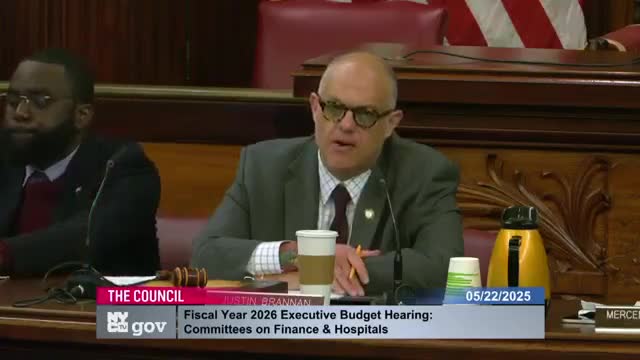
Summary
H+H told the council it has hired more than 3,000 nurses and reduced reliance on contract nurses, but union leaders and staff testified that shortages, an expiring midwives contract at Jacobi and North Central Bronx, and social-worker retention remain pressing problems.
New York City Health and Hospitals told the Council it has substantially reduced use of high-cost contract nurses by hiring staff, but labor representatives and council members said workforce pressures remain in multiple job categories and specialties.
Dr. Mitchell Katz said H+H has hired "over 3,000" nurses to date and reduced reliance on registry nurses used during the COVID surge. Katz credited competitive bargaining and city support with enabling nurse recruitment, and he said physician headcount changes largely reflect movement between city payrolls and PAGNY (a physician employer platform) rather than net system-wide physician losses.
At the same time, union leaders and frontline staff who testified during the public-comment portion told the committees that staffing shortages and workload remain serious problems. Carmen de Leon, president of Local 768 (NYC health-care employees union), urged the council to restore infrastructure funding and to prioritize staffing and safe working conditions, citing incidents when air conditioning or flooding forced staff to work in extreme conditions. Nurses and allied health workers said staffing absences and burnout can leave very small teams, particularly in critical units.
Council members asked about midwifery staffing and an expired NYSNA bargaining unit contract at Jacobi and North Central Bronx. Dr. Katz said those midwives are employed by PAGNY, not directly by the city, and that H+H leadership is engaging PAGNY and the union; he urged both sides to reengage and reach a counterproposal to avoid a strike.
Social-work staff and union leaders pressed for higher compensation for clinical credentials (a proposed licensed clinical social worker — LCSW — differential), language differentials for bilingual staff, and caseload limits to reduce turnover and improve care continuity. Witnesses described surveys showing caseloads that staff judged inappropriate for quality care and urged the council to help fund staffing increases where necessary. H+H said many social-work functions are not directly billable in inpatient settings and that funding for expanded social-work staffing depends on budget allocations and organizational priorities.
Ending: Council members and H+H agreed to continue labor and staffing conversations. H+H said it will work with PAGNY on midwife negotiations, and union representatives requested that baselined city funding recognize clinical licensing differentials, bilingual pay, and caseload limits to retain experienced staff and improve patient care.