Get Full Government Meeting Transcripts, Videos, & Alerts Forever!
Get email alerts on the School Technology topic
No spam. Unsubscribe anytime.
Baltimore County Public Schools plans systemwide cell‑phone restrictions after pilot shows improved focus and climate
Summary
After a year of pilots in 17 schools, BCPS officials said a systemwide cell‑phone implementation plan will roll out next school year with summer training, student involvement and consistent school‑level enforcement to reduce classroom distractions and support academic outcomes.
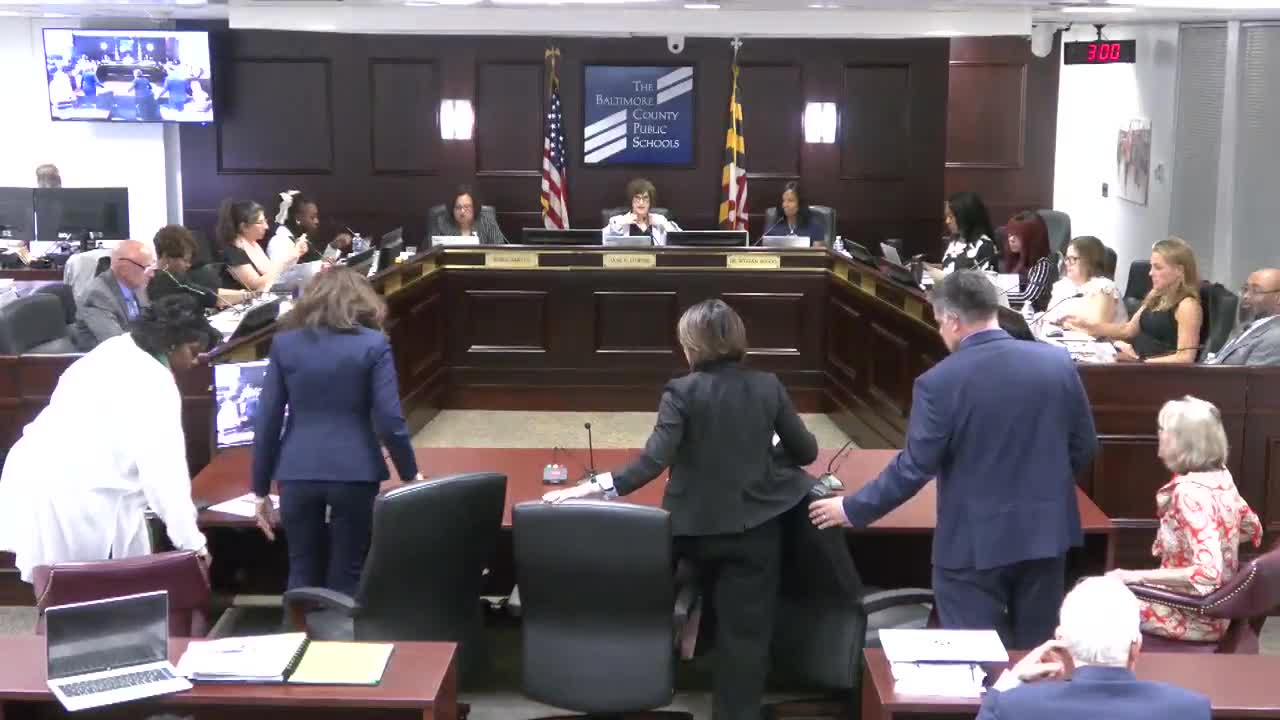
Baltimore County Public Schools will pursue a systemwide rollout of cell‑phone restrictions in secondary schools after pilot programs at 17 schools showed reduced classroom distractions, improved climate and early indications of better academic engagement, officials told the Board of Education on May 20.
BCPS said the goal of the effort is to separate students from their phones during class time while keeping devices nearby and available for legitimate needs such as emergencies or approved assistive‑technology use. The district plans summer training for school leaders, model implementation plans developed by pilot principals, parent FAQs and a student engagement component aimed at explaining the academic and social‑emotional benefits to learners.
District staff and principals emphasized that consistent enforcement and clear messaging about “why” the policy exists were crucial to success. “When the policy was consistently enforced by staff, students responded positively and adhered to the expectations,” one principal summary in the district slide deck said. Principals on the panel said teacher buy‑in, schoolwide consistency and parent partnerships were essential to sustaining gains.
Principal Emily Castor of Sparrows Point High School, a pilot site, told the board that staff surveys showed more than 90% of teachers reported progress toward holding students accountable, and about half reported “marked improvement.” Castor said students initially reported anxiety about being separated from phones but that the school emphasized the longer‑term academic and social benefits. “Students are more receptive to listen and behave in the classroom,” she said, quoting staff survey responses.
Cockeysville Middle School principal Adam Kearney, who earlier adopted strict practices, described data his school tracks: students with no recorded phone violations had a median GPA around 3.37, while students with multiple violations had lower GPAs and lower standardized‑test percentiles. Kearney said the school logs every violation and uses progressive consequences (lunch detention, parent conferences) so teachers avoid confrontations that interrupt instruction.
PTA Council leaders who partnered with the district credited family education events and community outreach — including screenings of the documentary Screenagers — with increasing parent support. “We got together, parents, community partners… and we were pleased to report that over 700 parents, students and teachers attended those viewings,” PTA Council representative Ramona Basilio said.
BCPS said next steps include: creating a small set of implementation models (so schools do not vary widely), preparing summer training for principals and staff, creating clear communications for families, identifying data collection methods (including a distinct category for phone violations in behavior tracking tools) and engaging student leaders in messages to peers.
District staff said they will account for documented exceptions — for example, students who require phones for assistive technology or medical reasons — and will build processes so those students are not inadvertently disciplined. The district also said principals and executive directors will review school‑level implementation and data as part of normal school oversight.
Board members asked that implementation include easily used data tools so principals need not rely on labor‑intensive spreadsheets and asked that disciplinary data be disaggregated by race, gender and special‑education status to monitor equity impacts. BCPS staff said disaggregated behavioral and discipline data are already possible in existing systems and that the rollout work group will consider data collection and equity safeguards.
Officials said the initiative aligns with new state requirements that each school system adopt a cell‑phone policy, and they expect to return to the board with additional implementation detail after summer planning and principal work groups finalize model plans.
The board did not take a vote on policy language at the meeting; staff said they will bring proposed implementation models and supporting materials for review and communication planning before full system launch.