Get Full Government Meeting Transcripts, Videos, & Alerts Forever!
Get email alerts on the Health Workforce Dentistry topic
No spam. Unsubscribe anytime.
Idaho Dental Education Program seeks one additional seat as state-backed pathway to keep dentists in Idaho
Summary
The Idaho Dental Education Program requested one additional funded seat for FY2026 to expand an in-state pathway for dentistry and ease debt-driven attrition; program leaders said they routinely receive more qualified applicants than seats and that most graduates eventually practice in Idaho.
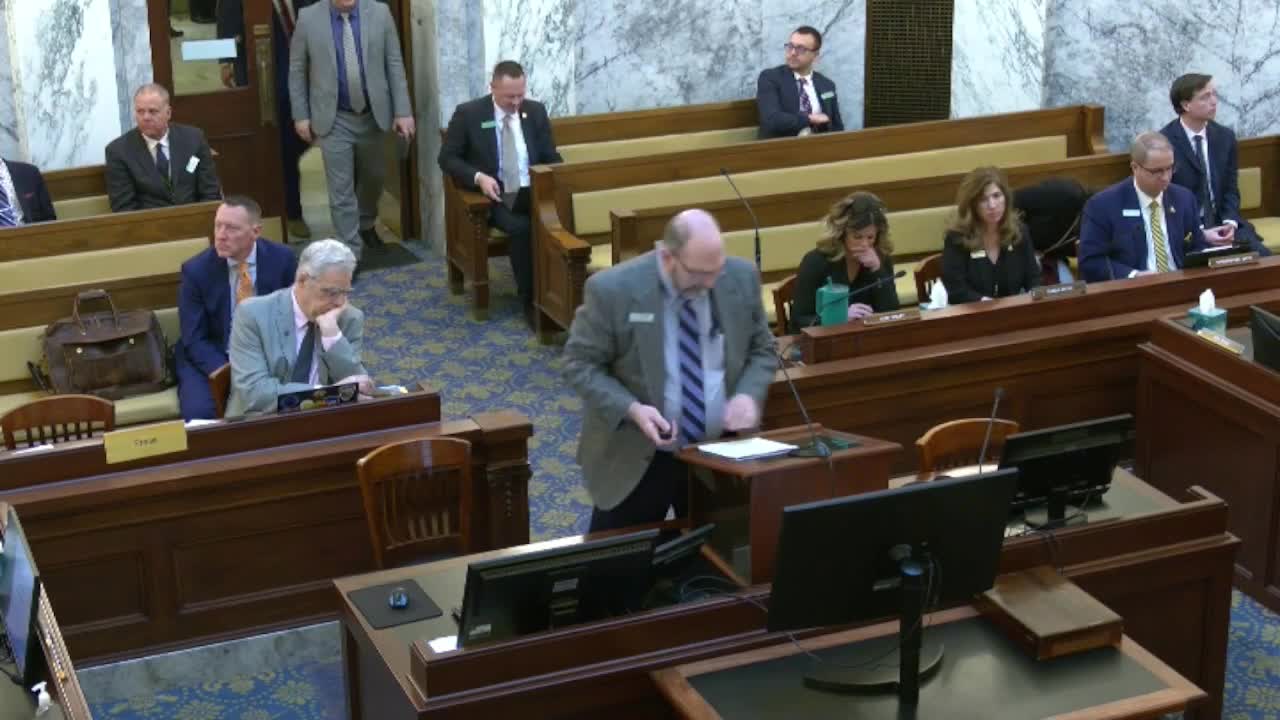
The Idaho Dental Education Program (IDEP) asked the Joint Finance-Appropriations Committee on Tuesday for $54,000 in ongoing general funds to support one additional dental seat in FY2026, part of a long-term plan to expand the program to 36 seats. Kevin Campbell of the Legislative Services Office presented the program's base budget and request; Dr. Jeff Weibargin, IDEP director, answered committee questions.
Why it matters: IDEP provides a lower-cost pathway for Idaho residents to train as dentists by placing students through a contractual arrangement with Creighton University's dental school. Program leaders said the pathway increases the chance graduates will return to practice in Idaho, addressing shortages in rural areas.
Program structure and the request
IDEP funds students who complete the first year at Idaho State University and then continue at Creighton University School of Dentistry in Omaha under a contractual arrangement. Seats are reserved for Idaho residents at discounted tuition. Campbell told the committee IDEP has 3.25 FTP and no vacancies and that the program has historically been oversubscribed with between 30 and 50 applicants in recent years.
Dr. Jeff Weibargin, IDEP director and program alumnus, told the committee he expects an additional seat would be filled easily and that the program has a strong return rate: historically about 65%–70% of graduates return to Idaho, and looking across a longer window the return rate rises toward 80% as graduates complete residencies or early-career moves and then practice in-state. "We return historically since about 1982 somewhere between 65 and 70 percent of our graduates have returned to Idaho to practice," Weibargin said.
Why seats matter for retention
Committee members pressed on what happens to qualified applicants turned away for lack of seats. Weibargin said highly qualified applicants who cannot get a seat often attend more expensive programs elsewhere, accumulate substantially higher educational debt and are less likely to return to Idaho to practice immediately. The program's applicants typically have high academic credentials; the director said applicants average about a 3.8 GPA and score in the 80th percentile or higher on the dental admissions test.
Budget details and outcomes
Campbell told the committee IDEP requests $54,000 ongoing to fund one additional seat as part of a multi-year objective to reach 36 funded seats. IDEP has used adjunct retired instructors to contain personnel costs recently but expects expenditures to increase as tenure-track faculty join. No formal vote was taken during the hearing; the committee will consider the request in budget deliberations.
Ending note
Weibargin closed by emphasizing the program's return on investment: graduates are practicing across Idaho and an expanded program would aim to address unmet dental needs, particularly in smaller and rural communities.