Get Full Government Meeting Transcripts, Videos, & Alerts Forever!
Get email alerts on the Aviation Recreation topic
No spam. Unsubscribe anytime.
County attorney outlines FAA limits on powered paragliders as residents raise safety and wildlife concerns
Summary
Assistant County Attorney Beth Moore briefed commissioners on federal rules governing powered paragliders at the May 20 meeting; residents described frequent flights, loud noise, risky maneuvers, and potential impacts on sea turtles and beachgoers. Commissioners requested one-on-one briefings before deciding on next steps.
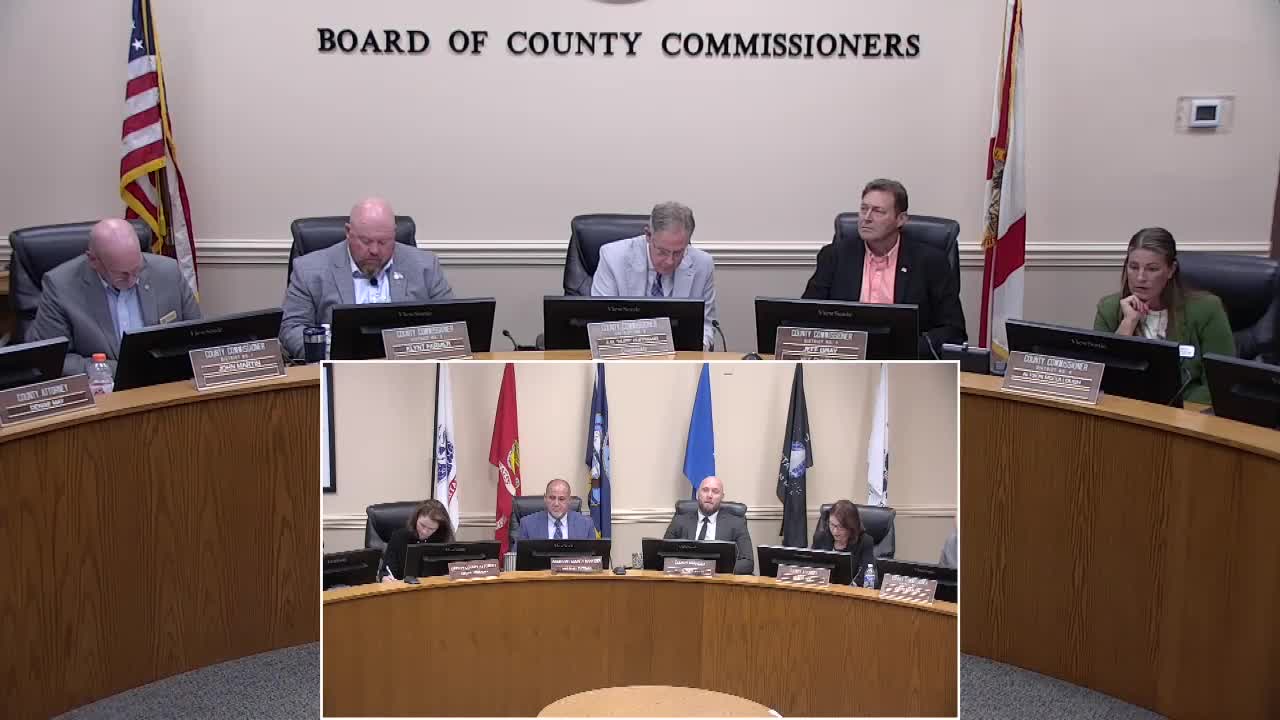
Assistant County Attorney Beth Moore told the Nassau County Board of County Commissioners on May 20 that federal aviation rules limit local enforcement of powered-paraglider (paramotor) operations and described several local approaches other Florida jurisdictions have used to limit takeoffs and landings from public property.
Moore said powered paragliders, often called PPGs, generally fall under the Federal Aviation Administration's Part 103 definition of ultralight vehicles when they meet criteria such as single-occupant operation, a powered weight below 264 pounds and a fuel capacity not exceeding five gallons. Part 103 does not require operator licensing, aircraft registration or airworthiness certificates, she said, and the FAA generally enforces those federal rules, not local law enforcement.
Moore summarized typical characteristics and impacts of PPGs: purchase and training costs ranging about $8,000 to $15,000; takeoff runs of roughly 10 to 50 feet for foot-launched models; typical flight altitudes often between about 100 and 2,000 feet; speeds commonly near 30 mph; and fuel-limited endurance usually up to about three hours on a five-gallon tank. She said noise comparisons in available materials were largely anecdotal and often likened a PPG at low altitude to a lawnmower, with actual levels depending on throttle setting and proximity.
Moore also described how other local governments have approached the issue. Some jurisdictions have restricted takeoff and landing from county parks, beaches and boat ramps; others have negotiated voluntary operating agreements with pilot groups (Neptune Beach). Redington Shores in 2023 adopted a broader ban on takeoffs and landings in town limits and a minimum flight altitude, though Moore said local officials there acknowledged enforcement would be challenging and that FAA rules may limit some local restrictions.
During public comment resident Susan Procco said powered-paraglider flights have become "extremely frequent" at the county beach, with multiple aircraft operating simultaneously. Procco said pilots perform high-altitude acrobatics, cut engines and descend near people on the sand, then restart power at the last moment; she said the noise is louder than a lawnmower and that flights raise safety concerns for beachgoers, dogs and seasonal wildlife including nesting sea turtles and hatchlings.
Commissioner Martin said he had received videos and urged caution: he requested one-on-one briefings with the county attorney before the board considers any formal restrictions. Other commissioners noted enforcement challenges and suggested staff continue to gather information, including possible equipment or muffler options that operators might adopt to lower noise. No ordinance or formal regulatory action was advanced at the meeting; the board asked staff to continue research and hold private briefings with commissioners before returning to the full board for direction.
No injuries or pedestrian-incident data were provided at the meeting; Moore said she did not find published statistics on beachgoer injuries related to PPGs and offered to research that further if the board desired.