Get Full Government Meeting Transcripts, Videos, & Alerts Forever!
Get email alerts on the Pensions topic
No spam. Unsubscribe anytime.
DeKalb County committee discusses pension COLA options, cost to move lower-tier employees to mid-tier plan
Summary
Committee members reviewed pension plan structure and cost estimates for annual cost-of-living adjustments (COLAs) and for moving employees from the 1% multiplier (Group 3) to the 2.25% multiplier (Group 2). Staff and the pension presenter provided contribution-rate comparisons and recommended modeling impacts before any formal change.
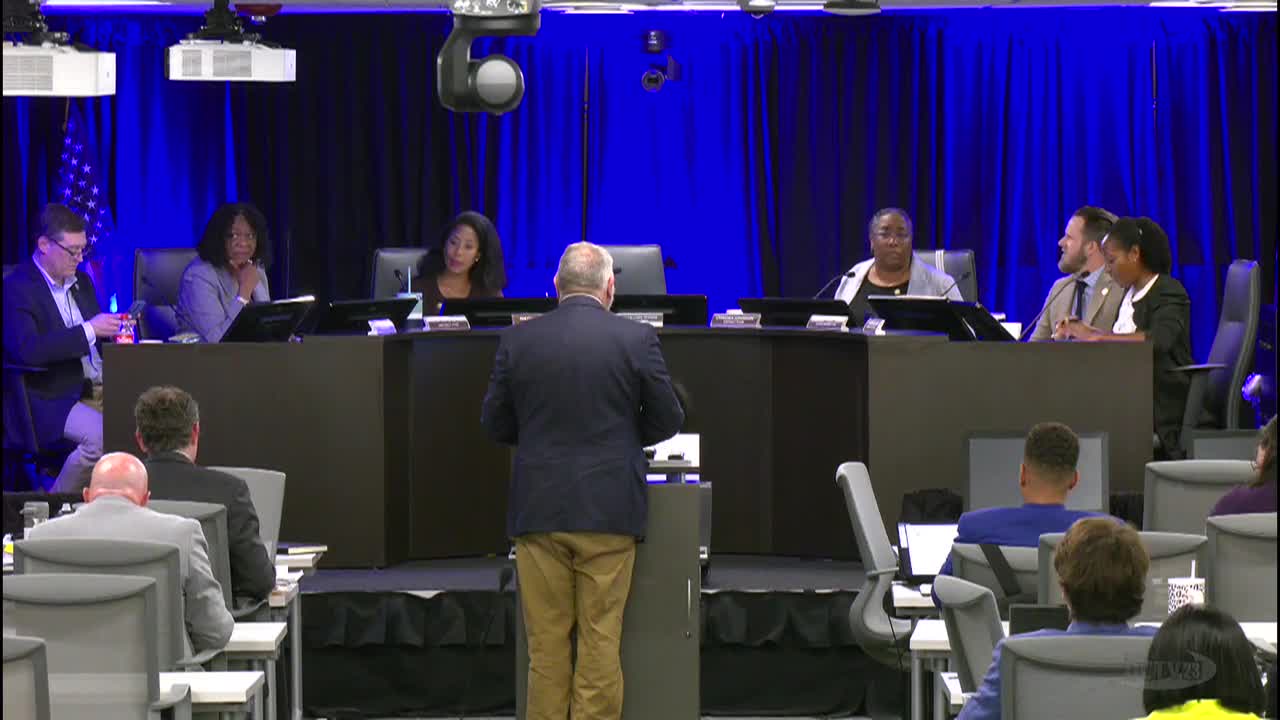
DeKalb County IRPS Committee Chair Ladina Bolton and county commissioners discussed potential changes to the county pension structure on a committee hearing that focused on retention and budget impacts.
County pension presenter Mr. Walls summarized two core issues: whether to assume an annual cost-of-living adjustment (COLA) for retirees in actuarial projections, and whether to move currently employed staff in the lowest multiplier tier (Group 3, 1% multiplier) into the mid-tier Group 2 (2.25% multiplier) to improve retention. Mr. Walls said a 0.5% annual COLA assumption in actuarial reports would raise county contributions from about $81,000,000 to roughly $86,000,000 (an increase of about $5,000,000 per year); a 1% COLA assumption would raise projected contributions to about $96,000,000 (about $15,000,000 more than current contributions), according to the presentation distributed to commissioners.
The presentation also compared employee contribution rates and retirement “payback” timelines using a $50,000 salary example. Under current Group 3 rules, employees contribute 6.42% of pay and, with a 1% multiplier, would see roughly a $10,000 annual pension after 20 years; that example yields about 6.42 years to recoup employee contributions (not counting investment earnings). Group 2 contribution rates were shown at 8.57% with a 2.25% multiplier; Group 1 contribution rates shown at 10.48% with a 2.75% multiplier. The presenter and commissioners noted the plans were designed so the middle and top tiers have similar payback periods despite different multipliers.
Commissioners said retention — particularly for public safety staff — is the primary policy goal behind considering a change. Commissioner Shakira Johnson said she would prefer eliminating Group 3 in favor of Group 2 if financially feasible; Commissioner Terry said he supported moving toward Group 2 as a middle ground and urged modeling to show long-term budget impacts. Commissioners noted roughly 4,000–5,000 employees are in the Group 3 tier (of an estimated 6,000–7,000 county employees) and that moving all affected employees to Group 2 would increase employer contributions by about $14,000,000–$14,200,000 annually, according to the presentation and follow-up clarifications in committee.
Legal and procedural constraints were discussed: committee members were told that IRS rules prevent offering an individual “opt-in” choice for employees when a more beneficial plan change is implemented; changes would have to be applied to all affected members rather than offered as an opt-in. Commissioners also debated whether COLAs for retirees are legally required or historically ad hoc; presenters said COLAs have been granted on an ad hoc basis in recent years and would continue to require commissioner action each budget cycle unless the commission explicitly modeled and funded an automatic COLA through contribution-rate changes.
There was no formal motion to change pension plan rules during the committee meeting. Commissioners asked staff to model the pension and COLA scenarios with budget office input (the committee asked staff to obtain numbers from TJ Siegler) and to return to committee with those modeled impacts before any policy decision. Chair Ladina Bolton confirmed staff will pursue the requested modeling and follow up.
Ending: Commissioners directed staff to produce actuarial models that show the budgetary impact of (a) assuming a 0.5% or 1% annual COLA in the actuarial valuation and (b) moving Group 3 employees to Group 2, and to brief the committee and the county’s budget staff on the results before any formal ordinance or pension code amendment is considered.