Get Full Government Meeting Transcripts, Videos, & Alerts Forever!
Get email alerts on the Housing Element Amendment topic
No spam. Unsubscribe anytime.
Carmel‑by‑the‑Sea reviews housing‑element amendments including hotel‑to‑housing, ADU amnesty and church programs
Summary
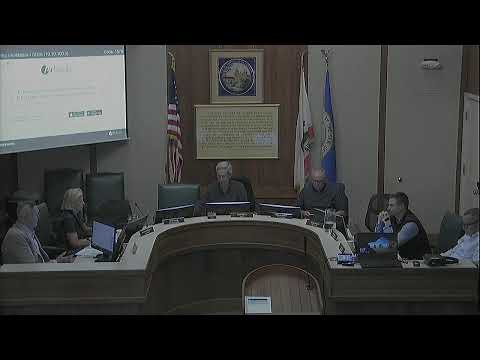
City council and the planning commission met May 20 to review a draft amendment to Carmel‑by‑the‑Sea—s housing element (Chapter 2 and a new Appendix C) and to give staff direction on five programs intended to spread the city—s RHNA obligations throughout the village.
CARMEL‑BY‑THE‑SEA, Calif. — City council members and planning commissioners met jointly on May 20 to review a draft amendment to the city—s housing element (revised Chapter 2 and a new Appendix C) and to provide direction to staff before a planned submission to the California Department of Housing and Community Development (HCD).
The draft packages five strategies intended to spread the city—s Regional Housing Needs Allocation (RHNA) obligations throughout the village rather than concentrating affordable units on two city‑owned parcels: (1) conversion of underperforming hotels to mixed housing using transferable “hotel keys,” (2) a downtown mixed‑income incentive to allow higher unit counts in exchange for a mixed income mix, (3) a live‑work conversion program for underutilized upper‑story and off‑street commercial spaces, (4) expanded accessory dwelling unit (ADU) credit including an amnesty and outreach program, and (5) outreach and technical support for religious facilities to house affordable units.
Why it matters: Carmel must show realistic sites and programs to meet a RHNA target of 349 units for this planning cycle; the amendment as drafted claims a total capacity of about 469 units as a buffer. Staff and community volunteers told the council they are pursuing a —7—day —8————friendly review— with HCD and plan to submit the revised chapters by May 30 for HCD—s preliminary review before formal submission and state certification.
What the programs would do
Hotel conversions: Tim Toomey, who led the hotel program presentation, described a market mechanism that would —decouple— hotel room rights or —hotel keys— from specific properties and allow those keys to be sold to affordable‑housing developers. Toomey presented a sample pro forma for a 19‑room example that used a $5.9 million hotel purchase, roughly $100,000 per unit in conversion costs and an assumed resale value for hotel keys at about $300,000 each; staff said the pro forma is conservative in some inputs but the backup analysis is in the amendment appendix. Toomey said the town—s statutory room cap (about 948 rooms) helps create value for keys and —leverages— conversions.
Council members and commissioners raised valuation and market‑validation questions. Council member Jeff asked staff to provide the full pro forma and to justify the $300,000 key price against recent local sales; Toomey and a hotel industry adviser, Mark Watson, said the $300,000 figure came from wider market analysis of underperforming hotels and that different buyers (new‑hotel developers, owners expanding existing hotels) place different values on keys.
Downtown mixed‑income incentives and live‑work conversions: Council member Hans Bueter described a downtown program aimed at —mixed income— projects that would allow developers to increase unit counts (to about 88 dwelling units per acre in examples) if they provide a roughly 30/70 affordable/market income mix in the project and accept deed‑restriction or other affordability controls for the affordable share. The program targets small infill parcels and interior courtyards to preserve village scale.
Bueter also presented a —live‑work— option for underused upper‑story or off‑street commercial spaces. The volunteer group catalogued more than 200 downtown commercial spaces; the staff summary identifies about 259 candidate spaces and a subset of 14 sites that could yield roughly 85 potential units under the draft assumptions.
ADUs, amnesty and implementation: Nancy Toomey told the joint meeting the city had previously credited 30 ADUs in the housing element; staff and volunteers reworked outreach, amnesty and presale inspection measures and now propose counting 77 ADUs for the cycle (staff said 45 ADUs already have permits or certificates of occupancy in the current reporting window). Nancy said the city would pursue an amnesty program and a presale inspection program to identify previously unpermitted cottage or studio units and bring them into the official inventory, plus preapproved ADU plans and an owner guide to streamline future permitting.
During Q&A, commissioners and council members pressed staff about the conditions for using ADUs as RHNA credit. Staff and the city—s consultant, Veronica Tam, clarified that the state accepts ADU production for planning credit but HCD will audit whether units are actually affordable when built; staff said implementation rules will attempt to capture evidence of affordability (deed restrictions or documented rents) for reporting purposes.
Religious facilities: Staff presented outreach to the city—s five religious institutions and reported that three churches have signaled capacity and interest to be included as housing sites. Staff said churches own more than 15 acres of property inside the city (roughly 2.5% of city acreage) and that recent state laws (SB 4/SB 20 and related provisions) create by‑right capacity and reduced parking and environmental review pathways for qualifying 100% affordable projects on religious sites. Staff said the city is offering technical assistance, architect matching and limited trust‑fund support in implementation so churches can evaluate options.
Numbers and targets: Staff summarized how the components add to the proposed inventory: the draft aims to show roughly 469 potential units against the 349 RHNA requirement (the extra is intended as a buffer). Staff emphasized that the amendment is a planning document; implementation (code amendments, exact water allocations, details of incentives and deed‑restriction language) will follow in separate hearings.
Public comment and concerns: Public speakers welcomed the effort but urged caution on ADUs and trees, and asked the city to protect the character of the village. Julia Christopher (owner of Photography West Gallery) told the council the changes are urgent for artists and local workers. Several commenters, including Maria Roos and Karen Ferlito, urged that ADU credit be tied to enforceable affordability or robust reporting so the units do not become short‑term rentals. Linda Smith raised tree‑protection concerns where ADUs replace yard area.
Water, timing and next steps: Staff and the Monterey County Water Resources representative at the meeting noted the city currently holds an allocation of district water (staff cited roughly 16 acre‑feet on record, with a small remaining portion from earlier allocations) and said additional pure‑water supply expansions are expected late this year; the water representative advised that water availability should not be treated as a near‑term absolute constraint for projects that will be constructed after the pure‑water expansion comes online. Staff said they will submit the draft to HCD for a —friendly review— around May 30, expect a two‑to‑three week informal response window, then return with refinements and later with implementation code amendments for council and commission approval.
What the meeting did not include
There were no formal votes recorded during this meeting on the housing element amendment; the session served to collect direction, answer technical questions and prepare the package for HCD—s review and later implementation steps.
Where the process goes from here
Staff told the bodies they will refine program descriptions, provide pro forma backup (hotel key valuation details and conversion economics), and return with implementation measures including: code changes for downtown density and live‑work use; ADU ordinance updates, preapproved plans and an amnesty enrollment framework; and water allocation rules tied to project phasing. HCD and staff emphasized the difference between planning credit now and the later implementation phase where deed restrictions, water allocations and objective design standards will be resolved.
A joint meeting of the city council and planning commission will consider the finalized amendment after the staff incorporates public and commission input and receives HCD—s friendly review.