Community Development Agency work program approved; staff to pursue septic, housing, code and communications initiatives
Loading...
Summary
The Board approved a new Community Development Agency work program May 19 to prioritize mandated planning and permitting tasks, address critical needs such as septic management and Golden Gate Village revitalization, and add short‑term staff capacity to speed reviews and outreach.
The Marin County Board of Supervisors on May 19 approved an updated work program for the Community Development Agency (CDA) that reprioritizes staff work across mandated duties, emerging critical needs and community support projects.
CDA Director Sarah Jones told the board that the department had reviewed more than 60 policy initiatives and grouped projects into three program goals: (1) fulfill mandated regulatory and planning responsibilities, (2) respond to immediate critical needs such as septic system management and Golden Gate Village redevelopment, and (3) support community projects and place‑based efforts. Jones said staff also recommends modest near‑term capacity additions and plans to use an organizational assessment (KPMG) to refine longer‑term staffing and process needs.
Items called out for priority work include drafting a local agency management plan for septic systems, accelerating work tied to Golden Gate Village revitalization, crafting objective standards for off‑site improvements required of new development, and creating clearer communications materials for food businesses and permit applicants. Jones said some initiatives may be transitioned to other agencies or partners where appropriate and that CDA will return to the board before shifting responsibilities.
Staffing and process changes: Jones told supervisors CDA seeks three fixed‑term planner positions to support project and policy workload, additional environmental health review capacity and an enhanced communications role to improve project transparency and developer/community communications. She said the KPMG organizational assessment will review department structure and staffing needs and that the fixed‑term hires are intended to be immediate, interim support while that work continues.
Public comment: Labor representatives urged that fixed‑term positions be converted to regular hires where appropriate and asked that contracting and consulting follow county procurement rules; union representatives also asked for meet‑and‑confer on any changes that affect represented positions. Nonprofit, agricultural and fair‑housing speakers urged increased county support for food systems, legal aid, and housing programs during public comment.
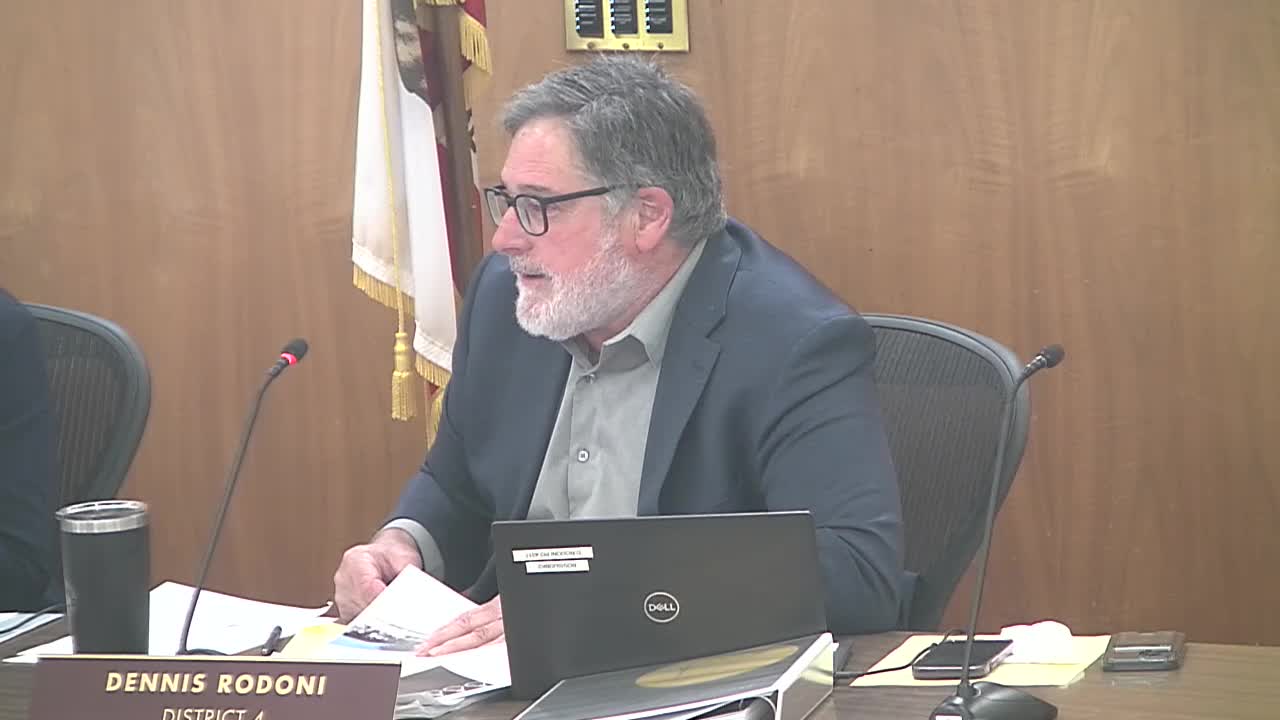
Vote: Supervisor Lukin moved the motion to approve the CDA work program; Supervisor Rodoni seconded. The motion passed with unanimous consent.
Next steps: CDA will begin immediate staffing changes described as interim measures, continue the KPMG study, and return with program timelines and any recommended transitions of responsibilities with partner agencies before making long‑term changes.