Get Full Government Meeting Transcripts, Videos, & Alerts Forever!
Get email alerts on the State Education Budget topic
No spam. Unsubscribe anytime.
Idaho education budget hearing spotlights special education positions, drivers‑ed reimbursement and $2.7M assessment transition
Summary
State Department of Education officials asked the Joint Finance-Appropriations Committee for new special‑education staff, a higher drivers‑education reimbursement, continued spending on career‑ready grants and a $2.7 million one‑time federal authority to transition to a new statewide student assessment platform.
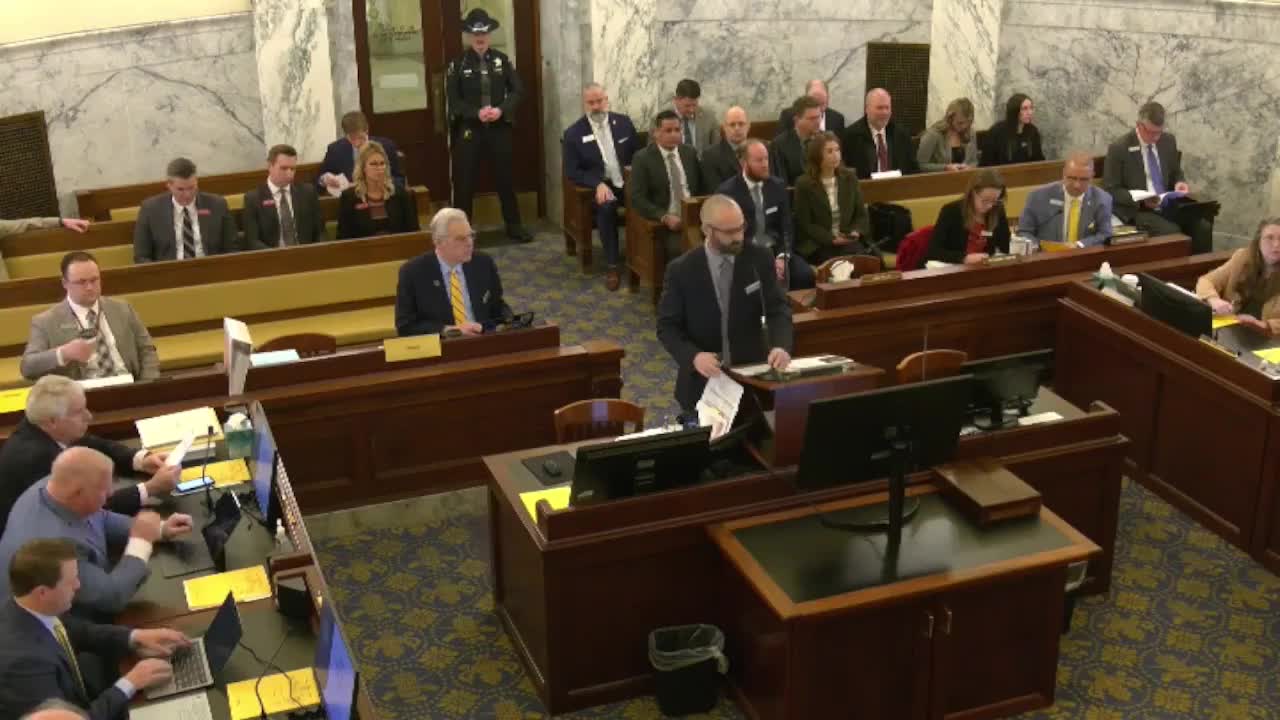
The Joint Finance-Appropriations Committee heard an hour-plus briefing from Legislative Services Office analyst Jared Tetro and State Superintendent Debbie Critchfield on the State Department of Education’s 2026 budget request, which includes new staff for special education and tribal education, a proposed increase in drivers‑education reimbursement to $300 per student, ongoing support for career‑ready student grants and $2.7 million in one‑time federal spending authority to transition Idaho’s statewide student assessment platform.
The request covers seven ongoing enhancements and several one‑time items, Superintendent Debbie Critchfield told the committee. “We have an increase in parents that are, asking for their students to be tested,” Critchfield said, citing more requests for assessments and an increase in disputes that sometimes escalate to the department level. The department asked for one full‑time dispute resolution specialist after analysts reported a roughly 43% workload increase tied to special‑education complaints and hearings. Critchfield later provided more granular figures: a 65% increase in mediation requests, a 77% increase in general complaints and what she described as a “1,200% increase in hearings.”
Why it matters: the enhancements respond to workload tied to federal special‑education law and state oversight duties and would place additional personnel at the department responsible for monitoring compliance, assisting parents and helping districts resolve disagreements before they become formal hearings. The committee pressed for more detail on caseloads and staffing; Critchfield agreed to provide follow‑up data on counts and trends.
Key elements of the request and committee discussion
- Special education and related staffing: The department proposed three personnel enhancements tied to special education and related duties: a dispute resolution specialist ($84,400), a charter school special‑education specialist to monitor and support charter schools’ compliance with IDEA and Section 504, and a second Indian Education coordinator (requested at about $114,000) to support tribal relations, travel and student achievement for Idaho’s five sovereign tribes. Critchfield said the charter role responds to rising charter growth and verification work for new charters. She characterized the Indian education role as broader than special education, intended to support tribal relations and culturally appropriate services.
- Student assessment development: The department requested $2.7 million in one‑time federal authority to pilot and transition to a new statewide assessment platform for the ISAT (Idaho Standards Achievement Test). Gideon Tolman, the department’s chief financial officer, said, “This . . . would be a one‑time federal fund spending authority to . . . help transition to a new platform.” Committee members asked whether the money would pay for an RFP/process only or purchase a new assessment outright; Tolman said the funding is intended to “pay for us to actually switch to the new platform” and that base funding would cover ongoing implementation, but he agreed to provide a written clarification.
- Drivers education reimbursement and bus cameras: The department said it is seeking legislation and spending authority to raise the drivers‑education reimbursement from $150 to $300 per student. Jared Tetro and department staff explained that the drivers training fund balance has grown—shown in the materials as roughly $3.8 million in 2022 and estimated at $7.4 million in 2026—because districts have not fully drawn down authority; the request would increase spending authority to distribute more of the accumulated balance. The committee also discussed a school bus camera fund created by recent legislation; the account currently holds about $35,000 and the department has requested both a current one‑time supplemental and an ongoing enhancement tied to camera purchases and related training and software.
- Career Ready Students (CTE) grants: Critchfield described the career‑ready student program as a multi‑year, competitive capital and program grant program intended to expand local industry‑aligned pathways. She told the committee that $65 million had been appropriated over recent budget cycles, that 152 grant applications were received, 72 grants were approved obligating about $62.7 million, and that reimbursements to date total roughly $16 million with additional claims in process. She emphasized the grants are being reimbursed as projects provide receipts to avoid commingling with local operating funds.
- Child Nutrition Technology and other one‑time grants: The department requested a four‑year Child Nutrition Technology Grant totaling $746,300 (largely to cover MyIdahoCNP licensing and software) and $264,100 in ARPA Farm to School funds to support garden and food‑education projects. The governor also recommended $300,000 from the Public Charter School Authorizer Fund to support underperforming charter schools; the department cited Idaho Code (30‑352‑14) for the authorizer fund’s statutory creation and agreed to provide a breakdown of last year’s recipients and amounts.
- Federal reporting and mandates: The department noted a federal requirement to maintain a state report card under Title I of the Elementary and Secondary Education Act; it requested a one‑time supplemental to update the statewide performance report card if federal technical assistance or funds are not available.
Questions, follow‑ups and committee directions
Committee members repeatedly asked for written follow‑up from the department and Legislative Services Office: a list of private schools and amounts that received COVID‑era ARPA reimbursements; an accounting of career‑ready grant obligations and project statuses; a breakdown of the charter school authorizer fund receipts and last year’s uses; and clarification of whether the $2.7 million pays for a procurement process or a platform purchase. Jared Tetro and Gideon Tolman agreed to provide the requested materials.
Context and fiscal details
The department reported 126.5 authorized full‑time equivalent positions for the current year with a reported fill rate just under 93% and about 9.5 vacancies at the time of the budget submission. Personnel costs have averaged about $13.5 million historically for the department’s administrative programs. The materials show CARES and ARPA funds and a 2024 appropriation of about $45 million for the Career Ready Students (CTE) program; separate Millennium Fund awards included $3 million for youth substance‑use prevention programs.
The hearing recorded no formal motions or votes; committee members asked for supplemental reports and documentation and the department agreed to provide follow‑up data and clarifications requested on reimbursements, program obligations and the assessment transition.