Get Full Government Meeting Transcripts, Videos, & Alerts Forever!
Get email alerts on the Executive Office Governor topic
No spam. Unsubscribe anytime.
Governor’s office seeks to replenish emergency fund, shops constituent-tracking options after consulting on Salesforce
Summary
The executive office told the Joint Finance-Appropriations Committee that its emergency fund carries a $2 million appropriation but roughly $650,000 in cash; the office requested a $1.35 million one-time transfer to restore the cash balance, plus one-time IT and America 250 expenses while legislators sought detailed transaction reports.
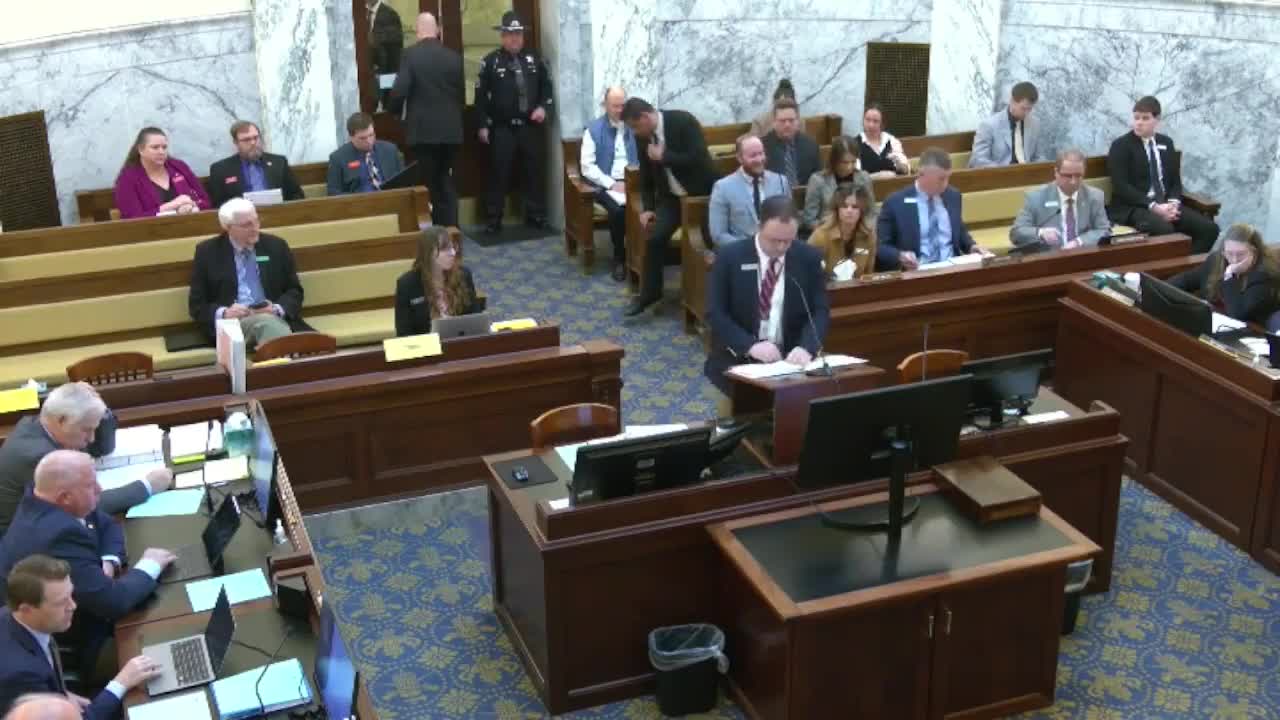
The executive office of the governor presented its FY2026 budget package to the Joint Finance-Appropriations Committee on Feb. 18, requesting a mix of one-time and ongoing items and answering questions about prior emergency fund uses and interagency personnel reimbursements.
Christopher LaHozet, the legislative budget analyst, said the governor’s emergency fund carries a base appropriation of $2,000,000. The current cash balance in the fund is about $650,000, LaHozet said, and the governor’s office sought a $1,350,000 one-time transfer from the general fund to restore the cash balance to the base appropriation.
LaHozet told the committee that previous expenditures from that emergency fund in fiscal years 2023 and 2024 included roughly $1.4 million reimbursing the Idaho State Police for the University of Idaho Moscow murder investigations and funding the Esto Perpetua ("Fight Fentanyl") program. He said the governor’s emergency program historically also handled CARES Act distributions and other short-term executive expenses, and that expenditures must meet requirements in Idaho law (the analyst referenced the code section cited in the department materials).
On new requests, the executive office asked for $45,000 one-time from the general fund for ITS replacement items (network switches, wireless access points, desktops and laptops) and $250,000 one-time to implement objectives of the White House Task Force related to America 250 activities. LaHozet described the America 250 item as tied to the presidential executive order referenced in the office’s submission and said the governor intends to collaborate with an existing advisory council to coordinate Idaho’s participation in national observances.
Committee members pressed analysts and finance staff on two recurring operational themes. First, several legislators (including Representative Tanner) asked about transfers into the governor’s office budget from other agencies and whether those reimbursements reflected specific documented work. Lori Wolf, Division of Financial Management administrator, explained that personnel-cost reimbursements have been a long-standing practice under the state’s interagency personnel process (the “10 P” process), that staffing can span duties across agencies, and that those reimbursements are visible in the accounting system. She said DFM and the controller’s office worked to replicate the process in the new LUMA accounting system and offered to provide detailed transaction reports to the committee.
Second, members asked about the governor’s constituent services platform. LaHozet said the budget book references Salesforce as one option, but cost estimates showed Salesforce would be cost‑prohibitive. Wolf said the governor’s office received an appropriation this fiscal year for a constituent-services system and is still finalizing requirements; to date no funds have been spent and staff are exploring less-costly alternatives and opportunities to leverage existing DFM/ITS resources. “We received that funding on July first of this year and since that time we've been working with our ITS group,” Wolf said.
Senators asked for itemized reports on in-state charter travel and the detailed uses of the governor’s emergency and related transfers; analysts said they would provide the committee the underlying spreadsheets and expenditure detail. Wolf noted the emergency fund must meet legal spending criteria in Idaho Code (as cited in the analyst’s presentation). The committee did not take formal action during the hearing and asked staff to follow up with itemized records and explanations of transactions requested by lawmakers.
Materials cited during the hearing (analyst slides and the governor’s office submission) and requested follow-ups are available to committee members in the legislative SharePoint folder for the hearing.