Get Full Government Meeting Transcripts, Videos, & Alerts Forever!
Get email alerts on the Public Safety Policing topic
No spam. Unsubscribe anytime.
Idaho State Police seek staffing, lab expansion and program adjustments; director stresses retention challenges
Summary
Idaho State Police presented budget requests including new fentanyl‑focused investigators, forensic lab staffing and remote housing; Director Bill Gardner highlighted recruitment and retention shortfalls and asked for legislative support to address trooper vacancies.
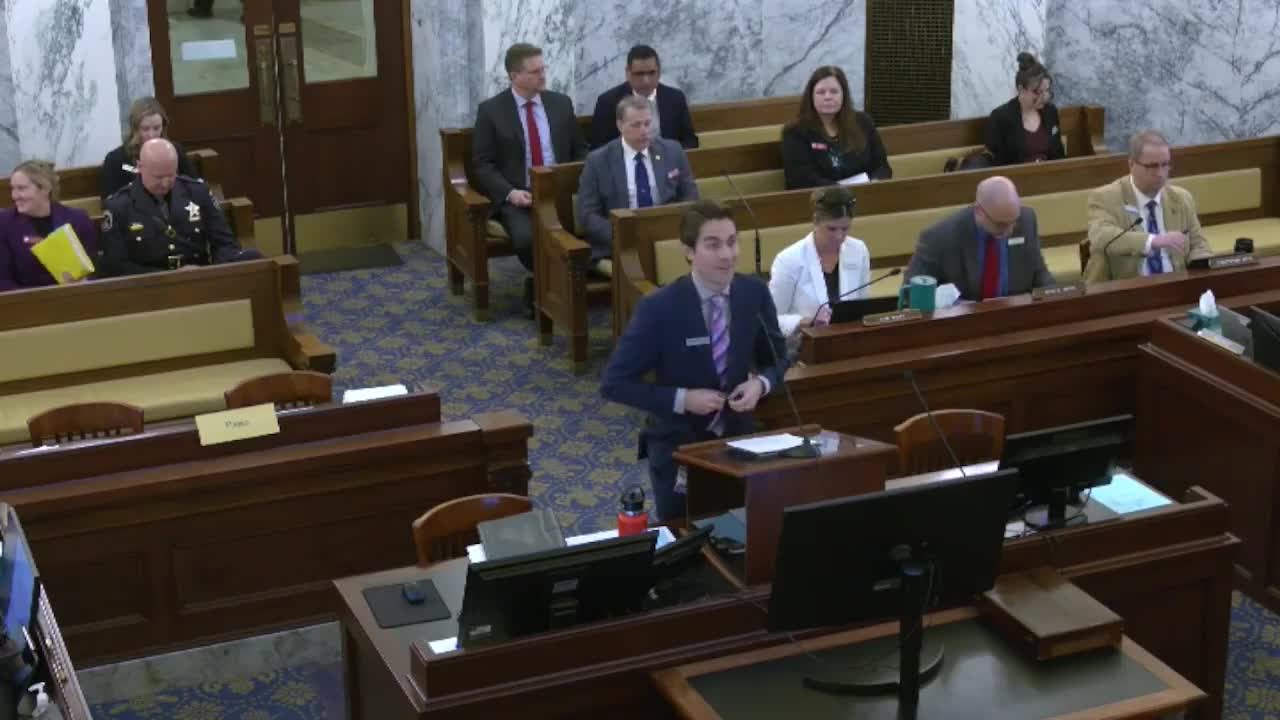
The Idaho State Police (ISP) outlined its fiscal 2026 budget priorities and ongoing issues to the Joint Finance and Appropriations Committee on Wednesday, requesting new positions and funding adjustments while flagging persistent staffing shortages.
Noah Peterson, budget policy analyst with the Legislative Services Office, reviewed ISP’s divisional structure, funds and recent appropriations. Peterson said ISP operates seven budgeted programs with a combined 583.67 FTP (full‑time positions) and cited a five‑year average fill rate of about 92.5 percent; he also walked the committee through dedicated funds including the Project Choice Fund, the Drug Enforcement Donation Fund and the Idaho Law Enforcement Telecommunications Fund (ILETS).
ISP’s enhancement requests for fiscal 2026 include a variety of staffing and technology items: 10 FTP and $1,043,300 for a fentanyl trafficking unit; conversion of forensic contract staff to full‑time positions; retention pay for forensic staff and dispatchers; two fleet service positions (2 FTP, net $63,300) to reduce upfitting backlogs; a four‑person special investigations unit focused on Department of Correction facility investigations (4 FTP, $757,300 total, $443,300 ongoing); one forensic deputy lab manager (1 FTP, $118,200); an estimated $168,100 fiscal impact for proposed DNA collection legislation that would add misdemeanors to mandatory DNA/thumbprint collection; a requested HDA (highway distribution account) fund shift of $4,995,500 and 37.48 FTP to maintain patrol operations if HDA transfers continue to decline; and program transfers including a 2‑FTP digital forensics transfer to the Forensic Services program.
Peterson noted last year’s large, one‑time appropriations and reappropriations (approximately $26 million in FY2023 and a $15.8 million reappropriation in FY2024), and he flagged several federal grants IPS administers, including funding tied to the Sexual Assault Kit Initiative (SACI) and the Adam Walsh Act (SORN A) compliance.
Director Colonel Bill Gardner told the committee ISP is “decimated” in staffing in some regions and said pay differentials with local agencies have driven departures. Gardner described operational impacts in Northern Idaho where vacancies leave large geographic areas with minimal coverage; he said some troopers recently left for other agencies or other states and that, in some places, no applicants are available. Gardner credited the committee for an 8 percent CEC (cost‑of‑earning change) increase for troopers this year but said further action is needed to stabilize staffing.
Gardner and staff highlighted other program matters: a new forensic laboratory project in Meridian (a full forensic lab to replace an outgrown facility), renovations to add a Twin Falls lab focused on drug identification, and a request to convert certain SACI investigators from contracted retirees to state employees so they can be POST certified and fully authorized to perform investigations. He described significant recent drug interdictions by ISP’s dedicated drug interdiction team and asked the legislature to consider administrative subpoena authority, narrowly tailored to financial information in drug and trafficking investigations, to help track illicit proceeds quickly.
Committee members asked for more detail on the OITS (Office of Information Technology Services) centralization proposal (Peterson explained the governor’s recommendation reduced the number of FTP moved from 20 to 16), the status of the Meridian lab construction, the SACI federal grant amounts and timing, and the HDA fund shifts. Division CFO Christine Otto and Director Gardner offered follow‑up commitments to provide outstanding federal grant details and lab schedule information.
Gardner closed by thanking the committee for prior support and said ISP had a recent trooper nominated as a national finalist for Trooper of the Year. The committee did not take final appropriation votes on ISP’s requests during this hearing; staff will include the agency’s items in the ongoing budget process.