Get Full Government Meeting Transcripts, Videos, & Alerts Forever!
Get email alerts on the Agricultural Research Extension topic
No spam. Unsubscribe anytime.
University of Idaho Ag Research & Extension requests faculty, maintenance funds; dean announces retirement
Summary
University of Idaho College of Agricultural and Life Sciences and the Agricultural Research and Extension Service presented FY2026 requests including a viticulture/small fruits faculty line and building maintenance; Dean Michael Perella announced he will retire in June.
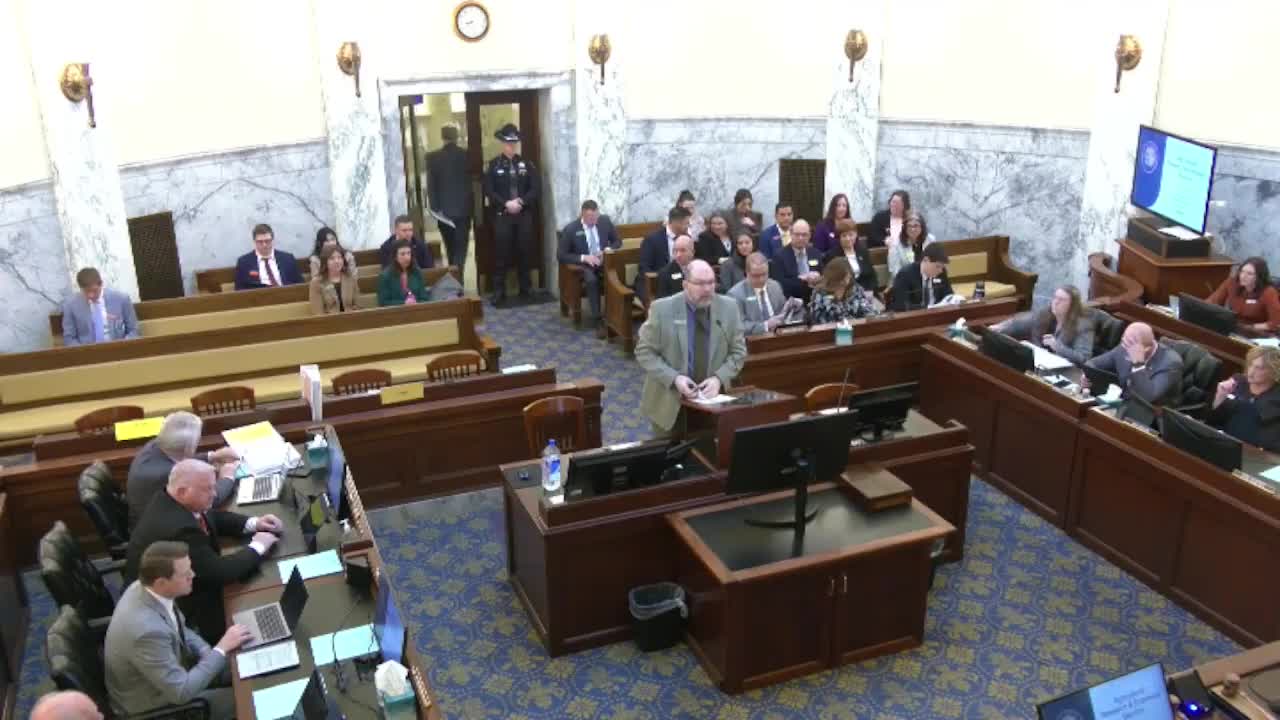
The Joint Finance-Appropriations Committee on Monday, Feb. 10, heard the University of Idaho's Agricultural Research and Extension Service (the land‑grant college's research and extension arm) present its FY2026 budget requests and program highlights. Dean Michael Perella announced he will retire in June and described recent investments and remaining needs across agricultural research, extension and facilities.
Kevin Campbell, budget and policy analyst with the Legislative Services Office, reviewed the agency's base budget. Dean Perella and senior college staff described statewide service levels, facility improvements and specific FY2026 requests: $157,900 ongoing for a viticulture and small fruits research faculty position and $250,100 for a portion of building maintenance at the Idaho Center for Agriculture, Food, and the Environment.
Perella told the committee the Agricultural Research and Extension Service operates statewide with a presence in 42 of Idaho's 44 counties and three recognized tribal communities, and the Idaho Agricultural Experiment Station comprises 10 research and extension centers with access to more than 14,000 acres for research. Campbell reported a current FTP (full-time personnel) count of about 341.33 and said roughly 81% of the service's expenditures are in personnel costs.
Perella highlighted recent investments in facilities — including a new research laboratory at Parma — and faculty hires in animal and plant sciences, agricultural engineering, irrigation and forestry. He said the requested viticulture and small fruits position would address grower needs for research on disease prevention, water management, pest control and post-harvest storage for grapes and small fruits, which the service described as a rapidly growing portion of Idaho agricultural production.
The committee asked about nonproduction extension work. Representative Handy noted prior visits to extension centers and asked whether extension research is moving beyond yield to nutritional value. Perella said the college already engages in nutrition and dietetics work — citing the Margaret Ritchie School of Family and Consumer Sciences and an NSF grant on women's health and nutrition — and said the program is expanding to connect agricultural production with nutrition and human health outcomes.
Committee members also discussed extension's digital-literacy efforts. Campbell and Perella reviewed ARPA-funded adult computer literacy efforts previously appropriated and described a pending federal grant application to the Federal Communications Commission that would expand digital-literacy work; Perella said one successful FCC award would bring roughly $13 million to a multi-partner project addressing the digital divide in rural communities (the FCC application is an external federal competition and remains contingent on federal approval). Perella said extension logged more than 450,000 face-to-face contacts last year and engaged more than 75,000 youth in 4‑H programming.
Perella emphasized the college's role as Idaho's land-grant institution and the economic importance of agriculture statewide: "Idaho agriculture contributes about almost 20% of the total economic output of the state," he told the committee, and he credited legislative support with enabling facility upgrades and faculty hires. He also said the college leverages state investments to attract competitive external grants and private support.
Requests from the service for FY2026 also included funding for building maintenance at the Idaho Center for Agriculture, Food and the Environment, and Perella said the center supports collaborative dairy-industry research. Campbell noted prior appropriations including FY2024 funding for new faculty positions and for maintenance of the Parma research laboratory. Perella reported the college's turnover rate fell from 14% to 11% after last year's change-in-employee-compensation appropriation.
The committee did not act on funding during the hearing. Members asked staff and college leaders for follow-up materials detailing program outcomes, measures of impact for digital-literacy efforts and how state funds leverage external grants.