Get Full Government Meeting Transcripts, Videos, & Alerts Forever!
Get email alerts on the Career Technical Education topic
No spam. Unsubscribe anytime.
Legislative panel hears Idaho CTE requests as waitlists grow; governor proposes $10M ongoing
Summary
The Joint Finance-Appropriations Committee heard an overview of Idaho Career Technical Education's budget and FY2026 requests, including a $10 million ongoing governor's recommendation to expand capacity in high-demand programs amid continuing waitlists for welding, nursing and other CTE fields.
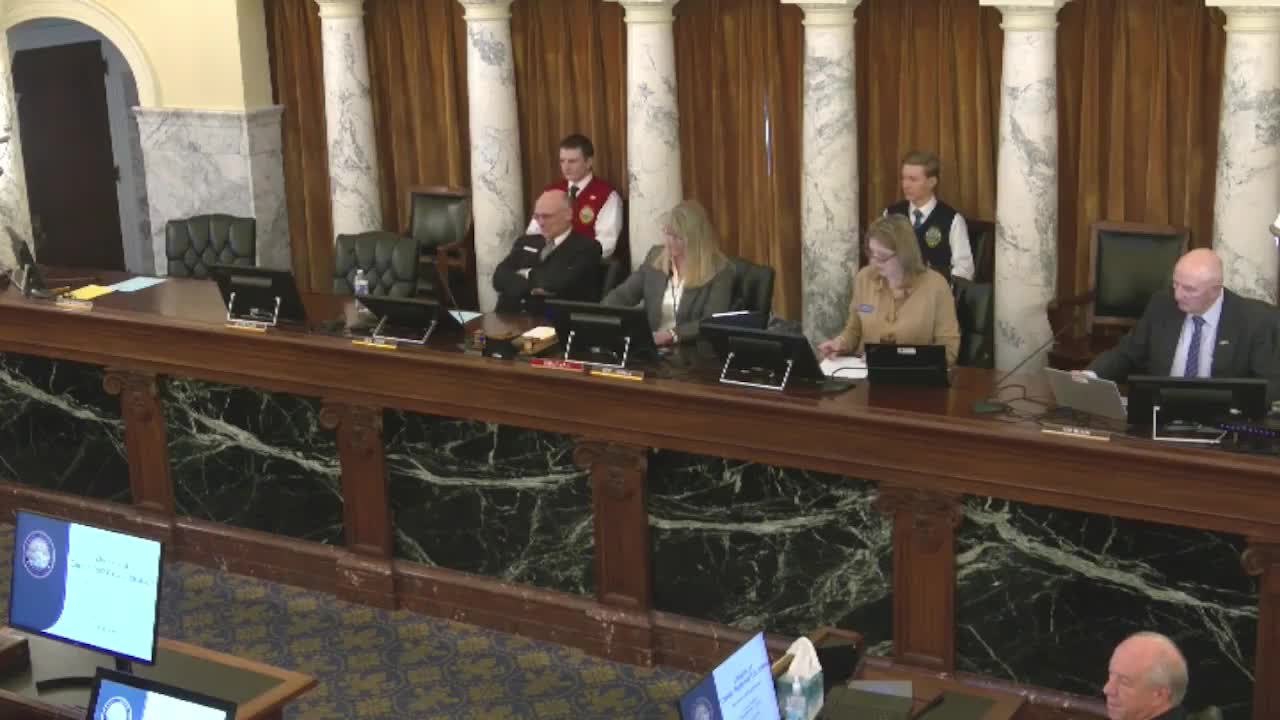
The Joint Finance-Appropriations Committee on Monday, Feb. 10, heard an overview of the Division of Career Technical Education's (CTE) base budget and FY2026 requests as lawmakers pressed agency leaders about persistent waitlists and the governor's $10 million ongoing proposal to expand capacity.
Kevin Campbell, a budget and policy analyst with the Legislative Services Office, reviewed CTE's budget picture and recent appropriations. Joshua Whitworth, the executive director for the State Board of Education and interim state administrator for CTE, and CTE staff answered committee questions about program demand, faculty and facility constraints, and how proposed grants would be structured.
The hearing highlighted why the issue matters: committee members and agency staff described rapidly rising student demand for applied programs such as welding and nursing, industry needs for skilled workers, and a shortage of both instructional faculty and lab/classroom capacity that limits the number of students who can be served.
Campbell told the committee CTE spends most of its appropriation on postsecondary instruction and related trustee and benefit payments and detailed several recent appropriations: ongoing and one-time investments in FY2024 included $5,000,000 ongoing for CTE readiness in middle and high schools, a $10,000,000 one-time appropriation for secondary CTE programs and $5,000,000 one-time for equipment and postsecondary investments. For FY2026, Campbell said CTE requested $664,000 ongoing for additional instructors in at-capacity technical college programs, $125,400 for a business-industry engagement manager, $50,000 for adult education and workplace English, and modest spending authority for federal grants; he said the governor recommended $10,000,000 ongoing to expand capacity in high-demand CTE programs.
"We are seeing large demand across the entire career technical education ecosystem," Whitworth told the committee when lawmakers asked him to describe waiting lists and capacity constraints. He said CTE can provide a list of the most oversubscribed postsecondary programs and that the state has seen a marked growth in demand at secondary and postsecondary levels.
Committee members asked where the money would go and how it would be distributed. Whitworth described the governor's $10 million as intended to be deployed to meet the most pressing capacity needs — nursing, welding, mechatronics and other oversubscribed fields — with a grant model that would require industry engagement. "The grant would require some engagement by industry to participate in that," Whitworth said, saying the intent is to pair public funds with private commitments so awarded grants address demonstrable employer demand.
Lawmakers and staff pressed agency leaders on the principal constraints limiting enrollment growth. Whitworth described three interdependent challenges: student and business demand; qualified faculty to teach technical courses; and facility capacity such as additional welding booths or lab space. "As that jumps, not only do you reach that constraint on the facility side, you also reach the constraint on the faculty side," he said.
Lawmakers asked about potential overlap with other workforce programs. Senator Hart asked whether CTE duplicates the Launch program run by the Workforce Development Council. Whitworth said the programs are "intimately tied" and collaborate; he characterized Launch as driving demand through student financial support while CTE focuses on quality of instruction and capacity. He said the proposed business-industry engagement manager would be embedded to support local school districts and technical colleges in matching business partners to programs, not to duplicate the Workforce Development Council's statewide advisory role.
Committee members also asked about specific funds that support CTE services. Campbell highlighted three dedicated funds: the Displaced Homemaker Fund (revenue from a fee on divorces, directed to Centers for New Directions), the Hazardous Materials and Waste Enforcement Fund (revenues from hazardous materials permits, used for firefighter hazmat training) and the Motorcycle Safety Fund (revenues from driver's licenses, motorcycle registrations and safety course fees, directed to motorcycle safety training). Senators and representatives flagged questions about recent reporting for the Hazardous Materials fund (a reported negative balance in FY24) and the motorcycle safety fund's growing ending balance. Whitworth said staff would validate reporting and provide follow-up information to the committee.
Lawmakers asked about program-level specifics: Senator Galloway told the panel that state data show welding and nursing among the most in-demand CTE programs. Whitworth said many technical colleges already run welding and nursing programs and the state's role is to expand seats and add faculty and equipment rather than stand up new programs. Several members questioned how the $10 million ongoing would be allocated and requested more detailed, defensible distribution plans and performance outcomes before floor debate.
On adult education, Tracy Bent, chief administrative officer for CTE, described the workplace English and adult basic education program as teaching basic, workplace English to learners whose first language is not English, delivered through workforce training centers and other local partners including Department of Corrections sites.
Committee members asked for additional detail and documentation. Whitworth and Campbell offered to provide the committee with (1) a list of oversubscribed postsecondary programs and waitlist counts, (2) a clearer plan for how the governor's $10 million would be distributed and monitored, and (3) validation and explanation of balances and expenditures in the Hazardous Materials and Motorcycle Safety funds.
The committee did not take a formal vote on funding during the hearing. Staff and agency leaders said they would return written follow-up information to the committee to support appropriation decisions.
Outlook: The governor's $10 million recommendation remains subject to committee review and appropriation. Lawmakers indicated they want a grant distribution plan, performance measures and clearer reporting on dedicated fund balances before approving ongoing, large-scale increases.