Get Full Government Meeting Transcripts, Videos, & Alerts Forever!
Get email alerts on the Budget topic
No spam. Unsubscribe anytime.
Durham County finance directors warn of sales‑tax shortfall, tightening fund balance and possible federal/state impacts
Summary
County finance staff told the Board of County Commissioners that sales‑tax receipts were significantly below budget in fiscal 2024–25, employee‑benefit costs are increasing and federal/state funding uncertainty is compressing the county’s ability to use fund balance for one‑time needs.
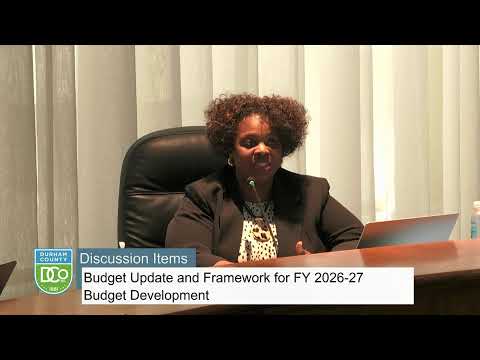
County finance staff gave commissioners an early overview of fiscal conditions ahead of the 2026–27 budget cycle, highlighting weaker than expected sales‑tax collections, rising personnel and benefits costs, reduced flexibility in using fund balance and potential near‑term disruptions from federal and state funding changes.
The finance team said the general fund ended fiscal 2024–25 with revenue collections at roughly 91% of budget and that sales tax collections were materially below the budgeted amounts; staff cited an approximately $11 million shortfall in gross sales‑tax revenue for the county in FY 2024–25, with roughly $9 million of that shortfall affecting the general fund. Staff described sales‑tax growth as essentially flat across the last three fiscal years, a change from previous upward trends, and said that flattening creates pressure because sales tax is the county’s second‑largest recurring revenue source.
Other fiscal pressures: staff said employee benefit costs are already about $50 million annually and are rising at rates that, if sustained, would materially increase long‑term cost pressure; the cost of capital projects has also risen and can increase by 15% or more annually. The county’s recent reliance on fund balance has diminished, staff said, and management recommended limiting mid‑year fund‑balance draws to preserve fiscal flexibility.
Federal and state risks: managers warned that a federal government shutdown and state‑level policy changes could reduce or delay payments for programs the county administers. Public health director Rod Jenkins and DSS director Maggie Clapp briefed the board: Jenkins said Durham County’s exposure to a Title X family‑planning funding reduction was about $87,553 and that a separate Medicaid funding change could reduce county budgeted funds by roughly $75,228 if those cuts flow as described; Jenkins and Clapp said state guidance remains incomplete and that the state is awaiting federal direction about which programs will be exempt during a shutdown.
Budget development process and next steps: staff said they have started a preliminary base‑budget review and will use performance‑measurement work with the new organizational effectiveness team to evaluate program effectiveness and identify potential efficiencies. The manager and finance staff urged commissioners to begin prioritizing programs and capital requests now, noting that roughly 36% of the county budget goes to education‑related services and nearly 38% to personnel‑related costs; those large categories limit options for large operating cuts without affecting core services.
Commissioner comments and next steps: commissioners asked for more benchmarking, for clearer public‑facing KPIs tied to the county strategic plan and for community‑facing explanations of what discretionary programs local funds support. Staff said they will return with quarterly reports, a proposed KPI framework and an updated capital improvement plan and will continue to refine revenue estimates as more state and federal information becomes available.
Ending: staff framed the budget outlook as manageable but constrained and urged the board to begin policy conversations and prioritization so the county can respond quickly if revenues continue to lag or federal/state reductions materialize.