Get Full Government Meeting Transcripts, Videos, & Alerts Forever!
Get email alerts on the Public Defender topic
No spam. Unsubscribe anytime.
Durham public defender urges more staff, workspace and revival of family drug‑treatment court
Summary
Chief Public Defender described staffing, caseloads, storage and space shortfalls; said family drug treatment court previously improved family reunification timelines and recommended exploring restoration; commissioners asked for cost and timeline data.
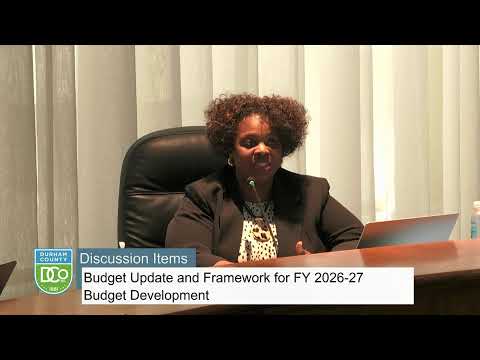
Chief Public Defender Don Vaxon updated the Durham County Board of Commissioners on the public defender office’s staffing, caseloads and facility needs, saying the office is operating with fewer locally funded attorneys and limited workspace while handling thousands of cases annually.
Vaxon said the office was created in 1990 and now operates with two senior assistants, 22 assistant public defenders funded by the state, and two assistant public defenders funded by the county (24 assistant public defenders in total). He described support staffing that includes six legal assistants, two investigators, one interpreter and one social worker assigned to abuse, neglect and dependency matters. The office also provides attorneys for first appearance, juvenile and involuntary‑commitment hearings and partners with local stakeholders on specialty courts.
Why it matters: the office’s caseloads and physical‑space constraints affect representation and case timeliness. Vaxon said the office disposed of 8,408 cases in fiscal 2024–25 and described lengthy timelines for abuse/neglect cases and family‑reunification delays. He said the county‑funded presence at first appearance and the public defender’s participation in specialty courts such as drug treatment court, mental health court and “safe babies” court are important to outcomes but noted that a previously successful family drug treatment court was defunded and that its absence lengthens reunification timelines.
Facilities and records: Vaxon said e‑court changes have increased equipment needs for support staff and that the office lacks sufficient physical and digital storage. He emphasized retention rules—juvenile files and abuse/neglect files and homicide files must be retained long term—and said some records are already stored across multiple locations. He asked county leadership to help identify short‑term reconfiguration options and longer‑term workspace solutions.
Staffing and capacity: Vaxon told commissioners he would prefer 30 assistant public defenders to achieve balanced caseloads; he said current staffing (24 assistants plus chief and senior assistants) leaves attorneys with heavy workloads and fewer disposals than pre‑pandemic years. Commissioners asked for comparative data on attorney staffing in other jurisdictions and for historical cost data for the family drug treatment court so the board can consider possible restoration as a locally funded program. Vaxon suggested the family drug treatment court had materially shortened case timelines when it operated.
Follow‑up and next steps: Commissioners and staff asked the public defender’s office to provide historical budget numbers for the family drug treatment court, and management said staff would follow up on workspace reconfiguration and benefits for the office. Several commissioners voiced support for restoring elements of the family drug treatment court and for collaborative work with the courts, Durham Public Schools and other partners to reduce case backlogs and improve outcomes.
Ending: Commissioners thanked Vaxon for the presentation and said they would consider potential budgetary requests in next year’s cycle and seek follow‑up information on staffing, historical program costs and facility solutions.