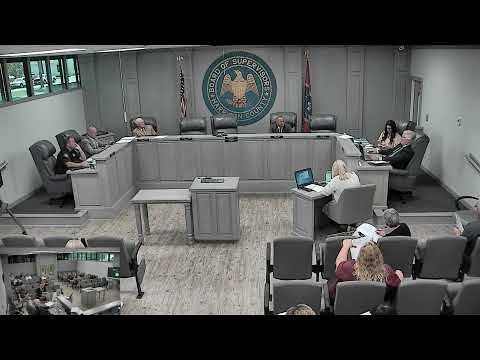
Harrison County officials: federal wetlands designation limits county help for eroding Gulfport property
Loading...
Summary
A Gulfport homeowner asked Harrison County supervisors for help after erosion next to a federally designated wetland damaged her house; county staff said federal wetland rules and prior enforcement limit county work on private property in that area.
A Gulfport homeowner and a family representative asked the Harrison County Board of Supervisors to help lift and stabilize a house at 2903 Fort Worth Place after erosion and a natural drainage area reduced the yard and damaged structures.
The homeowner, identified in the record as Patricia Griffin (speaking through a family representative), said a ditch or low natural drainage area behind her property—adjacent to what the county now calls the skate‑park property—has eroded her land and caused structural settling; she said an engineering survey shows about five inches of settlement to the main structure and more for an outbuilding, and that the backyard has lost roughly two feet in places.
Why it matters: The property borders land the transcript shows the federal government has previously designated as wetlands. County staff said wetland protections and prior enforcement actions limit what the county can do on and adjacent to the wetland without federal permits. The homeowner requested three items: county help to jack and level the house, construction of a retaining wall to halt erosion, and a reevaluation of the wetland designation.
County staff response
County staff and supervisors explained that federal agencies previously determined parts of the skate‑park area to be regulated wetland, and that prior county grading or work in the area drew federal enforcement. Staff said routine county maintenance or mechanical work in wetlands without permits would expose the county to enforcement actions and potential personal liability for employees. One supervisor noted that trees and root systems in the wetland can stabilize soils, and removing them could worsen erosion. Staff suggested the homeowner could seek a wetlands permit (Army Corps/Jurisdictional Determination) or hire a wetlands consultant to seek a permit or demonstrate the designation should be revisited.
Homeowner requests and constraints
The family requested: (1) county assistance to jack and level the house; (2) construction of a retaining wall; and (3) review of the wetlands designation. County staff said the county likely cannot perform those tasks on private property in a wetland without federal or state permits. Staff advised the family to obtain expert technical and permitting help and offered to discuss hiring a consultant and potential costs; they warned that such a consultant and any associated legal process would require county funds and formal action.
Next steps
Board members suggested the homeowner may petition the county for a formal wetlands review and that the county could, at the board’s discretion and at cost, hire a consultant to reassess jurisdictional lines, but staff emphasized this would be a cost and time decision for the board. No formal motion or county commitment to pay for the requested stabilization work was made at the meeting.
Ending
County staff recommended the homeowner pursue a wetlands jurisdictional review and, if desired, a county‑funded consultant could be considered with board approval; supervisors emphasized limits on county authority where federal wetland jurisdiction applies.