Get Full Government Meeting Transcripts, Videos, & Alerts Forever!
Get email alerts on the Sheriff Budget topic
No spam. Unsubscribe anytime.
Sheriff asks court to shift ABV transfers and seek general‑fund support for fleet, highlights ankle‑monitor savings
Summary
Sheriff Salinas proposed reducing reliance on abandoned/abandoned-by-vehicle (ABV) reserves, requested county general-fund support for vehicle maintenance and tires, and urged expansion of an electronic-monitoring/comp‑time policy after reporting reduced prisoner housing and medical costs tied to ankle-monitor use.
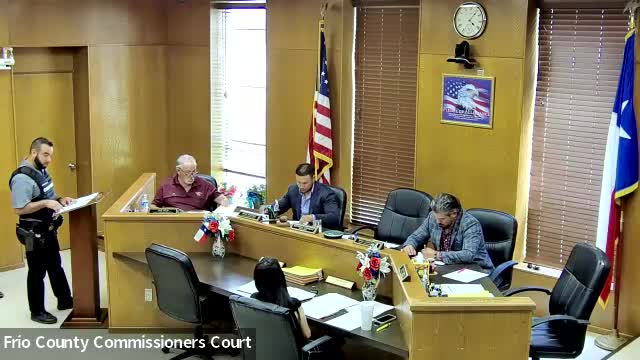
Sheriff Salinas asked Frio County Commissioners Court on July 15 to reduce the sheriff’s reliance on the ABV (abandoned motor vehicle) reserve and to begin shifting a portion of fleet-maintenance and related costs back onto the general fund while describing operational savings from an electronic-monitoring program.
Salinas told the court that the county previously relied on ABV proceeds of roughly $270,000 annually to fund the sheriff’s operating costs and vehicle maintenance. He proposed reducing the ABV transfer to $150,000 this fiscal year and asked that the general fund pick up a portion of vehicle‑maintenance needs in the interim. Specifically he asked for roughly $40,000 for motor-vehicle repairs and $25,000 for a new batteries/tires/tubes line to support patrol and fleet reliability while the ABV reserve is rebuilt.
The sheriff also described substantial month-to-date reductions in jail costs tied to a court-approved electronic-monitoring/ankle‑monitor program. He said prisoner‑housing and prisoner‑medical line items have fallen dramatically from prior years and attributed the savings to the electronic-monitor program, calling the results “black and white” evidence the program is reducing outside housing and medical expenses. (The transcript records the sheriff praising the program’s savings and describing outreach from other counties seeking details about implementation.)
Salinas requested that the court consider allowing patrol deputies to participate in the overtime/comp‑time program the jail and dispatch staff have used, saying the patrol corps could be added without undermining oversight. He proposed applying the same approved approval and documentation processes used for jail and dispatch overtime — shift documentation, supervisor sign‑off and payroll checks — to patrol deputies if the court wants to authorize the change.
Why this matters: moving vehicle-maintenance costs from ABV reserves to the general fund reduces the sheriff’s self-funded flexibility and shifts some recurring operating costs to county taxpayers; at the same time the sheriff reported measurable savings from electronic monitoring that he argued offset other costs and could serve as a model for other counties.
Ending: Commissioners said they would review certified revenue numbers and the auditor’s calculations before making final decisions on any general-fund transfers or expanded overtime policies. They asked the sheriff and auditor to return with reconciled reserve figures and a concrete cost estimate for expanding the overtime policy to patrol deputies.