Lifetime Citizen Portal Access — AI Briefings, Alerts & Unlimited Follows
FQHCs, hospitals and community health centers warn rebasing, Alliance freeze and rate uncertainty threaten primary‑care access
Loading...
Summary
Federally qualified health centers, hospitals and provider associations told the Committee on Health that the FY26 proposals — including delaying FQHC rate rebasing, an Alliance enrollment freeze and proposed Medicaid changes — would strain safety‑net providers and could reduce capacity and access to care.
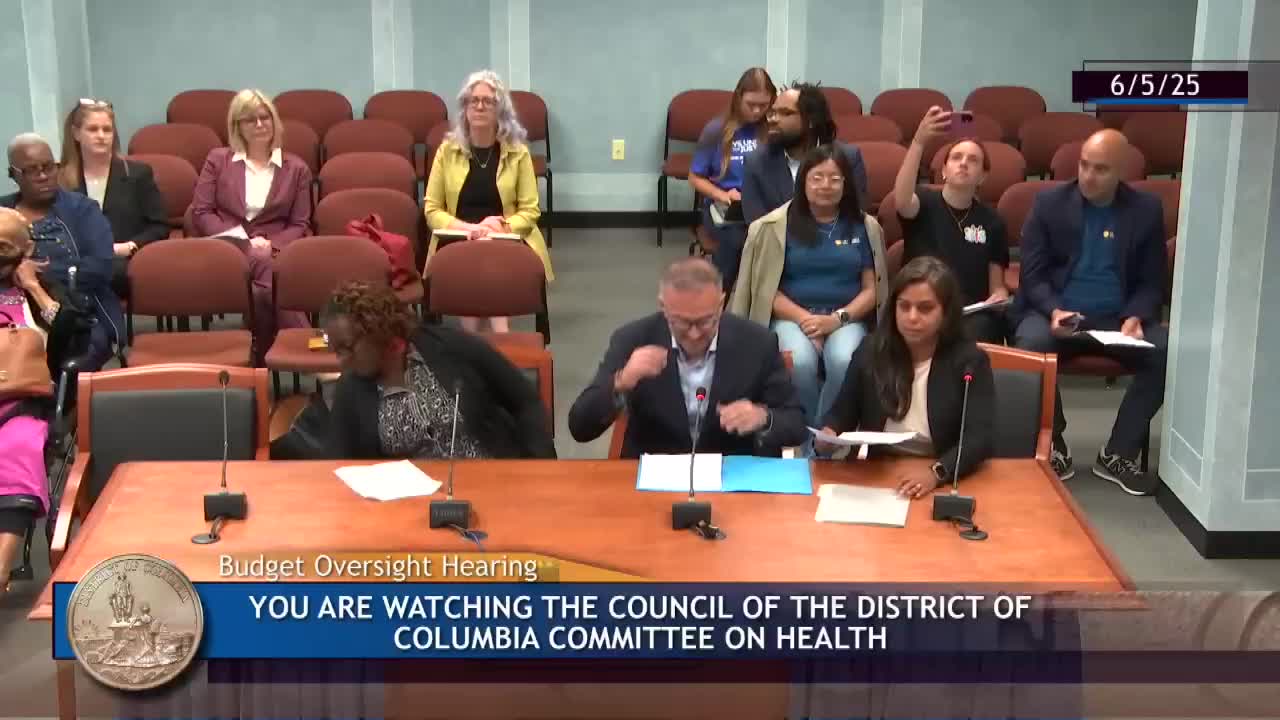
Community health center leaders, hospital officials and provider coalitions told the Committee on Health on June 5 that proposed FY26 budget actions would put the safety net at risk and could reduce access to primary care across the District.
Leaders of the district’s FQHC network described the system’s role as a cost‑effective primary care backbone and urged the Council to protect provider revenues and enrollment continuity. "Community health centers are DHCF's best partners, patients' best choice, and health care's best value," Kelly Sweeney McShane, CEO of Community of Hope and chair of the DC Primary Care Association, told the committee. Whitman Walker, Mary's Center, Bread for the City, Unity Health Care and other FQHCs highlighted the clinics’ reach and populations served.
FQHC representatives urged the Council to oppose or mitigate three administration proposals: (1) delaying or reducing the proposed FQHC rate rebasing, (2) freezing DC Health Care Alliance enrollment for adults (a policy that would move tens of thousands of adults out of Alliance over time), and (3) postponing scheduled Medicaid provider rate increases. Ruth Pollard of the DC Primary Care Association said the proposed policies risk more than $32 million in cuts for centers and threatened care for roughly 184,662 patients tied to FQHC services.
Hospitals echoed the outreach and transition concerns. Jackie Bowens, president and CEO of the DC Hospital Association, said hospitals are coordinating with DHCF and the exchange on outreach for people who may transition from Medicaid, but emphasized that delays in reimbursement and unclear program design raise operational risks. "We can't afford to let anyone fall through the cracks," she said.
Providers also asked the Council to preserve the directed payment program for hospitals, which is subject to federal approval and annual renewal, and to expedite Medicaid managed‑care contracts and value‑based payment arrangements that many centers say would stabilize revenue and improve outcomes. Whitman Walker's testimony highlighted a recently executed value‑based contract with Amerigroup DC as a promising example.
Several witnesses described the financial math: delayed rebasing and rate freezes create multi‑year revenue shortfalls that threaten staffing and services. The DC Primary Care Association asked for a one‑year delay at most, and urged replacement strategies if an additional delay is unavoidable. Witnesses also requested vendor and outreach support to help patients through any transitions and additional funding for HBX assisters.
Council members pressed agency staff to provide more detailed fiscal models and to consider targeted mitigations — for example, reinvesting some savings to preserve critical primary‑care capacity and provider solvency. The committee will seek follow‑up materials from DHCF and the Health Benefit Exchange Authority when government witnesses appear on June 9.