Get Full Government Meeting Transcripts, Videos, & Alerts Forever!
Get email alerts on the Short Term Rentals Law topic
No spam. Unsubscribe anytime.
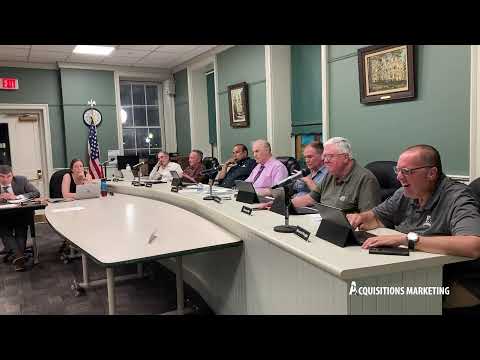
Planning board reviews draft local law to restrict short‑term rentals, flags drafting issues and will prepare redline report
Summary
The board reviewed Introductory Local Law No. 13 (2024) amending town zoning rules on short‑term rentals, raised multiple drafting and enforcement questions, and tasked staff to prepare a redlined report clarifying intent and procedural points for the town board.
The Goshen Planning Board on June 6 discussed a draft local law (Introductory Local Law No. 13 of 2024) that would amend the town zoning code to regulate or prohibit short‑term rentals. Board members said they generally agreed on the intent but identified numerous drafting, clarity and enforcement problems the town board should address before the law moves forward.
Planning board members raised several concerns about the draft: imprecise cross‑references to code sections (a citation to 97.1(c)(1)(g) could not be found in the current code as drafted), inconsistent use of “article” and “chapter,” unclear penalty language (daily fines and how they are assessed), and ambiguous phrases such as “presence of the following shall create a presumption” (board asked whether the presumption requires all listed items or any one). Members also flagged potential overreach in presumptive indicators (for example, occasional visitors or house sitters could be mischaracterized as commercial short‑term rentals) and asked for carve‑outs for non‑compensated temporary occupancy (e.g., house sitters, relatives staying while an owner is away).
The board discussed enforcement mechanics at length: how findings of violation would be made, who would record complaints, the role of the building/code enforcement office and whether a formal technical determination would be made upon request. Members urged clearer procedures for notice, appeal and the evidentiary standard for declaring a short‑term rental violation. The board also asked that new language show which portions are additions and which are deletions so the Department of State will accept the submission.
Planning staff agreed to prepare a redlined draft and a short report that would (1) clean up cross‑references and formatting, (2) propose clearer language for presumptions and enforcement procedures, and (3) identify examples that justify a prohibition (as the board requested) so the town board has a record of the planning board’s concerns and reasoning. The planning board emphasized that while it would not itself adopt or oppose policy, the members want the town board to have clearer statutory language to reduce legal uncertainty and litigation risk.
Staff said the planning board would circulate a draft redline for discussion at a future meeting and that members could also submit written comments to be incorporated.