Get Full Government Meeting Transcripts, Videos, & Alerts Forever!
Get email alerts on the Premises Liability Open And Obvious topic
No spam. Unsubscribe anytime.
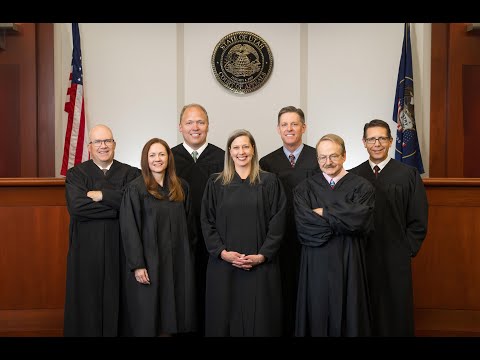
Utah Court of Appeals hears dispute over sidewalk snow pile, pauses for more briefing
Summary
The Utah Court of Appeals heard oral argument on whether a district court erred by granting summary judgment after Kathy Andrews slipped on a pile of snow and ice on a condominium sidewalk, and the panel invited supplemental briefing on whether Utah’s "open‑and‑obvious" doctrine applies beyond traditional premises‑liability claims.
The Utah Court of Appeals heard oral argument on whether a district court erred by granting summary judgment in a slip‑and‑fall case after the plaintiff, Kathy (Cathy) Andrews, fell on a pile of snow and ice allegedly created by neighbor William Thomason at the Stony Brook Condominium Association.
The issue that consumed most of the argument was whether the district court correctly applied the open‑and‑obvious danger doctrine and removed questions of duty and causation from the jury. Attorney Ryan Schreiber, representing Andrews, told the panel that "there are some, really straightforward facts in this case that were undisputed. The is that miss miss Andrews fell on the pile of snow and ice." Schreiber contended the district court prematurely decided factual questions—particularly whether ice under the snow was reasonably observable—and said those questions should go to a jury.
Why the case matters: the court pressed both sides on whether the open‑and‑obvious rule is confined to traditional premises‑liability claims against land possessors or whether it can be applied to ordinary negligence claims when the negligence alleged is creating an unsafe condition on land. If the appeals court clarifies that boundary, it could change how future Utah negligence claims tied to created hazards are analyzed.
Arguments and factual disputes
Schreiber emphasized that the record includes disputed facts relevant to the summary‑judgment standard: whether ice under the snow rendered the condition dangerous, whether lighting at about 8:15 p.m. made the hazard less perceptible, and whether a clear path around the snow pile was actually a practical alternative. He argued the district court erred by concluding as a matter of law that "snow and ice isn't dangerous as a matter of law," and said the case law requires factual inquiry when reasonable jurors might differ.
Counsel for Stony Brook, Ryan Poole, pressed several defenses: classification of Andrews' status as an entrant to the condominium complex, the temporary character of the condition, lack of notice, and the open‑and‑obvious doctrine. Poole told the panel that, as the record stands, Andrews admitted she saw the pile and could have gone around it, and an expert's testimony in the district court supported the view that lighting was sufficient and the condition not dangerous. Poole argued those admissions and unrebutted expert statements justified summary judgment.
Panel's focal questions
Throughout oral argument the judges pushed both sides to identify where the legal line should fall. The panel asked whether courts should treat the open‑and‑obvious inquiry as a duty question that may be resolved on summary judgment only when no reasonable jury could disagree, or instead as a breach question sometimes amenable to summary disposition. The panel also raised whether the doctrine applies to non‑possessors (here, the neighbor alleged to have pushed snow onto the sidewalk) and whether doctrines like assumption of the risk and comparative fault bear on or supplant the open‑and‑obvious inquiry.
On the record, counsel and the panel repeatedly referenced Utah case law (including Hale, Coburn, Downham, Zazedi and Martin v. Safeway) as the authorities framing the analysis; both sides urged the panel to read that lineage consistently with either more categorical duty rules or a fact‑specific breach inquiry.
Court action and next steps
At the close of argument the court said it would "take the matter under advisement" and signaled interest in further briefing on a dispositive question: whether and to what extent the open‑and‑obvious doctrine applies outside of traditional premises‑liability claims to ordinary negligence claims that allege a defendant created a hazardous condition on land. The panel invited supplemental briefing from the parties limited to that question.
What the record shows and what remains unresolved
Key factual points cited during argument include the presence of an “obvious pile of snow” the parties estimated had been in place about eight hours before the fall; the plaintiff’s own testimony that she saw the pile and knew there was a clear path around it; and an expert opinion the district court relied on stating the lighting "was sufficient" in the relevant area. Counsel disagreed about whether Andrews’ contemporaneous acknowledgements in sworn testimony and the expert evidence defeat causation and duty as a matter of law.
The appeals court must now decide whether those disputed inferences were properly resolved on summary judgment or whether they are questions for a jury. The court’s forthcoming opinion may also clarify whether the open‑and‑obvious rule can be applied against a non‑possessor who created a hazardous condition on a sidewalk and whether that doctrine should function as a duty‑defining rule in ordinary negligence claims.
For now, the case remains under advisement and the panel has asked the parties to submit targeted supplemental briefs addressing the scope of the open‑and‑obvious doctrine.