Get Full Government Meeting Transcripts, Videos, & Alerts Forever!
Get email alerts on the Disability Employment topic
No spam. Unsubscribe anytime.
Committee hears HB 4493 to remove overlapping food licensure for blind concession stands
Summary
Rep. Thompson and Department of Labor and Economic Opportunity staff told the committee HB 4493 would exempt concession stands licensed under the Blind and Visually Disabled Act from duplicate state food licensure and fees, preserving employment opportunities for blind entrepreneurs.
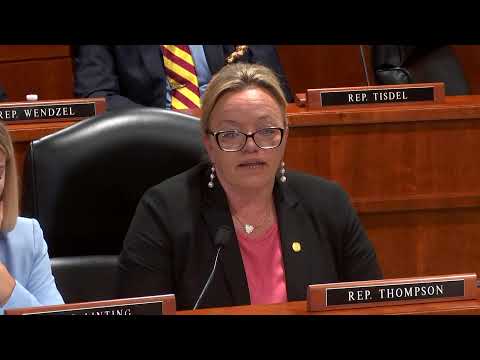
Representative Thompson told the House Regulatory Reform Committee on Oct. 26 that House Bill 4493 would reduce regulatory and financial burdens on blind and visually impaired entrepreneurs who operate concession stands on state property by exempting those stands from additional state food licensure requirements.
“Since 1978, licenses to operate concession stands on state properties have been reserved for blind entrepreneurs,” Representative Thompson said, and he told the committee that the concession program provides employment and business experience to about 40 legally blind individuals currently licensed under the program.
Brennan Smith of the Department of Labor and Economic Opportunity, which houses the bureau serving blind persons, said the federal framework already provides inspections and oversight and that the department conducts inspections frequently. Smith told the committee his agency is coordinating with the Michigan Department of Agriculture and Rural Development (MDARD) on a memorandum of understanding to ensure training and safety expectations match MDARD’s standards.
Representative Dievendorf asked whether waiving fees instead of creating a statutory exemption would address the problem. Thompson and Smith answered that the bill removes duplicative paperwork and oversight beyond a fee waiver and that the department already conducts relevant inspections under the federal program.
Support was noted in the committee record from the Pemberton Center for Blind Children and other stakeholders. The committee received testimony and answered questions; no committee vote on HB 4493 is recorded in the transcript for this meeting.