Get Full Government Meeting Transcripts, Videos, & Alerts Forever!
Get email alerts on the Infrastructure Emergency Repair topic
No spam. Unsubscribe anytime.
Ashe County approves up to $45,000 from insurance proceeds for Riverview Community Center electrical design after flood damage
Summary
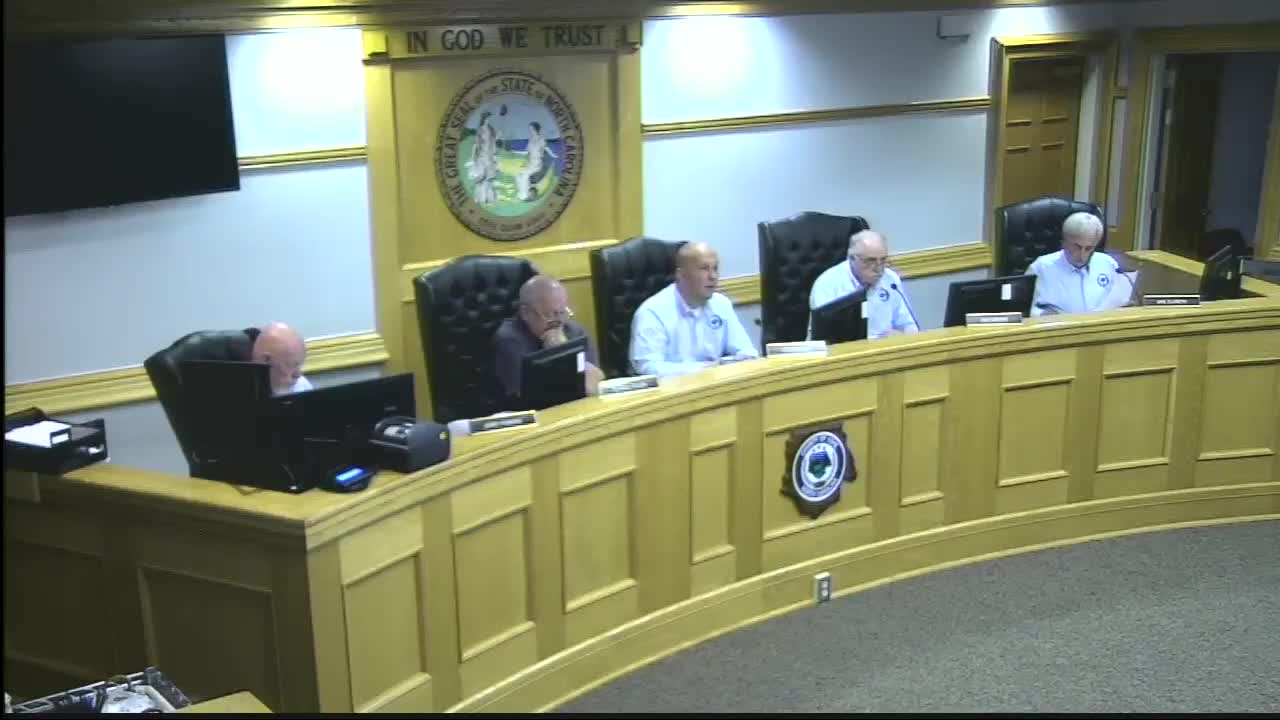
The Ashe County Board of Commissioners on June 2 approved up to $45,000 from insurance proceeds to pay for an electrical engineering design for the flood-damaged Riverview Community Center.
The Ashe County Board of Commissioners on June 2 approved up to $45,000 from insurance proceeds to pay for an electrical engineering design for the flood-damaged Riverview Community Center.
The request came from Steve Trinkle, a recent board member with the Riverview Community Center, who said the center — a county-owned facility that provides food distribution, a thrift shop, a hair salon and community events for the county’s western half — remains unsafe in parts after Hurricane Helene. “The greatest risk to the Riverview Community Center right now is in the electrical system,” Trinkle said. "We gotta fix the electrical. We have to fix that." The county asked the consulting firm Clark Nexon to produce a design, and Trinkle said Clark Nexon quoted $38,000; commissioners amended and approved the request at a not-to-exceed $45,000 to allow a modest contingency.
The center’s volunteers and board members described extensive recovery work already completed, including water and septic repairs, replacement of propane heaters and removal of mud and damaged materials. But presenters said the building’s underground conduit is filled with mud and water and will likely require complete replacement to meet code. The board was told the building is about 75 years old, that cosmetic work does not address aging infrastructure and that a more extensive repair package or relocation would be costly.
Patty, speaking for county staff, said the building has not been declared “substantially damaged” by FEMA — a threshold that would trigger federal acquisition or elevation programs. “In order for FEMA to come in and do an acquisition project, the building ... has to be damaged more than 50% of the value. So we have to show $2,400,000 of damage. When the floodplain administrator went out, I think he said it was 30%,” Patty said. County presentations put the facility valuation at $4,800,000 and noted FEMA requires damages above $2,400,000 to qualify for certain assistance. County staff said they are pursuing documentation that could add engineering costs to the measured damages and potentially change FEMA’s determination, but stressed that a substantial-damage declaration would require demolition or elevation if achieved.
Presenters laid out a set of options: (1) limited maintenance and repairs to keep the building functional for the near term; (2) longer-term replacement on higher ground, a process that would likely take five years or more to acquire land, design and build; or (3) a hybrid approach keeping the gym while rebuilding other parts. Trinkle said a full repair estimate could exceed available insurance funds and suggested $500,000 is a plausible low-end figure for required repairs beyond the electrical work; a roof repair estimate cited in the presentation was about $105,000.
Commission discussion focused on the scope of the electrical design contract, competitive bidding and whether the county should fund engineering from insurance proceeds. Trinkle said the firm had been on-site and was already engaged on related work; commissioners chose to authorize the contract to the county and limit the authorization to $45,000. A motion to approve the engineering contract, funded from insurance proceeds, was made, amended to a not-to-exceed $45,000 limit, seconded and approved by voice vote.
Next steps described by presenters include completing the electrical design, using those documents to solicit bids from electrical contractors, and returning to the board with specific repair estimates and additional funding requests as necessary. Presenters asked commissioners to coordinate when seeking state and federal assistance and to consider long-term options for moving or replacing the facility.
The Riverview Community Center’s leaders asked the public to continue supporting volunteer-run operations, including a regular fish fry that resumed quickly after the building reopened for events.
ENDING: The county approved the engineering design step to address immediate life-safety concerns; further repairs or a replacement facility will require additional engineering, bidding and capital funding decisions over coming months.