Get Full Government Meeting Transcripts, Videos, & Alerts Forever!
Get email alerts on the County Budget topic
No spam. Unsubscribe anytime.
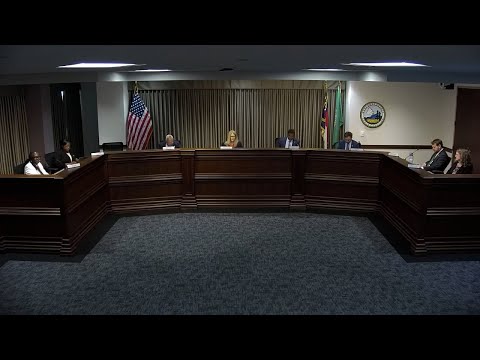
Buncombe County adopts FY2026 budget with 2.9¢ tax increase after lengthy debate
Summary
The Buncombe County Board of Commissioners adopted a $433.1 million fiscal 2026 budget on June 3, voting 5–2 to raise the county property tax by 2.9¢ amid post‑Hurricane Helene revenue losses and sustained public comment urging full school funding.
The Buncombe County Board of Commissioners voted 5–2 on June 3 to adopt a $433,096,618 fiscal year 2026 spending plan that raises the county property tax by 2.9¢ to cover an estimated $15.2 million in additional property‑tax revenue needed to balance the budget.
The vote followed months of work by county staff and three spring work sessions after the county’s finances were hit by revenue losses tied to Hurricane Helene. John Hudson, the county’s budget director, told the board that “between the loss of revenue and the inability to use fund balance, this creates a deficit of around $25,000,000 less than our fiscal year 25 amended budget.” The approved plan reduces department operating budgets, defers capital projects and delays a $1.9 million contribution to an other‑post‑employment benefit trust to limit the tax increase from a previously proposed 3.26¢ to 2.9¢.
Why it matters: Commissioners said they sought to protect essential services while responding to a sudden decline in revenues. Education remains the single largest general‑fund expenditure at about 28 percent of the budget, but the county reduced local current expense to K‑12 by $4.1 million and moved other adjustments to preserve core services including 9‑1‑1, emergency medical response and mandated human services.
Key facts and figures: the FY2026 general fund totals $433,096,618; projected revenue declines from the prior year were roughly $11.5 million; the tax increase produces about $15.2 million in additional property tax revenue and is estimated to raise $101.50 annually on a home assessed at $350,000 ($8.45 per month). The county also recommended raising the Asheville City Schools (ACS) supplemental district tax from 10.62¢ to 11¢, a change included in the ordinances the board adopted.
Public comment and schools: More than 20 speakers addressed the board at the public comment period, with dozens of teachers, parents and students urging the commissioners to fully fund Buncombe County Schools (BCS) and Asheville City Schools. Commenters warned layoffs and program cuts if supplemental funding was not restored. Several speakers noted that cuts would disproportionately affect low‑income students, special‑needs services and support staff.
Board deliberations and dissent: Commissioners described the year as the most difficult budget cycle in recent memory. Two commissioners voted against the budget. Commissioner Al Sloan said he would vote no because the package “is too reliant on luck” and expressed concern about exhausting the county’s fiscal tools; Vice Chair Martin Moore also voted no. The five who voted in favor — Chair Amanda Edwards, Commissioners Carrie Wells, Martin Ball, Candace Whitesides and Mary Horton — said the plan balanced competing needs across a county with uneven recovery from Helene and preserved legally mandated services.
Related actions and safeguards: the board adopted two ordinances and two resolutions tied to the budget: the annual funds budget ordinance (adopted 5–2), a capital projects ordinance (adopted), a resolution directing use of opioid settlement funds, and a resolution to permit the possible use of Article 39 sales tax revenue for school operations if state legislation allows it. Commissioners passed a separate, preemptive resolution stating their intent to allocate Article 39 receipts to return schools to FY2025 funding levels and to seek a joint public recommendation from a committee including school board members.
Recusals and appropriations: the board handled several recusal motions under North Carolina law for commissioners who serve on nonprofit boards that receive county funding. In each case the commissioner recused, and the remaining members voted to approve the listed appropriations (Economic Development Coalition, Open Doors of Asheville, Arts AVL, Via Health).
What’s next: staff and the board said they will track pending state legislation that could allow Article 39 sales tax proceeds to be used for school operations and will revisit the budget if state replacement revenue or new legislation provides revenue. Several commissioners said placing an ACS supplemental tax increase on a future ballot could be a transparent option to restore school funding.
Votes at a glance: - Annual funds budget ordinance (FY2026): motion to adopt approved. Vote: 5 yes, 2 no (No: Commissioner Al Sloan; Vice Chair Martin Moore). Outcome: approved. - Capital projects funds ordinance: approved (voice vote). Outcome: approved. - Resolution to direct use of opioid settlement fund: approved (voice vote). Outcome: approved. - Resolution authorizing use of Article 39 sales tax for school operating costs (contingent on state law): approved unanimously. Outcome: approved. - Multiple recusals and subsequent appropriations for nonprofit partners (Economic Development Coalition; Open Doors of Asheville; Arts AVL; Via Health): recusals granted where commissioners had board roles; appropriations approved by remaining board members. Outcome: appropriations approved following recusals.
Ending: Commissioners and staff emphasized the budget was a compromise to maintain essential services and begin recovery while awaiting potential state or federal revenue assistance. Several speakers and school officials said they will continue discussions with county leaders and monitor state actions that could alter local financing options.