Get Full Government Meeting Transcripts, Videos, & Alerts Forever!
Get email alerts on the Public Safety Technology topic
No spam. Unsubscribe anytime.
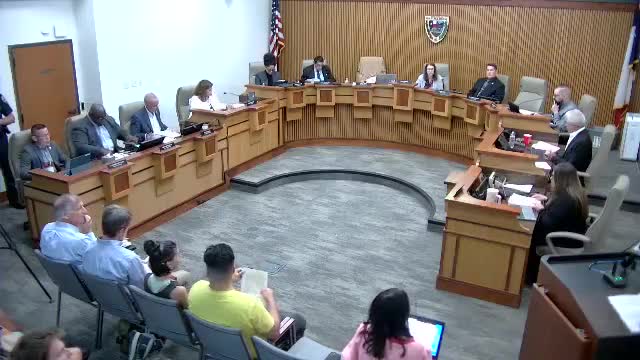
San Marcos council declines expansion of Flock license-plate cameras after hours of public comment
Summary
The City Council voted 5-2 to deny a proposed contract amendment to add 19 Flock license-plate readers and extend data-retention terms, after public testimony both for and against the cameras and questions about data access and civil liberties.
The San Marcos City Council voted 5-2 on June 3 to deny Resolution 2025-18R, a proposed amendment to the city’s contract with Flock, Inc., that would have added 19 automated license-plate readers and extended data-retention provisions.
Supporters said the cameras help solve serious crimes. “I am for additional flock cameras and I am for keeping license plate data safe for the industry standard of 30 days,” said Cindy Laird, a San Marcos homeowner, during the meeting’s long public-comment period. Other supporters told the council the devices had helped police locate murder suspects and recover missing persons.
Opponents said the networked cameras threaten civil liberties and could be used by federal agencies or other third parties. “Mass surveillance does not make us safer,” said Sam Benavides, who urged the council to reject the expansion. Other speakers raised concerns that outside agencies — including federal immigration authorities — could obtain data stored in Flock’s system even if the local police decline to share.
Council members asked detailed questions about how Flock’s network operates, how alerts are shared, and whether third-party hosts or cloud providers retain copies of images. Officials and a Flock representative explained that the city pays for hosting via Flock’s portal (hosted on commercial cloud services) and that the city’s policy sets a 30‑day rolling retention; they also said some anonymized, aggregated snippets may be used by the vendor to improve its product.
But multiple council members said those responses did not resolve their concerns about the networked nature of the system, the possibility of access by other jurisdictions or federal agencies, and the limits of local control. “It does not matter what internal policies we have in place when it comes to a subpoena by the feds,” Council Member Amanda Rodriguez told colleagues during debate.
The motion to deny was made during the meeting’s consent‑item debate and was approved by a 5‑2 roll call. The council also directed staff to keep open channels for future policy review and to return any vendor contract documents already requested by council members, including audit records and the proposed memorandum of understanding.
Council members and staff said they expect a continued public discussion; speakers on both sides urged the council to pair public-safety investments with transparency measures and to secure independent audits before changing retention or network rules.
Ending — The denial halts the immediate purchase and installation of 19 additional Flock cameras and keeps the city’s retention and sharing practices unchanged for now. The city manager’s office and the police department will continue to engage with the public and return with additional documents and clarified contract language as requested by council members.