Get Full Government Meeting Transcripts, Videos, & Alerts Forever!
Get email alerts on the Behavioral Health topic
No spam. Unsubscribe anytime.
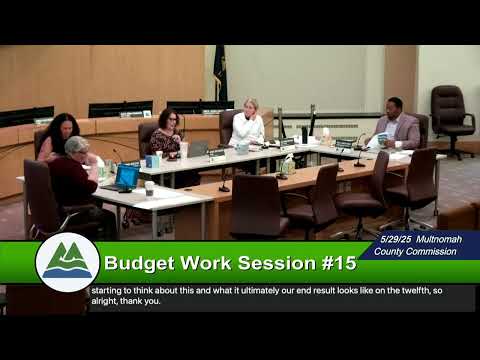
Commissioners approve $470,000 from OHA to expand civil‑commitment staffing; some members push state for more funding
Summary
The board accepted $470,000 in ongoing Oregon Health Authority funding to add staff for involuntary civil‑commitment processes, data reporting and diversion strategies. Commissioners urged stronger state funding and committed to pursue advocacy.
The Multnomah County Board of Commissioners approved a $470,000 ongoing award from the Oregon Health Authority to strengthen the county's involuntary civil‑commitment processes, improve data reporting and increase diversion efforts.
Brady Estevez, finance manager for Behavioral Health and Corrections Health, presented the modification and said the funding will add two positions: a behavioral health manager to oversee involuntary commitment coordination and compliance, and a program specialist to support pre‑ and post‑commitment work, data collection and evaluation. JL Sender, interim deputy director of Behavioral Health, provided 2024 activity counts: 2,303 investigations, 1,824 filings after the initial 72 hours, 408 14‑day diversions, 53 hearings and 35 commitments.
During discussion Commissioner Moyer criticized the Oregon Health Authority funding level as insufficient for long‑term benefit and argued that civil commitment only yields durable outcomes if it is followed by sustained treatment and supports. "A civil commitment in Oregon, if it were to be the full 180 days under statute, costs an average of $321,000 per civil commitment," Moyer said, urging additional state support. Commissioners agreed to pursue ways the board can press for greater funding and directed staff to work with Stacy Cohen in Government Relations to identify advocacy steps.
Staff emphasized that the OHA award would support compliance with new state reporting expectations and help expand diversion strategies to reduce criminal justice involvement for people experiencing severe behavioral health crises. The board approved the appropriation unanimously and asked staff to report back on implementation timelines and metrics for diversion and post‑commitment outcomes.
The vote: R3 (HD01222) approved on roll call, 5–0.
What this means: The funding expands county capacity for managing civil commitments and reporting to the state, but commissioners signaled the amount is unlikely to close broader treatment and aftercare gaps without additional state or federal investments.