Get Full Government Meeting Transcripts, Videos, & Alerts Forever!
Get email alerts on the Governance And Procedure topic
No spam. Unsubscribe anytime.
County attorney clarifies use of roll calls, divisions and FOIA changes for county committees
Summary
County Attorney Lester addressed committee members about when roll‑call votes are required, how to request a division of the assembly, limits on "friendly amendments," and recent 2025 FOIA changes affecting communications among justices of the peace.
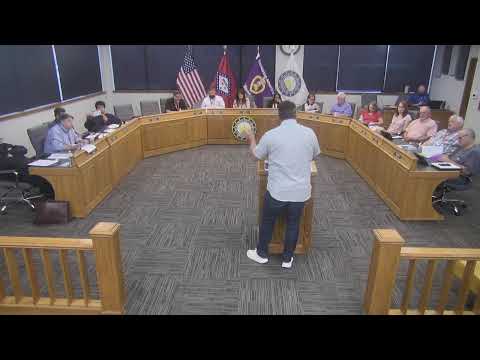
County Attorney Bridal Lester briefed the County Services Committee on parliamentary procedure and recent changes in open‑meeting law, answering members’ questions about roll‑call votes, divisions of the assembly, amendments and FOIA communications.
Lester told the committee that under Robert’s Rules a roll‑call vote must be made by motion but that, in a committee of the whole, Robert’s Rules do not permit ordering a roll‑call vote; members can instead request a division of the assembly (a standing or show‑of‑hands verification) if they doubt a voice vote. He said the quorum court’s practice of recording yeas and nays on ordinances in full‑court meetings (a change made in about 2018) arose to provide public transparency but that recording individual votes in committee meetings is not standard procedure under Robert’s Rules.
Lester also advised there is no formal concept of a “friendly amendment” in Robert’s Rules; an amendment must be made, taken up, voted on and then, if adopted, is incorporated into the main motion. He noted a motion to table is not debatable and that a motion only needs a simple second to proceed; if a motion is seconded informally and the assembly continues, Roberts treats that as waived.
On open‑meetings law, Lester explained the 2025 legislative changes that relaxed some prior restrictions on back‑and‑forth communications among members so long as members are not polling one another or soliciting votes for a particular outcome; he said members may circulate statements of position without recruiting votes so long as they do not create a back‑and‑forth discussion among a quorum that would constitute an improper meeting.
His comments were intended as legal and procedural guidance to the committee; no action was taken.