Get Full Government Meeting Transcripts, Videos, & Alerts Forever!
Get email alerts on the Reentry And Alternatives To Incarceration topic
No spam. Unsubscribe anytime.
Community Rebuilding Initiative reports 30 participants in first 30 days; program focuses on treatment, housing and fatherhood
Summary
Program leaders told the committee they served 30 residents in the first 30 days, most charged with low‑level "lifestyle" crimes; 76% of participants are fathers and organizers emphasized housing and substance‑use treatment partnerships.
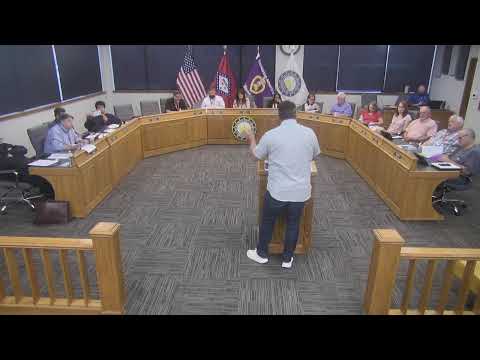
The Community Rebuilding Initiative (CRI) reported initial results to the Washington County County Services Committee: the program accepted its first participants on April 29 and served 30 residents in the program’s first 30 days.
CRI Director Nick Robbins told the committee most residents are in the program for repeated low‑level offenses—failure to appear, possession of controlled substances and theft—and described the cohort as frequent users of the county jail: on average the participants had been booked into Washington County Jail nine times. The average bond across participants was reported at $53,890, Robbins said, and many residents arrive with long incarceration spans that the program now aims to shorten through faster screening and intake.
Robbins said 76% of residents are fathers; 35% lived with their children before incarceration and 48% had daily contact. Substance‑use indicators were high: 48% reported past opioid abuse and 52% identified methamphetamines as their drug of choice; 45% had never participated in a substance‑abuse treatment program. Robbins highlighted adverse childhood‑experience statistics among residents and said the program’s therapeutic‑community model seeks to build peer support, treatment access and housing connections.
CRI uses a rapid vetting process with sheriff’s office cooperation to transfer eligible residents from jail—often within two to three days—then provides on‑site group counseling and links to behavioral‑health partners. Program staff reported five transitional housing partners already engaged and said staff will begin weekly housing‑partner meetings. Robbins also announced an on‑site fatherhood cohort run in partnership with UAMS.
Bill Esri, a CRI board member, told the committee the program moves participants from “no hope to hope,” and that he has observed durable behavior change among participants and alumni. Committee members asked about officer staffing at the CRI site and safety; Robbins said the sheriff’s office assigned a rotating team of officers to the site and a lieutenant supervises operations and vetting.
Robbins reported that of the first 30 participants 19 remained in the program at the time of the report; two were released on probation and declined transitional housing, two bonded out, two were removed (one voluntary, one for behavioral issues), one was transported to another county and one was sent to an ACC facility for a six‑month violation. Robbins told the committee the program expects better outcomes as it shortens the jail dwell time prior to intake.
No committee vote or formal action on funding was taken; the presentation was an informational update to the committee.