Get Full Government Meeting Transcripts, Videos, & Alerts Forever!
Get email alerts on the Taxi Fares topic
No spam. Unsubscribe anytime.
SFMTA makes taxi upfront-fare pilot permanent, keeps meter-based cap
Summary
The SFMTA Board voted to make the taxi upfront fare program permanent, retaining a requirement that upfront taxi fares remain within 10% of the regulated taxi meter; board also approved a code cleanup reducing the continuance notice for administrative hearings from five business days to 72 hours.
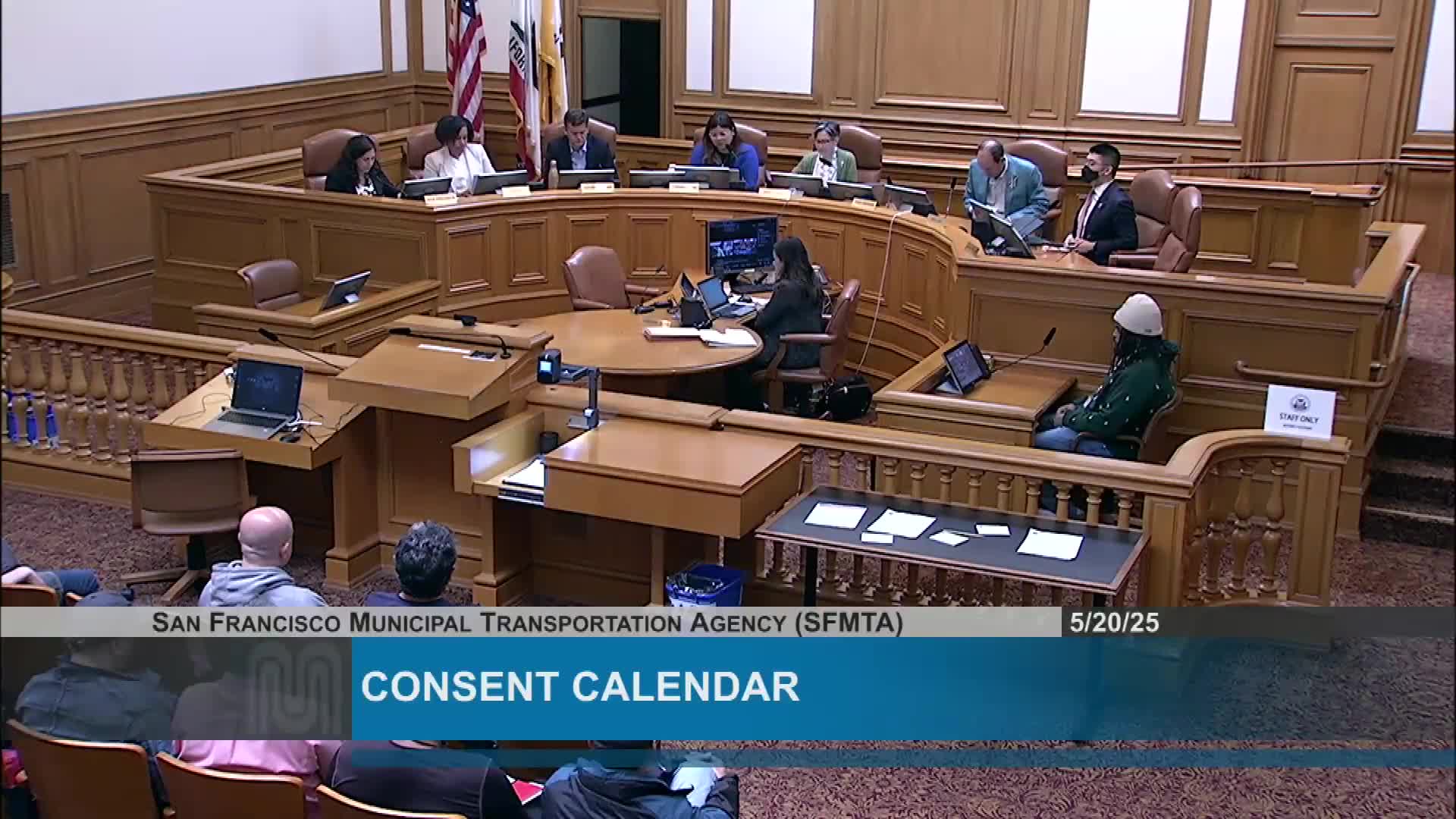
The San Francisco Municipal Transportation Agency Board on Wednesday voted to make the agency’s taxi upfront-fare pilot a permanent program, keeping a requirement that taxi e-hail fares be within 10% of the regulated taxi meter rate.
Board members approved the change during the meeting after hearing staff presentations and minutes of public comment from drivers, medallion owners and industry representatives who said the program has increased driver earnings and expanded taxi service citywide.
The agency said the upfront-fare program — introduced in late 2022 and involving taxi e-hail apps and third-party app referrals — helped participating drivers earn roughly 25% more in average quarterly fare revenue than nonparticipating drivers. “Pilot drivers who provide both types of pilot trips earn about 25% more in average quarterly fare revenue than drivers who do not participate,” principal planner Maddie Ruvolo told the board. The staff presentation said the pilot produced about 56,000 pilot trips per quarter and helped diversify trip locations away from the downtown core.
The resolution also makes a small cleanup change to the transportation code tied to taxi administrative hearings: staff recommended, and the board approved, shortening a deadline inconsistency so that taxi permit holders must request a continuance at least 72 hours in advance (instead of a 5 business-day requirement that conflicted with another code section).
Why it matters: Taxi industry representatives told the board the program is helping to stabilize the local taxi economy and restore driver opportunities lost during and after the pandemic. Drivers and company managers said third‑party referrals (for example, when a rideshare app transfers a trip to a taxi) have expanded service into neighborhoods that historically had fewer taxi pickups.
What the board heard: During public comment, drivers from Flywheel, Yellow Cab and other companies urged a permanent program. Flywheel chairman Hansu Kim said more than $10 million in fares have been referred to taxis through the partnerships and that other third-party platforms have expressed interest in joining. Taxi Workers Alliance leaders pressed for continued protections: “Taxi passengers may appreciate being driven by RedLane, but they can't open Uber and ask for a cab,” said Evelyn Engle of the Taxi Workers Alliance, urging careful oversight of third‑party service rules.
Program rules and oversight: Staff emphasized the program remains voluntary for individual drivers and companies, and the board accepted staff’s recommendation to continue the rule that upfront taxi fares through taxi e-hail apps be based on the taxi meter — within a 10% variance. The Citizens Advisory Council and the Taxi Workers Alliance both recommended metric-based fares; the CAC favored keeping the 10% rule and the union suggested a tighter 5% tolerance, which staff said would be too narrow for real-world conditions.
Board action: The motion to make the program permanent passed on a recorded roll call. Secretary Silva recorded aye votes from Director Chen, Director Felder, Director Hemminger, Director Henderson, Director Hinsley, Director Kahina and Chair Tarlow. (The motion and second were called from the dais; the transcript does not record mover/second by name.)
Next steps: Staff will continue quarterly reporting on the program’s metrics, including impacts on paratransit taxi service and driver earnings; staff also said program rules can be adjusted if data later show unintended impacts. The pilot, as approved, continues the city’s monitoring and enforcement levers under the director of transportation’s program rules.
Ending: The Board’s action keeps the upfront fare mechanisms in place while retaining meter‑based consumer protections that industry stakeholders and the Citizens Advisory Council said riders and drivers expect.