Get Full Government Meeting Transcripts, Videos, & Alerts Forever!
Get email alerts on the Zoning Signs Scoreboards topic
No spam. Unsubscribe anytime.
Brentwood planning commission backs ordinance change to allow larger athletic scoreboards
Summary
The Planning Commission voted to recommend approval of an amendment to Section 78-420(c)(4) to increase permitted electronic message display area and add limits on scoreboard advertising, height, orientation and number per campus. The change responds to a request from Brentwood Academy.
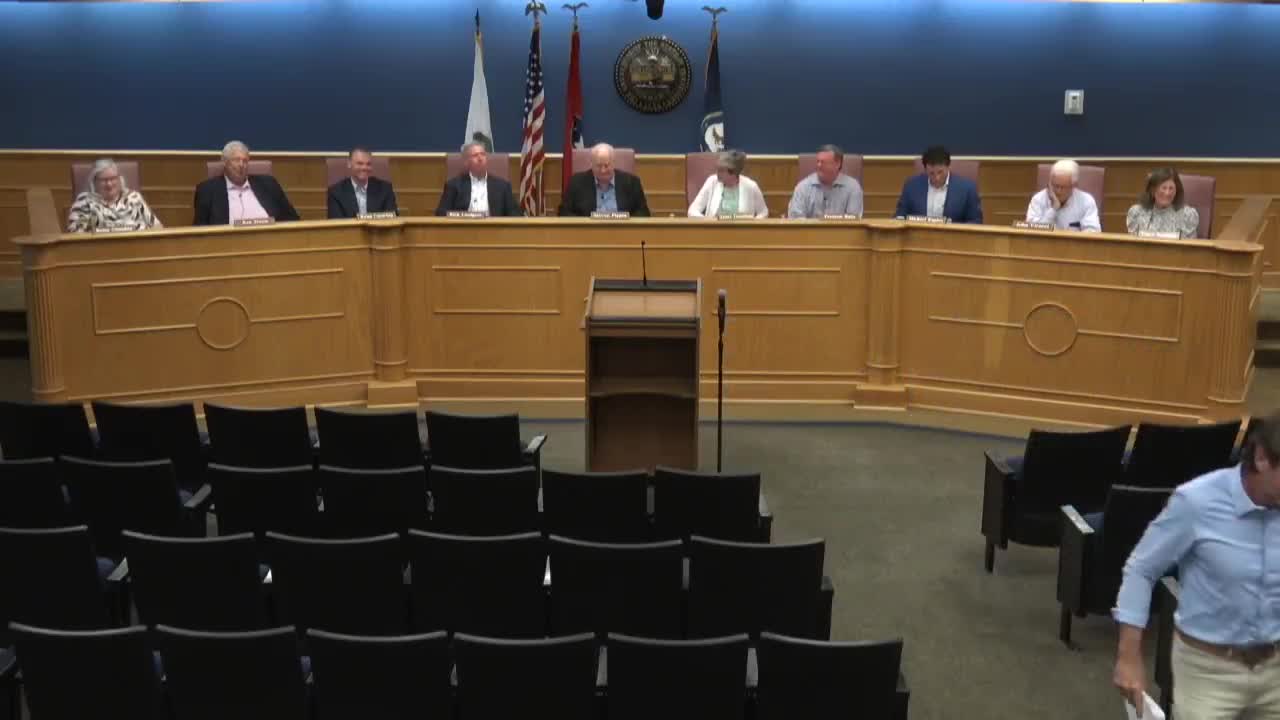
The Brentwood Planning Commission voted June 2 to recommend approval of an ordinance amending Section 78-420(c)(4) of the zoning code to change signage allowances for athletic fields and scoreboards.
City Director Todd Petrowski said the request was initiated by Brentwood Academy and intended to align the private school's signage allowances with larger scoreboards already installed at some public high schools. "This request was initiated by Brentwood Academy," Petrowski said. He told the panel staff revised the ordinance to increase the permitted electronic message display area from 200 square feet to 710 square feet and to add several limitations.
Under the proposed language, the ordinance would: allow the electronic message display to be used only for score and timekeeping; permit up to 100 square feet of commercial advertising on the scoreboard structure; cap total scoreboard height at 40 feet; restrict boards to single-sided displays; and allow only one scoreboard per campus. Petrowski said existing ordinance language already permits advertising on the message display area.
Commissioners asked whether the change distinguishes between older electronic scoreboards and newer digital displays and whether other athletic fields or non‑school users could install such boards. Petrowski and other commissioners clarified that the change is intended to address size and display‑area limits rather than the underlying technology and that the code defines "athletic event" narrowly (excluding practices and scrimmages). He also said the code limits operation to one hour before an athletic event and 30 minutes after the event.
Commissioners discussed potential proliferation and cost. A commissioner noted the structures are "insanely expensive" and often funded by parent‑teacher organizations or booster clubs, which the staff and other commissioners offered as a practical limit on rapid expansion.
Petrowski said the matter will go to the Board of Commissioners for public hearing on Monday, June 9, with a second and final reading proposed for Monday, June 23. The Planning Commission made a motion to forward a recommendation of approval; Commissioner Travis moved and Commissioner Bain seconded, and the motion passed on the Planning Commission vote.
The ordinance revision would apply to the city's S/I (service institution) zoning districts and, if adopted by the Board of Commissioners, would alter the sign allowances for athletic fields across affected campuses in those districts.