Get Full Government Meeting Transcripts, Videos, & Alerts Forever!
Get email alerts on the County Finance Budget topic
No spam. Unsubscribe anytime.
Grand County forecasts slight revenue contraction; staff flag $1.1M of commitments that could draw on general fund
Summary
Staff reported a near‑term revenue forecast that shows revenue roughly 0.8% below earlier projections and said the county may need to use fund balances to honor previously authorized expenses. Commissioners asked for a red‑line accounting and scheduled a working session ahead of the next meeting.
Grand County staff told commissioners in a May 20 special workshop that recent tax receipts have narrowed the gap with budgeted targets but that the county still faces a modest revenue contraction for 2025 and a set of one‑time and recurring commitments that could require transfers from fund balances.
At a glance: staff presented a revenue update showing the county has received about 95 cents on the dollar of what was budgeted to date. Using a three‑year, 12‑month moving total method, staff said the current year projection is roughly a minus 0.8% contraction (approximately a 1% decline). That projection followed a month in which receipts were materially closer to budget than previously — staff said they had reduced the year‑to‑date shortfall from about 12% below expectations to roughly 5% below.
Why it matters: county staff and commissioners said shrinking revenue combined with a number of approved capital and one‑time expenses means the commission must confirm balances and, where necessary, identify transfers or cuts ahead of the formal budget season.
Key figures discussed
- Staff presented a broad operating‑year snapshot showing a typical annual budget scale of roughly $22 million and a combined fund balance figure the packet lists as approximately $9,000,466 before accounting for identified commitments.
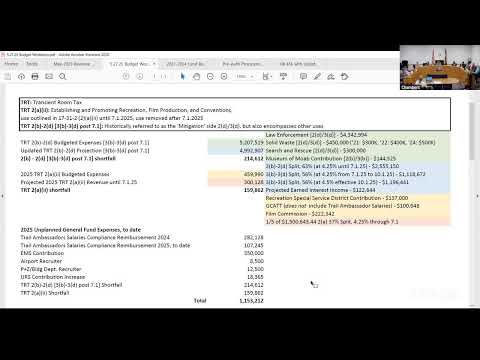
- A line of previously approved but not‑fully funded items appearing on the county's procurement/capital lists totaled about $1,486,100 in staff analysis; staff also cited a ledger of approved expenses amounting to $1,153,212 that, as configured, would require transfers from the general fund to complete.
- Staff repeatedly noted that some portions of the figures remain to be reconciled: one estimate of general‑fund exposure cited in the meeting was approximately $1.1 million, a number staff said could shift as the team refines the 2023–2024 figures, receives outstanding component‑unit financials, and follows up on audit findings tied to TRT allocations.
Budget posture and next steps
Commissioners asked staff to prepare a clearly marked, "red‑line" accounting showing committed vs. available funds and to identify which items are one‑time capital versus ongoing operating commitments. Administrators and commissioners agreed departments should be notified to prepare budget requests that assume downward revenue pressure for the coming budget season, rather than expecting routine increases.
On procedural next steps: the commission set a short, focused working session on the Tuesday before the next commission meeting (3:30 p.m.) to review line‑by‑line reconciliations, the status of component‑unit filings (for example, the Recreation Special Service District), and any memo from the county attorney clarifying TRT treatment. Staff said April receipts and other monthly data typically post in late May (around the 22nd–24th), and those numbers will further inform any amendments.
Accounting and fund‑flow reminders
Staff explained the county maintains both a general operating fund (fund 10) and a capital/capital projects fund (fund 34). Participants discussed the relative fungibility of transfers between funds (transfers are permitted but subject to accounting rules and policy), and staff advised that some previously pre‑authorized procurement items are ongoing line items while others are one‑time capital projects requiring explicit allocation.
No votes were taken at the workshop. Commissioners and staff emphasized they intend to avoid rushed decisions: the group prioritized producing accurate reconciled numbers and documentation before any formal budget amendments or transfers are placed on a public agenda.