Get Full Government Meeting Transcripts, Videos, & Alerts Forever!
Get email alerts on the Juvenile Justice Restorative topic
No spam. Unsubscribe anytime.
Board members debate restorative‑justice pilot; county will not pursue program now
Summary
Board members reviewed a proposed Full Circle Restorative Justice pilot for at‑risk youth and raised victim‑protection concerns; staff reported the program has not been implemented and said the county will not pursue it now.
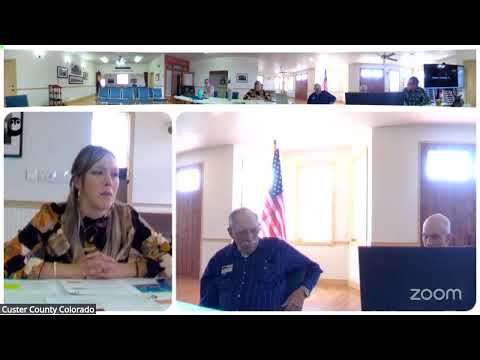
Custer County Board of Health members discussed a state‑funded restorative‑justice pilot called Full Circle Restorative Justice during the May 22 meeting and indicated the county will not pursue the program at this time.
Public health staff introduced the program as a grant‑funded alternative to traditional discipline that focuses on prevention, intervention and leadership opportunities for at‑risk youth. Staff said the program is active in other nearby counties (Fremont and Park) and had been presented to county staff for consideration but not adopted in Custer County.
A board member strongly objected to the concept in some cases, saying such approaches can require victims to "restore your relationship with who abused you," and that the member would not support requiring restoration between an adult abuser and an abused person. The exchange included a clear expression of concern about potential harm to victims and a statement from staff that no county action had been taken to implement the program. Staff said, "they have approached us. We have not done anything."
After discussion, public health staff told the board they would not pursue the program in Custer County and would focus efforts on other priorities. No formal vote on adopting the restorative‑justice program was recorded in the transcript.
Context
Staff said Full Circle Restorative Justice is grant‑funded and intended to reduce punitive responses to student behavior by training school administrators and educators in restorative practices; the county has been approached about piloting it but has not implemented the program locally. The board’s concerns centered on potential harms in cases involving serious abuse and the appropriateness of mandating restorative processes for victims.
Next steps
Public health staff said they would relay the board’s concerns back to program proponents and redirect effort and grant‑seeking toward other child‑focused services that the board prioritized (for example, early‑childhood intervention for 1–3‑year‑olds).