Get Full Government Meeting Transcripts, Videos, & Alerts Forever!
Get email alerts on the Broadband topic
No spam. Unsubscribe anytime.
House passes Michigan Broadband Accessibility Act to exclude federal grants from state taxable income
Summary
The Michigan House on May 21 passed House Bill 4287, the Michigan Broadband Accessibility Act, to exempt federal broadband grant money from state taxation; the measure passed 97-8 and was given immediate effect.
The Michigan House of Representatives on Wednesday passed House Bill 4287, the Michigan Broadband Accessibility Act, which would exempt federal broadband grant money from being treated as taxable income under state law, 97 to 8. The House also ordered the bill to take immediate effect.
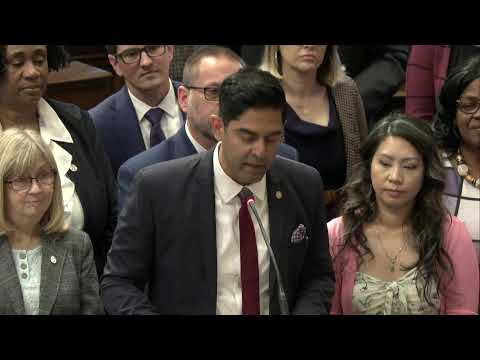
Representative Ryan Bonack, the bill sponsor, told the House the change would ensure taxpayer dollars and federal grants “go completely toward the expansion of reliable internet access” and would remove a state-level tax barrier that he said slows deployment and raises costs for residents in rural areas.
"The state currently considers a taxpayer‑allocated grant as taxable income. This only slows the expansion of reliable affordable internet," Bonack said on the floor. He argued the bill would help expand telehealth, online schooling and other services that rely on broadband.
Clerk calls during the roll confirmed individual aye votes including Representative Wirtz, Representative Fairbairn, Representative Wolford and Representative Arbitt; the clerk later announced the final tally, 97 aye votes and 8 nay votes. With a majority in favor, the bill passed and the majority floor leader moved for immediate effect; that motion was ordered by voice and standing vote.
The bill, as introduced, amends the Income Tax Act of 1967 to exempt certain federal grant proceeds related to broadband expansion from being treated as taxable income for the recipient. No amendments were offered during third reading.
Representative Bonack framed the bill as targeted relief for rural communities and urged a yes vote. The record roll call was completed on the floor before the clerk announced the vote tally and passage.
House Bill 4287 now proceeds to the next steps required under the state legislative process after passage and the House’s order of immediate effect.