Get Full Government Meeting Transcripts, Videos, & Alerts Forever!
Get email alerts on the Drones topic
No spam. Unsubscribe anytime.
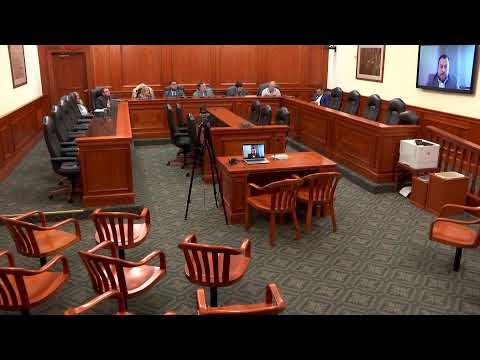
Michigan panel hears industry warnings on foreign-made drones, supply-chain risks
Summary
The Michigan House Oversight Subcommittee on Homeland Security and Foreign Influence heard a virtual briefing from the Association for Uncrewed Vehicle Systems International on security, supply‑chain and policy options for drones, with members pressing for state-level procurement and enforcement tools.
The Michigan House Oversight Subcommittee on Homeland Security and Foreign Influence heard a virtual presentation on domestic drone security and supply‑chain risks from Scott Schaffman, associate vice president and counsel for regulatory affairs at the Association for Uncrewed Vehicle Systems International (AUVSI).
Schaffman told the committee that U.S. and allied manufacturers can deliver many operational capabilities used by public safety and infrastructure agencies — wildfire mapping and prescribed burns, power‑line and bridge inspections, and persistent surveillance for perimeter security — but that hardware and firmware from foreign adversaries create long‑term national security and operational risks.
“The bottom line here is that you can’t secure what you can’t trust,” Schaffman said, arguing that vulnerabilities embedded in hardware and firmware can allow data exfiltration or remote control even when U.S. software runs on a platform.
Why it matters: Committee members framed the issue as both a homeland‑security and procurement problem. Members referenced recent incidents raised in Michigan — including a reported drone overflights near TACOM/Detroit Arsenal and Camp Grayling — and asked whether state law and grant programs should shift purchasing toward trusted domestic suppliers and fund replacements for existing foreign‑made platforms.
Schaffman described a coalition he represents, the Partnership for Drone Competitiveness, and cited federal steps already taken to limit procurement of certain adversary systems. He referenced the American Security Drone Act and a provision he identified as “section 17 o 9” of the most recent National Defense Authorization Act that, he said, requires a determination that named entities present an unacceptable national security risk and can lead to those systems being blocked from use of U.S. radio spectrum after a one‑year designation period.
Industry capabilities and risks: Schaffman gave examples of commercial and allied systems used for public safety and infrastructure work, including a partner that recently passed 500,000 flights and companies producing tethered perimeter systems, 3‑D inspection tools and long‑endurance platforms for pipeline work. He also warned that firmware and hardware can be “security blind spots,” and cited the 2017 Chinese national intelligence law — specifically Article 7 and Article 14 as recited in his remarks — to explain why he said it is impossible to guarantee that platforms built in China are free from state influence.
He also said supply‑chain concentration posed resilience risks: “Nearly 90% of small commercial drones in use today come from a single Chinese company,” Schaffman told the committee, and he said that a sudden cutoff of parts, updates or support could leave public‑safety agencies grounded.
Policy examples and financing: Schaffman described North Dakota’s recent $9,000,000 appropriation to replace state‑owned uncrewed aircraft systems as a model for a “rip and replace” approach. He said the federal government has used tariffs and laws to restrict procurement of adversary systems and that industry and the Department of Commerce are working on rulemaking for connected drones and telecommunications devices.
Committee response and public comment: Committee members asked detailed questions about detection and mitigation authorities, the role of the Federal Aviation Administration, and how state and local governments might lawfully intervene to detect or stop nefarious drone activity. Members signaled interest in drafting a package of bills covering procurement, technology standards and enforcement. No formal votes or motions were taken at the hearing.
During the public comment period, Richard Smith Sr., who identified himself as a health‑care worker, told the committee he had been followed by drones and said he possessed evidence; he asked the committee to accept that material for review. His remarks were presented as his account and were not corroborated during the meeting.
What the committee did next: Members thanked the presenter and said they would continue developing state‑level options in coordination with federal efforts; Schaffman offered follow‑up assistance and said AUVSI is working with members of Congress and states on grant and manufacturing initiatives.
No formal decision, motion or vote on legislation or procurement policy was recorded in the transcript.