Get Full Government Meeting Transcripts, Videos, & Alerts Forever!
Get email alerts on the Capital Improvements topic
No spam. Unsubscribe anytime.
Marin County receives 2025–26 capital improvement program; eyes $223 million in road and facility projects
Summary
The Marin County Board of Supervisors on May 20 received a report on the countycapital improvement program (CIP) for FY 20252626 the five-year plan, which outlines roughly $223 million in road and bridge projects over five years and new spending proposals for county facilities.
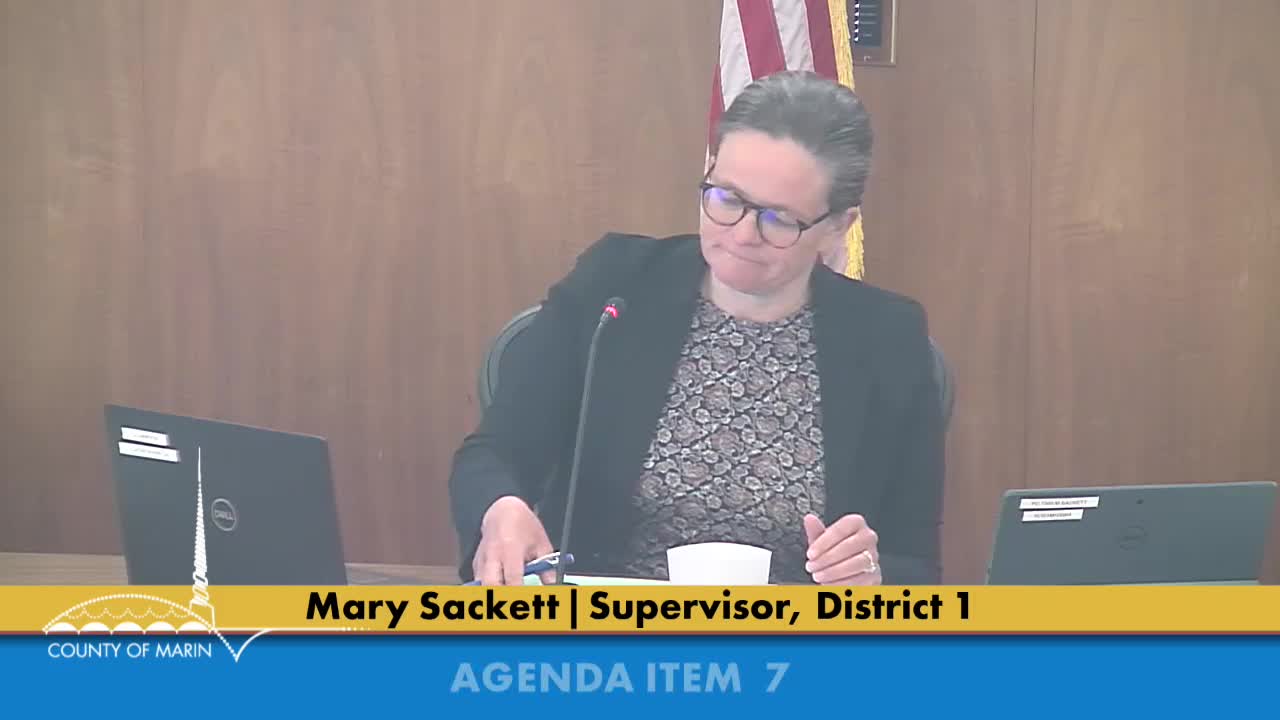
Marin County Board of Supervisors President Mary Sackett and county staff on May 20 received the countycapital improvement program (CIP) and an update on the five-year roads and facilities plan for fiscal year 202526 2026.
The report, presented by Interim Public Works Director Chris Blenck and framed by County Executive Derek Johnson, lays out a multiyear program that staffs said will include more than 300 projects in the next five years and about $223 million in road and bridge investments when grant funding is included. For the next fiscal year, staff showed roughly $39 million of capital revenue available for county roads and bridges (noting a separate $11 million line in the budget book for road maintenance that staff treats as operations). The county is also proposing $8 million in new general-fund support for county facilities for FY202526 2026.
Why it matters: County staff said the CIP is the primary way residents see taxpayersdollars on infrastructure such as streets, bridges and public buildings. Public-works leaders told supervisors they plan to move from a revenue-driven, bottom-up approach to a top-down process that identifies needs first, prioritizes projects, and then programs funding so the board and the public can see priorities across departments.
Highlights and near-term projects
- Pavement network: Staff said the countypavement condition index is 68 (0 = worst, 100 = best) and the departmenthas an objective to raise it to 72 over time. This year the county plans roughly 26 miles of chip-seal and striping work and about 4 miles of heavier pavement rehabilitation, with about $18 million programmed for the paving network in FY202526 2026. - Federal Lands Access Program (FLAP) projects: Frank Valley Road, Muir Woods Road and Pierce Point Road work are large multi‑million-dollar paving projects; the countyshare is roughly $2.3 million for Frank Valley and $2.4 million for Pierce Point, staff said. - Civic Center roof: Bids for a Civic Center roof cleaning and repair project came in low bid about $1.5 million for roughly 220,000 square feet of roof. Staff said a contract award will be requested June 10 and work would start in late June or July with about a four‑month schedule. - Veterans Memorial Auditorium: The county has allocated $15.1 million so far for lobby floor, utilities under the slabs and interior improvements; staff are advancing plans to add roof replacement and a new sound system while the building is closed. Construction is anticipated to start in late 2025 and take about 12 months, with a target reopening in spring 2027. - Libraries: Staff said a five‑year program for library facilities totals roughly $28 million, including about $24.5 million for major renovations at four county‑owned branches. - San Geronimo Fire Headquarters: Staff said the preliminary cost estimate is about $86 million; the project seeks to reduce footprint and cost and staff said they will return with budget and delivery recommendations.
Staffing, delivery methods and emerging issues
Johnson told the board the CIP is in a transition year and emphasized synchronizing capital planning with county goals including housing and economic vitality. Blenck said staff will build a software system to manage more than 300 projects and related funding by project and phase, with an aim to have the system ready before next year27s budget development.
On delivery, Blenck said the county will explore alternative methods such as design-build, progressive design-build and construction manager at risk. He also flagged project-labor agreements and community workforce agreements, noting the Public Contract Code requires skilled-workforce provisions for design‑build projects over $1 million and that the county has budgeted $300,000 to study those approaches. "If you have a project labor agreement or a community workforce agreement in place that meets the criteria in the public contract code, that will take care of that requirement for the skilled and trained workforce," Blenck said.
Supervisors raised timing and coordination questions: Supervisor Milton Peters asked whether emergency projects such as Fairfax Bolinas Road divert staff and money from other work; Blenck said emergency retaining‑wall work has drawn resources and that staff plan a line item to anticipate about $2 million per year for such emergencies. Board members urged more regional coordination on corridors that cross cities and unincorporated county (for example Sir Francis Drake Boulevard).
Public comment and staffing note
In public comment before the CIP presentation, Roland Katz urged the board to convert proposed fixed‑term positions to regular hires where feasible, and said the county should consider that public‑defender staffing typically rises as district‑attorney staffing increases. Katz said: "We would hope you could take that into account... the county simply should not be hiring people in the fixed term positions."
What the board acted on
Staff recommended that the board receive the CIP report and the five‑year plan update for FY2026–2031. With no additional formal motions recorded, staff and the board agreed to receive the report and continue developing the program for future adoption steps and project appropriations.
Looking ahead
Staff said they will return with a completed project database by the end of the calendar year, will present San Geronimo Fire Headquarters delivery recommendations on June 10, and will continue seeking grants and considering financing options, including bonds with a financial advisor to be retained this spring.