Get Full Government Meeting Transcripts, Videos, & Alerts Forever!
Get email alerts on the Regional Transit topic
No spam. Unsubscribe anytime.
Caltrain says electrification brought speed and ridership gains but warns of a $75 million annual shortfall without new funding
Summary
Caltrain executives told the SFMTA board the completed electrification program has reduced run times and increased ridership, but the agency faces a projected $75 million annual operating gap beginning next fiscal year and is pursuing self‑help revenue strategies and a regional funding measure.
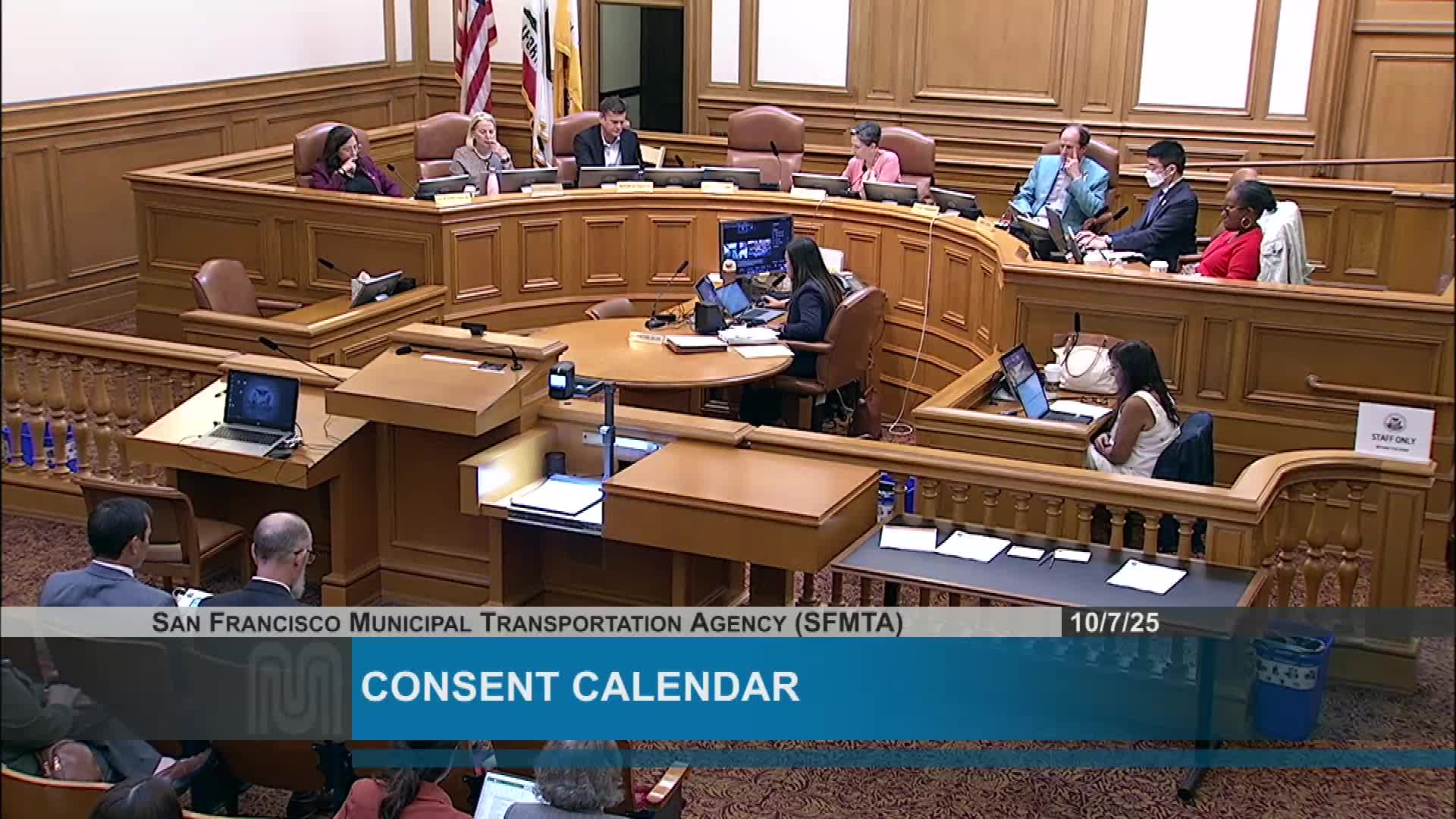
Caltrain executives told the San Francisco Municipal Transportation Agency board that the agency’s recently completed electrification program has delivered faster rides and reliability gains — but that the railroad faces a sizeable annual operating shortfall without new revenue.
Caltrain director Michelle Bouchard summarized progress since the corridor’s electrification was completed in 2024, saying the new electric multiple units accelerate and decelerate faster than legacy locomotives and have cut end‑to‑end travel time by roughly 20 minutes on the electrified segment. She said electrification also let Caltrain double service frequency in parts of the corridor, which has driven strong ridership recovery: weekdays operate at about 65% of pre‑COVID levels while weekend ridership is running about 120% of pre‑COVID.
“As a result, we’ve seen over a 75% increase in ridership where we’ve launched electrified service,” Bouchard told the SFMTA board. She said electrification was a multidecade, $2.4 billion program that upgraded signals, traction power and rolling stock but that the agency now faces fiscal challenges largely tied to post‑COVID ridership patterns and a reduced farebox share of operating revenue.
Budget gap and measures: Bouchard outlined Caltrain’s long‑range financial planning and said even with best‑case fare revenue estimates the agency anticipates a roughly $75 million per year deficit starting in the next fiscal year unless new revenue is secured. Caltrain staff described a three‑scenario approach — success of a proposed regional measure, partial success, and failure — and stressed the measure is central to avoiding deeper cuts.
Caltrain’s response strategies
To close the gap, Bouchard said the agency is pursuing several “self‑help” and non‑fare revenue strategies: negotiating energy credits from regenerated braking, issuing an RFI for battery and solar energy storage, growing special‑event service and bulk passes, pursuing transit‑oriented development and commercial leasing, and monetizing other assets. Bouchard said credits from regenerated braking will yield a “couple of million dollars a year,” and that the agency has identified both near‑term and longer‑term revenue opportunities.
Safety and grade crossings
Bouchard highlighted safety work including an AI‑driven “Rapid Safety Enhancement Program” at grade crossings that uses monitoring to detect risky driver behavior. She cited a test at Broadway Burlingame where AI monitoring and low‑cost treatments reduced incidents of vehicles turning into the rail right‑of‑way. She also described a longer-term program to prioritize and fund grade crossing upgrades, noting individual grade separations cost hundreds of millions of dollars.
Governance, partnerships and local projects
Caltrain emphasized partnerships with San Francisco and other counties in governance and funding, and Bouchard said the agency is pursuing transit‑oriented development and other projects around rail yards, including a Bayview/SF parcel and planning work connected to the Salesforce Transit Center portal.
Why it matters: Caltrain’s completed electrification improves speed and rider experience across the corridor but the agency’s operating model and post‑COVID ridership mix leave a substantial funding gap that will require regional solutions or aggressive new revenue programs.
Ending: Bouchard urged support for the regional funding measure being developed and said Caltrain will continue coordination with county transportation authorities and local partners on both funding and near‑term revenue efforts.