Get Full Government Meeting Transcripts, Videos, & Alerts Forever!
Get email alerts on the Transit Infrastructure topic
No spam. Unsubscribe anytime.
SFMTA scales back Potrero Yard housing plan, advances Muni capacity study and street safety projects
Summary
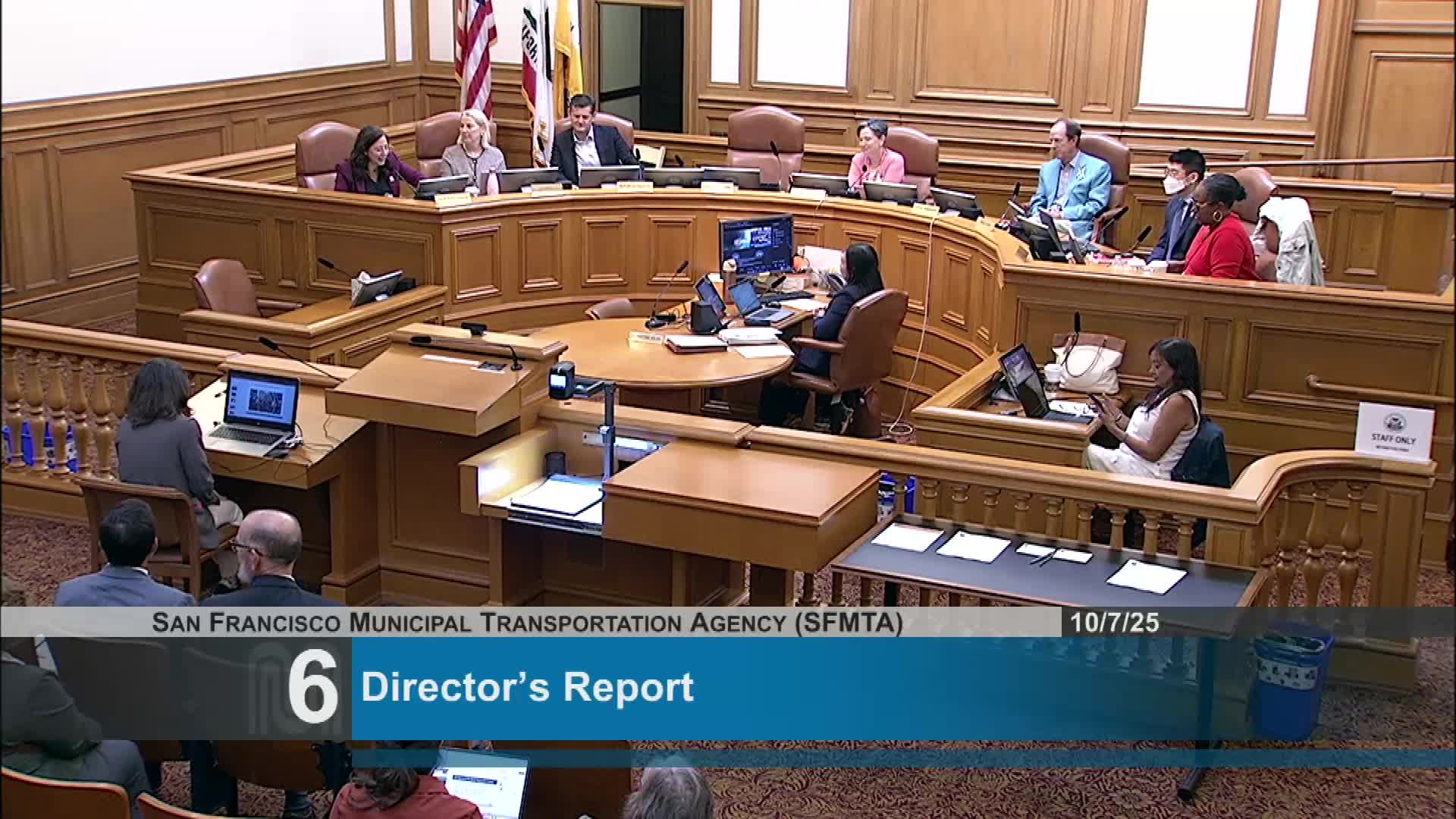
SFMTA director Julie Kirschbaum told the board the agency will modify the Potrero Yard modernization to keep the bus facility deliverable while preserving 100 affordable homes on Bryant Street; board heard draft Muni Metro capacity recommendations and updates on Sixth Street pedestrian safety and a 14‑Mission pilot.
The San Francisco Municipal Transportation Agency announced changes to the Potrero Yard modernization and outlined planning work for long‑range rail capacity and street safety at its board meeting.
Director Julie Kirschbaum told the board the agency will revise the Potrero Yard scope “to make sure it's financially viable and affordable for our agency.” The change reduces the portion of housing planned directly atop the bus yard — work that had required a different structural design — while preserving 100 affordable units planned on adjacent Bryant Street.
Kirschbaum said escalating construction costs, rising interest rates and market volatility made the original combined bus‑yard/above‑podium housing design difficult to deliver. She told the board that project team members expect to negotiate a final cost and return to the board with a final project agreement early next year, and she scheduled two community meetings to explain changes and solicit feedback (October 15 and 16). The project, she said, will remain within existing CEQA and NEPA timelines.
Why it matters: Potrero Yard is a critical bus maintenance and storage facility. The agency framed the change as an effort to ensure the capital project is buildable while keeping an affordable housing commitment in the neighborhood.
Muni Metro capacity study
Kirschbaum also updated the board on the Muni Metro capacity study, a multi‑decade planning effort meant to identify capital projects and funding approaches for the system’s next 10–15 years. She said the study has produced draft recommendations and noted the plan “is a framework for what we're going to pursue in the future” rather than a set of project approvals. Draft recommendations are being circulated for public feedback through Oct. 19 at sfmta.com/metrostudy, and the agency intends to return to the board to accept a final report that incorporates public input.
Kirschbaum described the study as scenario driven — slow, medium and high growth — and intended to help the agency anticipate capacity upgrades such as where three‑car trains may be needed, traction and train control improvements, and how to pair those with large development projects such as Parkmerced. She said the study is intended to guide later project‑level environmental review and funding decisions.
Street safety, pilots and events
The director highlighted the Sixth Street Pedestrian Safety Project, called out as an area with among the highest concentration of severe and fatal pedestrian collisions in the city. Kirschbaum said the project benefited from community‑led design and that “we're now seeing a significant improvement just from the quick build alone” and expect trends to continue as permanent infrastructure is completed.
She also briefed the board on a Bloomberg Philanthropies mayoral challenge pilot funded to study customer experience and operational approaches on the 14‑Mission route. The agency has received $50,000 for the proposal development and is piloting a package of safety and cleanliness interventions on one of Muni’s busiest lines.
Other director’s report items noted to the board included recognition of a retiring operator, the agency’s finalist spot in a Mayor’s Challenge, work to expand the trolley fleet, the Muni Heritage Weekend events and the citywide Walk and Roll to School Week.
What board members asked: Directors pressed staff on schedule and cost implications of the Potrero Yard change. Kirschbaum said the project is design‑build and the project’s design partner is already engaged, so staff do not expect “a major dollar amount lost” and that the team would have likely needed an additional 3–6 months for design work even if the original approach stayed intact.
Next steps: SFMTA is negotiating final costs and will bring a final project agreement back to the board early next year. Public feedback on the Muni Metro capacity study is open through Oct. 19.
Ending: The board heard the report as informational and opened public comment; agency staff directed members of the public to the agency web pages for details and upcoming community meetings.