Get Full Government Meeting Transcripts, Videos, & Alerts Forever!
Get email alerts on the Climate Action Plan topic
No spam. Unsubscribe anytime.
Residents urge measurable goals, citizen committee in Mankato climate action plan
Summary
Multiple residents urged the Mankato City Council to add measurable interim targets, a citizen oversight committee and stronger support for electrification and distributed renewables to the city's draft Climate Action Plan.
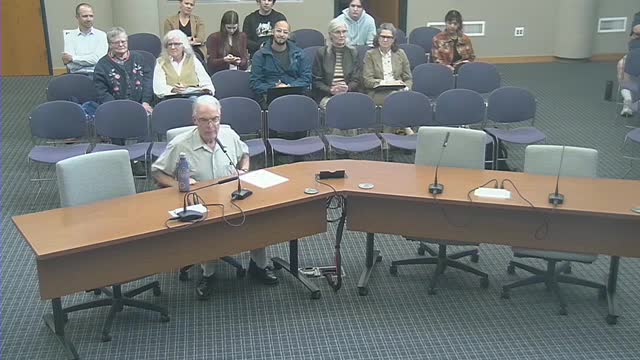
Several residents told the Mankato City Council on May 27 that the city's draft Climate Action Plan should include measurable interim goals, a permanent citizen advisory committee and stronger support for building electrification and distributed renewable energy.
Speakers at the public forum said the draft aligns with city priorities on water and flood resilience but lacks specific targets and ongoing community oversight. "What you can measure, you can manage," said Jodi Swanson, who identified herself as living at 110 Pheasant Drive and said volunteers have worked on climate issues for years. Swanson and others urged the council to create a standing citizens committee to monitor implementation and to include measurable percent- or date-based interim goals in the plan.
Lou Schwarzkopf, 210 Floral Avenue, said the plan "fits Mankato well" and pointed to actions on water quality, wetlands and stormwater management. He suggested the city require energy-efficiency and sustainability standards for new public and city-funded projects, citing St. Paul’s Sustainable Development Ordinance as a model. "We just can't afford to put up new buildings or make renovations to old buildings that will waste energy for decades to come," Schwarzkopf said.
Sabri Fair, 518 North Broad Street, urged the council to add recommendations supporting distributed energy such as on-site solar at city facilities, residences and commercial properties. Fair said community input included comments on solar and bicycle infrastructure and recommended the city actively encourage and permit such installations.
Brenda Flannery, identifying herself with the South Central Minnesota Clean Energy Council, thanked the council for addressing climate action and urged city leadership to work with the broader community and local economic strategies such as the region's bioeconomy planning.
Council members asked staff about how CDBG (Community Development Block Grant) rehabilitation funds could be used for energy-efficiency upgrades, and staff confirmed that heat-pump and other energy-efficiency work are eligible costs in both rental and owner-occupied rehabilitation programs when projects fall within targeted areas.
The public comments combined repeated calls for (1) a permanent citizen committee to assist and monitor implementation and (2) measurable, time‑bound interim goals (numbers, percentages or dates) to track progress. Speakers also recommended specific program links such as using housing-rehabilitation programs to promote heat pumps and encouraging on-site solar in public and private projects.
The council did not take a final vote on the climate action plan at the May 27 meeting; the comments were made during the public comment segment of the meeting and will be part of the record for future consideration.