Get Full Government Meeting Transcripts, Videos, & Alerts Forever!
Get email alerts on the Energy Siting topic
No spam. Unsubscribe anytime.
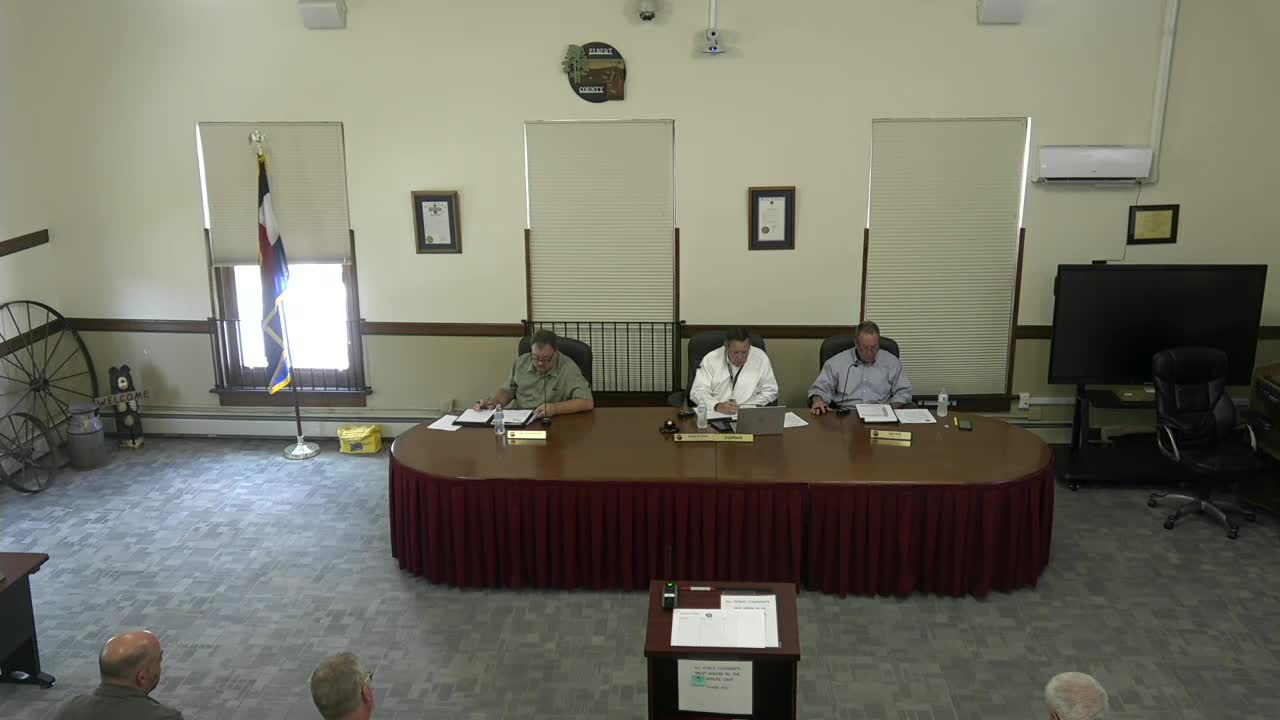
Elbert County residents urge commissioners to reject Excel energy applications, cite tax and land-use concerns
Summary
Multiple residents urged the Elbert County Board of County Commissioners to deny Excel’s solar and transmission applications, raising claims about overstated tax benefits, potential land loss and legal pressure via the Public Utilities Commission and district court.
Multiple residents told the Elbert County Board of County Commissioners on a public-comment agenda item that they oppose Excel Energy’s proposed solar and transmission project and urged the board to deny the company’s permit applications. Speakers said Excel overstated local tax benefits, would reduce property values, and has threatened legal action if local officials deny its permits.
The comments came during the board’s public-comment period, when at least five residents and local advocates addressed the commission about Excel’s applications and related land-use impacts.
Carrie Giblets, of the Albert County Environmental Alliance, said the utility overstated local tax revenue from existing facilities, telling the board that Excel claimed $2,000,000 in 2024 tax revenue while “the amount paid to the general fund for 2024 was only $224,000.” She advised commissioners to review the planning commission hearing video and transcript and said residents had identified “inconsistencies, omissions, and discrepancies” in Excel’s application. Giblets also described legal pathways she said Excel might use if the county imposes conditions, saying the company could appeal to the Colorado Public Utilities Commission (PUC) and pursue district-court options.
Pamela Chappell, a resident of Mountain View Trail, warned the board about contract language and potential expansion, saying she had been told Excel could add more acreage and that lines or panels could be expanded without additional local permission. “Go over that contract,” she said, adding that residents who have studied other sites show post-storm and post-installation damage and long-term soil and water concerns.
Sunny Mills, a Kiowa resident, said the proposed site would “destroy home values and change the feel” of the riparian area where panels were proposed and urged commissioners to include “creative thinkers” when forming citizen advisory groups for siting or mitigation.
Trent Chapel, a Kiowa resident, focused on economic effects and presented a local land-value calculation he said showed substantial, aggregate losses if property values decline by the percentages discussed in the planning hearing. He also asserted that Excel would not bring significant local jobs and that the county should be able to direct siting even if that increases costs for distant utilities.
Several commenters said they had seen legal threats to landowners and the county related to eminent-domain or possession actions; speakers described the possibility of appeal to the PUC if local authorities deny or attach conditions to the applications. Commissioners and staff did not vote on any Excel applications at this meeting; the discussion remained in public comment and questions.
County staff answered requests for clarification about an oversight committee referenced during prior discussions. A staff member said the committee mentioned by residents is the group being formed for the county’s comprehensive plan and regulations and that a separate, solar-specific committee had not been formed.
No formal action on Excel’s applications occurred during this meeting. Several residents requested the board review planning-commission materials and the hearing record before taking any future action.
Ending — The board closed public comment and moved to other agenda items; commissioners did not adopt any motion related to Excel during this session. Residents who spoke asked the commission to review the planning record and legal claims before future decisions and to consider forming a public workshop or oversight process tied to the county’s comprehensive-plan work.