Get Full Government Meeting Transcripts, Videos, & Alerts Forever!
Get email alerts on the Municipal Judge Appointment topic
No spam. Unsubscribe anytime.
Laredo council appoints Eduardo Davila Jr. as municipal court judge
Summary
At a special June meeting the Laredo City Council appointed Eduardo Davila Jr. to serve as municipal court judge after interviewing two candidates. Council members discussed candidate experience, amnesty programs and transition timing; the motion to appoint Davila passed by voice vote.
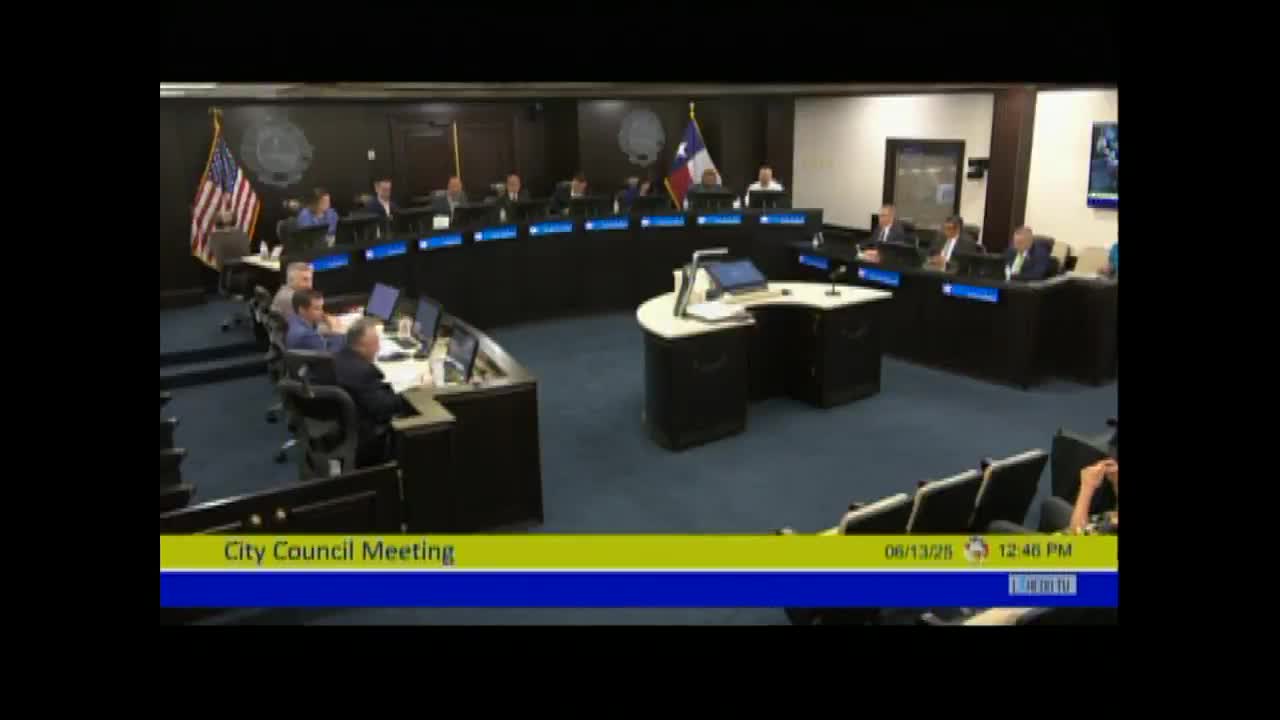
The Laredo City Council on Friday interviewed two candidates and voted to appoint Eduardo Davila Jr. as municipal court judge, approving the appointment by voice vote during a special meeting in council chambers.
The appointment came after the council heard from both candidates in closed-question interviews conducted in the chamber. City management reported it had contacted both applicants and informed them that, if appointed, the municipal judge would be required to cease private practice and would receive a salary "set by ordinance" of $150,000 a year, according to materials distributed to the council.
The council questioned both applicants about experience, court management and indigency and amnesty programs. Eduardo Davila Jr., who described himself as born and raised in Laredo and said he holds a law degree and has served about six years as an associate judge in the municipal court, told council members he supports existing amnesty and indigency procedures. "Amnesty programs are very important to our citizens," Davila said, adding that the court has an indigency docket and works with legal aid.
The other finalist, Eduardo Gonzalez Jr., described a background that includes a law degree and an MBA from the University of Alabama and private-practice work as well as work for the Texas Office of the Attorney General on child-support matters. On the subject of campaign donations, Gonzalez said, "I'm not a fan of it," adding that donations can create perceived bias.
After questions and brief discussion, a council member moved to appoint Davila; a second was called and the motion passed by voice vote. The council discussed an October 1 target date for the appointed judge to assume office; Davila said he could likely close his private-practice matters within "30 to 60 days," and in some remarks indicated he could be ready sooner. Management told the council it would coordinate onboarding and any swearing-in once the appointee is prepared to start.
Council members who spoke during the selection process commended both applicants for applying and noted the appointment is an unusual step because the municipal judge is typically an elected position. City management told the council it had interviewed both applicants and provided suggested interview questions in the council packet.
No ordinance number or statutory citation setting the salary was provided in the meeting materials; the council packet referenced only that the salary is "set by ordinance." The council took no further formal action at the meeting on municipal-court rules or amnesty programs.
Davila will succeed the current presiding judge when that judge's term ends in 2026, according to remarks during the meeting; the council did not set a public swearing-in date at the time of the vote.