
Buncombe County pretrial services resumes intake after 90‑day pause; new policies and risk assessments introduced
Get AI-powered insights, summaries, and transcripts
Subscribe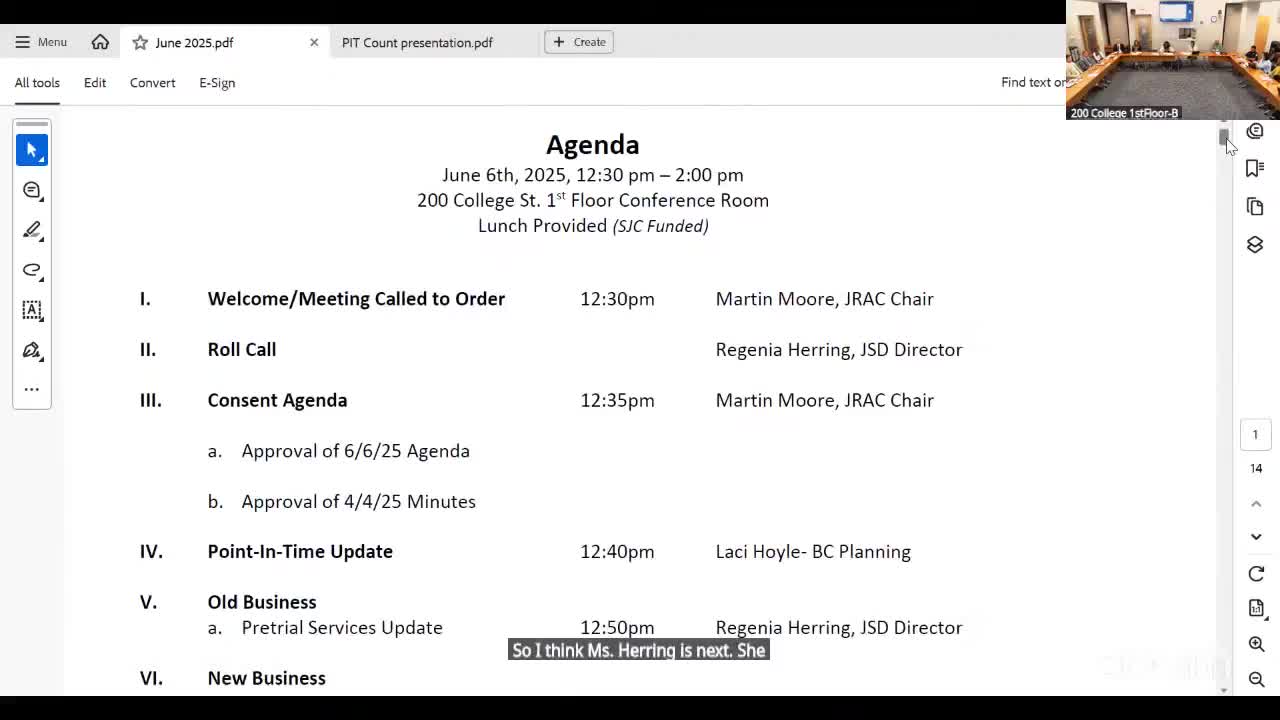
Summary
County staff reported pretrial services paused new intakes for a staffing and program review and have resumed after about 90 days. The program will supply pretrial risk assessments to judges and tighten protocols, with national training for staff and limits on geographic supervision.
Miss Herring (Justice Services leadership) told the group the county paused accepting new pretrial cases to review operations, address staffing shortages and implement tighter policies; existing program participants continued to be served during the pause.
Why it matters: Pretrial services provide judges with information to inform release decisions and supervision; changes to the program affect court operations, public safety assessments and case management for people awaiting adjudication.
Herring said she began a program review after starting in the department late last year, noting newer managers and a lack of operational leadership when she arrived. She recommended a temporary pause on new cases to resolve capacity and policy issues. The pause lasted roughly 90 days; the program has now resumed new intakes.
As part of the restart, Herring said pretrial staff will provide judges with a pretrial services assessment (PSA) or risk assessment and a background check for every individual appearing, even if the person is not enrolled in direct supervision. The office is training staff at a national level to permit access to broader criminal history information, including national records, which Herring called important for judges’ decision‑making. Electronic monitoring had been used broadly before the pause but was curtailed due to staffing limits; some monitoring continues through external services (identified in the meeting as a criminal justice information network used for high‑risk domestic violence, sexual assault and stalking cases).
Herring said the department will not try to supervise people located far outside the region; supervision will focus on Buncombe County and adjoining counties (roughly six or seven neighboring counties), though courtesy supervision arrangements may continue for jurisdictions that already have pretrial programs. She also said the department has implemented new policies and procedures and provided staff training during the pause.
Participants asked about bond policy work. Judge Scott and other judges said state statute requires the senior resident judge to create a bond policy that the chief district judge reviews; meeting comments indicated a prior draft addendum had recognized pretrial but a full revised bond policy had not been finalized. Herring and judges said the reformed pretrial approach would be incorporated by reference in any new bond policy.
Ending: Herring said program materials and policies will be posted to the department website and provided to commissioners and judges. She described the restart as a collaborative effort with the courts and thanked staff for implementing changes during a challenging period.