Get Full Government Meeting Transcripts, Videos, & Alerts Forever!
Get email alerts on the Municipal Budget topic
No spam. Unsubscribe anytime.
Mount Juliet commissioners cut proposed tax hike to 44¢; FY2025-26 budget passes first reading amid debate over staff cuts
Summary
On June 9 the Mount Juliet Board of Commissioners approved the city's FY2025-26 budget on first reading and set the property tax rate at 44 cents per $100 of assessed value. The vote followed hours of public comment and debate over proposed staff reductions, including the public information officer and a parks deputy director.
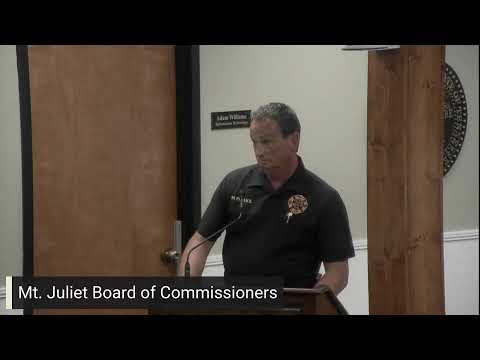
Mount Juliet Board of Commissioners approved the city's fiscal 2025-26 budget on first reading June 9 at City Hall, setting the property tax rate at 44 cents per $100 in assessed value after commissioners amended a staff proposal that would have set a higher rate.
The move came after more than four hours of public comment, with residents urging the board both to restrain a sizable proposed tax increase and to preserve some positions the administration had recommended cutting. The budget passed first reading with a recorded majority; commissioners recorded the first-reading vote as 4-1.
The adopted first-reading package reduces the tax increase the city's finance staff originally presented. City staff had recommended a higher rate; after board discussion Vice Mayor Trevitt moved to set the rate at 44 cents and the commission adopted that figure for first reading. City Manager Kenny Martin and Finance staff said the 44-cent rate keeps the city at a minimal fund-balance threshold required by policy while leaving less cushion than the staff's original plan.
Why it matters: Commissioners said the city faces rising costs, chiefly from public safety and capital needs, and the budget debate reflected a choice between restoring reserves and funding personnel or programs. Mount Juliet has expanded public safety capacity in recent years and now funds a larger fire and EMS presence; those services were frequently cited during budget debate as key drivers of higher spending.
What the board decided and what changed: The commission approved the budget (first reading) with these notable outcomes: - Property tax rate: set at 44 cents per $100 assessed value for FY2025-26 (first-reading action). The board scheduled second reading and final action at the June 23 meeting (public notice: second reading date listed in the agenda packet). - Parks staffing: The commission reinstated the previously proposed cut to the deputy parks director position. After debate and a roll-call-style voice vote, the body voted to add the deputy parks director back into the FY2025-26 budget. - Public information officer (PIO): A motion to reinstate the city's public information officer did not pass. Several residents, business owners and nonprofit leaders addressed the board in favor of keeping the PIO post during the citizen-comment period; those requests were discussed during the budget deliberations but the motion to restore that position failed on the floor. - Legal staff: A short motion to add a staff attorney (half-year funding) was proposed but did not receive a second and was not adopted.
Public comment and board discussion: The meeting drew a large turnout. Dozens of residents and business owners spoke in favor of retaining the PIO and the deputy parks director, saying the roles support local businesses, emergency communications and volunteer coordination. Speakers described the PIO's role in promoting small businesses, public-safety messaging during storms, and connecting nonprofits to resources; multiple commenters said losing that position would reduce the city's visibility and civic service.
Commissioners debated competing priorities. Several board members emphasized the need to restore reserves after years of capital spending and stated they preferred to identify additional cuts or revenue sources rather than adopt the highest tax proposal presented by staff. Others argued for returning some positions and for pursuing alternative revenue or cost controls before eliminating staff.
Next steps and timing: The budget ordinance returned for final consideration at second reading on June 23. Commissioners asked staff to continue reviewing departmental budgets, be prepared to identify additional reductions or offsets before second reading, and to report midyear if actual revenues deviate from the estimates used in the FY2025-26 plan.
Ending: Officials said they expect more public comment before the final vote. The city manager and finance staff told the commission they would continue to refine revenue and expense forecasts and present options that might reduce pressure on property taxpayers going into the next fiscal year.