Get Full Government Meeting Transcripts, Videos, & Alerts Forever!
Get email alerts on the Budget topic
No spam. Unsubscribe anytime.
Curry County 4‑H and Extension Service District approves $1.47 million budget, sets tax rate
Summary
The Curry County 4‑H and Extension Service District budget committee approved a $1,469,408 fiscal year 2025–26 budget and authorized a permanent property tax rate of $0.1021 per $1,000 of assessed value; the budget funds restored staffing, a new greenhouse, program reserves and responds to uncertainty in federal and state grants.
The Curry County 4‑H and Extension Service District budget committee on June 11 approved a $1,469,408 budget for fiscal year 2025–26 and authorized the district to impose ad valorem taxes at a permanent rate of $0.1021 per $1,000 of assessed value.
“The Curry County 4‑H Extension Service District was established in 1986 to provide local funding for OSU Extension programs,” said Margie White, budget officer for Curry County Extension Service, as she presented the budget message. “A total of $405,850 in taxes was estimated to be received for fiscal year 26. Additionally, we estimated $15,000 in previously levied taxes and $2,255 in interest.”
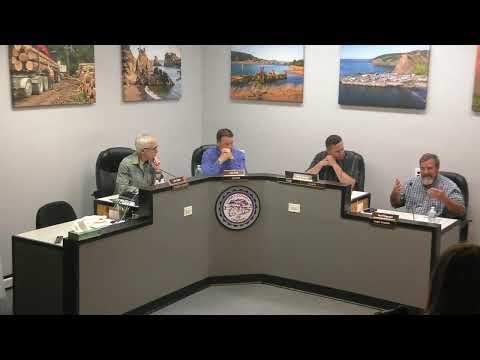
The budget vote followed the election of Jay Trost as budget committee chair. The committee then voted to approve the budget and tax rate; the motion passed and the committee recorded the measure as approved.
Why it matters: The district contracts with Oregon State University’s Extension (OSU Extension) to deliver local programming. The approved budget restores full staffing after prior vacancies, increases the Master Gardener program assistant position from 0.5 to 0.8 full‑time equivalent (FTE) to support a new educational greenhouse at the Gold Beach Community Center, and reserves funds for unallocated projects and contingency to maintain stability going into FY 2026.
Key budget figures and structure: White told the committee the district begins the year with a fund balance of $1,046,303, in part because of underspending in fiscal years 2023 and 2024 during family medical leave and staff vacancies. Total resources and requirements for FY 2025–26 are $1,469,408; appropriations include $262,582 for personal services (including 0.7 FTE administrative office manager, 0.8 FTE master gardener program assistant and 1.0 FTE 4‑H education program assistant) and $141,150 for materials and services. The budget reserves $300,000 for unallocated project funds and $31,000 for contingency, with a projected unappropriated ending fund balance of $734,176.
Funding context and risks: Wiley Thompson, regional director for the coast, highlighted the partnership between the county and OSU Extension and the role of state and federal funding streams. Thompson said certain federal and state grants that support programming are uncertain, noting SNAP‑Ed (the nutrition education component tied to the Farm Bill) and Sea Grant funding as concerns. “The nutrition education piece…has been zeroed out,” Thompson said, describing that loss as a potential threat to programs delivered in schools, food banks and farmers markets. He also explained that some Sea Grant funding had been authorized in a continuing resolution but not released for use.
Public comment and facilities: Volunteer 4‑H club leader Tiffany Summers spoke during public comment, urging greater partnership between the county, the fairgrounds and 4‑H—specifically for livestock programs and shooting sports. “I would just love to see a larger partnership between the county, the fairgrounds, and the 4‑H programs, specifically livestock and the 4‑H shooting sports,” Summers said, adding that the county typically sees dozens of animals at the fair and that facility improvements are needed to safely support youth programs.
Committee discussion and next steps: Committee members expressed support for the budget as presented and thanked White for preparing it. White and Thompson emphasized that local tax dollars spent through the district bring additional state and federal funds into Curry County, and that OSU serves as administrator for disbursing reimbursements to the county based on actual expenses. After the vote the committee adjourned.
Votes at a glance: The budget and tax rate motion was approved by the committee; the official tally recorded the motion as approved (yes votes recorded by named commissioners during roll call).