Get Full Government Meeting Transcripts, Videos, & Alerts Forever!
Get email alerts on the Eip Waivers topic
No spam. Unsubscribe anytime.
Subcommittee narrows EIP waiver scope to March 1 filing deadline; staff to place broader waiver language elsewhere
Summary
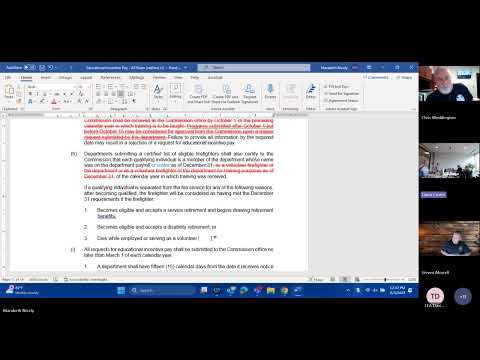
Members debated waivers tied to education incentive pay (EIP). The committee favored limiting the waiver in the EIP chapter to late submission (March 1) appeals and housing other waiver authorities in a broader chapter; staff will propose redraft and placement.
The rules subcommittee spent substantial time discussing when and for what reasons the commission should grant waivers related to the education incentive pay program.
Members agreed the EIP chapter should narrowly contain a waiver authority tied to the March 1 submission deadline (late batches) rather than a catch‑all waiver that could be invoked for missing training hours, certification waiting periods, or other unrelated provisions. Several participants said previous drafts conflated waiver procedures across multiple chapters, creating confusion for departments and for staff processing appeals.
Why it matters: waivers determine whether individual firefighters or departments may receive pay or certification credit despite missed deadlines or incomplete elements. Subcommittee members emphasized a predictable process and noted that allowing broad, discretionary waivers led to inconsistent statewide outcomes.
Subcommittee discussion points included: whether waivers for missing training hours should reside in certification chapters (chapter 3 or 6), whether chapter 6 should hold an enterprise waiver authority covering multiple programs, and how to balance flexibility for rare disasters (floods were cited) against preventing routine case‑by‑case exceptions.
The group endorsed keeping a narrowly scoped waiver in the EIP chapter limited to missed March 1 batches and adding a separate waiver policy in a catch‑all chapter for other exceptional circumstances. Staff were directed to draft text that: (a) limits EIP waivers to March 1 late‑submission cases, (b) references the other chapter for broader waivers, and (c) clarifies the commission’s role in discretionary appeals.
Ending: Staff will return with consolidated wording that reassigns waiver authorities as discussed and clarifies where departments should petition for relief.