Get Full Government Meeting Transcripts, Videos, & Alerts Forever!
Get email alerts on the Land Use topic
No spam. Unsubscribe anytime.
Amador County board declines developers request for reimbursement district for Jackson Gate Road improvements
Summary
The board did not direct staff to form a reimbursement benefit district or joint powers agreement proposed by RTR Investments to recover infrastructure costs for a planned development near Highway 49 and Jackson Gate Road; neighbors and other property owners raised traffic, notice and fairness concerns.
The Amador County Board of Supervisors declined to direct staff to pursue a reimbursement benefit district or joint-powers agreement (JPA) requested by RTR Investments to recover road, sewer and water improvement costs related to a proposed development near State Highway 49 and Jackson Gate Road.
Ron Reagan, principal of RTR Investments, and Sean Reagan, representing the project team, told the board the proposal would let the developer front intersection, roadway, sewer and water work and be repaid by future developers who "piggyback" on the improvements. The proposal centered on a previously approved 96-room hotel and associated commercial spaces and on two adjacent parcels identified in the presentation as roughly 20 and 21 acres.
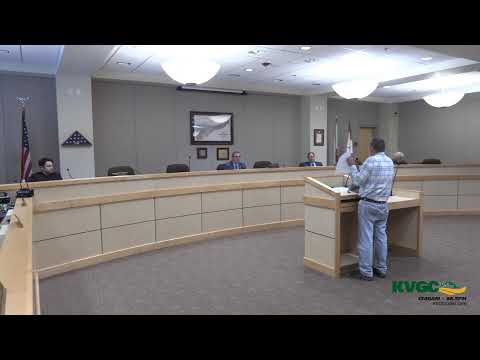
The request drew sustained public comment and questioning from supervisors about traffic capacity, notice to adjacent landowners and the mechanics of repayment. Jason (last name not specified), an adjacent property owner, said he had previously paid to upgrade a water main to meet fire-flow requirements and urged that those earlier costs not be retroactively assessed to him; for the record he said, "I'm against this." Wayne Vinciguera, managing partner of Vinciguera Real Estate Investments and an owner of a nearby 21-acre parcel, said current local road conditions were unsafe for the scale of development under discussion: "One 9-foot-wide road feeds 57 acres. That's completely substandard," he said.
Planning staff and others described the proposed improvements. Chuck Beatty of the Planning Department told the board there had been no county extraction imposed previously on the Reagan site and noted that Caltrans must review and approve intersection work tied to state highway access. The project team said a traffic study had been submitted to Caltrans and that planned work would include turn-lane and widening components, water-line upgrades coordinated with the Amador Water Agency and sewer line work.
Developers described the reimbursement mechanism as a long-standing tool used in California to allow a developer to advance infrastructure and recover costs over a fixed period if and when subsequent development occurs. The team said repayment timetables typically ranged from about five to 20 years, and that the district or JPA would provide governance and oversight for assessments and reimbursements.
Opponents and some supervisors raised specific concerns: (1) whether small future projects would be charged disproportionate shares; (2) whether existing property owners who benefited from improvements already paid up front would be subject to retroactive assessments; (3) whether the Caltrans plan provided sufficient capacity (members disputed whether the approach into the development would be one lane or more); and (4) that several potentially affected landowners said they had not been notified in advance of the developers request.
After extended discussion and public comment, Chairman John Brown said the developer "knows kinda where the board is" and indicated the board would not move forward at this time. "This subject will die as is," Brown said, adding the item could be brought back by the developer or others in the future.
The board's decision left the applicant able to pursue ministerial permits that meet current requirements, but it did not authorize county staff to create a reimbursement district or JPA. Planning staff noted that future developments could still be subject to project-level review and mitigations under the California Environmental Quality Act (CEQA) if cumulative impacts warrant that process.
The matter is unresolved: developers and several affected landowners were told they may continue private negotiation, and the item can be returned to the board at a later date if proponents secure broader support or provide revised plans and documentation.