Get Full Government Meeting Transcripts, Videos, & Alerts Forever!
Get email alerts on the Rental Act Topa topic
No spam. Unsubscribe anytime.
Council hearing exposes sharp division over Rental Act changes to TOPA
Summary
Supporters told the Committee on Housing that changes in the proposed Rental Act would restore investor confidence and boost tax revenue; opponents and tenant advocates said the same changes would reduce tenant rights and raise displacement risk. The committee did not vote on the measure.
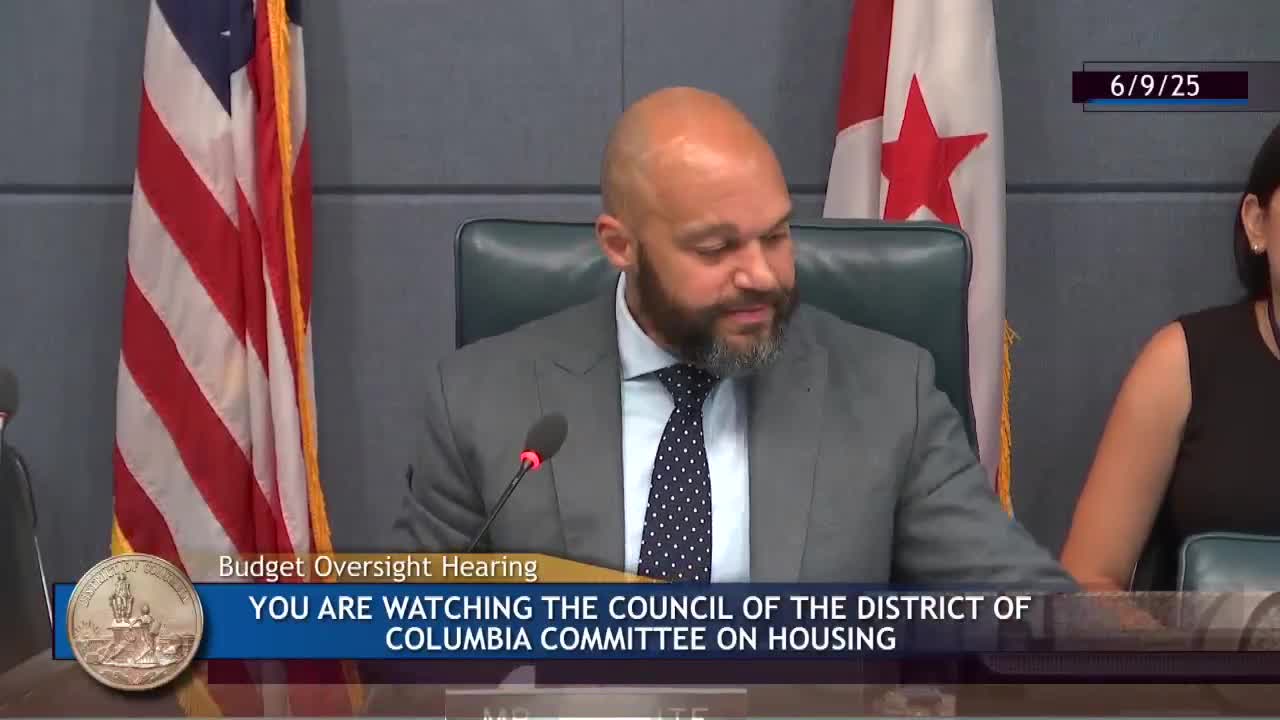
Council Member Robert White opened a budget oversight hearing of the Committee on Housing on June 9 by saying the city faces a budget shortfall and housing crisis and the council must be “mission focused” when it decides what problems a budget is meant to solve. Testimony on a separate but related item — the Rental Act, which would alter the District’s Tenant Opportunity to Purchase Act (TOPA) — dominated much of the hearing.
Developers and commercial brokers who backed changes spoke first. Liz De Barros, CEO of the District of Columbia Building Industry Association, told the committee she “strongly support[s] Subtitle two-five of the Rental Act,” and urged the council to keep a 25‑year threshold for the market-rate exemption and to restrict what tenant assignees may receive as compensation. Christine Espenschade of Newmark presented market data and argued that TOPA makes DC multifamily assets “illiquid” and deters institutional capital, which she said reduced transfer-and-recordation tax revenue that might otherwise fund the Housing Production Trust Fund.
Speakers representing tenant advocates, legal services and housing advocates countered. Mel Zond of Legal Aid DC urged reserving 30% of the Housing Production Trust Fund for preservation and opposed new exceptions to TOPA, saying Tenant Opportunity to Purchase “is one of the most powerful tools for preventing displacement in D.C.” Michael Cohen of the DC Fiscal Policy Institute asked that changes to TOPA be considered as stand‑alone legislation rather than as part of a budget act and pushed for more funding to preserve affordable housing and for direct support to renters with arrears.
The committee chair, Council Member White, said he did not think the council should pass the Rental Act as part of the Budget Support Act and repeated his intention to move the bill before recess. The chair also said he had conducted community conversations with tenants and landlords and acknowledged there were no “perfect answers,” but said the city was in an emergency and needed action.
Taken together the testimony reflected two competing priorities: developers seeking changes that they say will increase investment, transactions and tax revenue, and tenant advocates who argue that the proposed exemptions will erode tenant rights and reduce protections against displacement. No formal council vote or procedural action was taken during the hearing itself; White and several members said additional hearings, briefings and community meetings would follow.
The committee asked witnesses for supporting data cited at the hearing. Several developers and brokers agreed to provide transaction and valuation data to the committee so members could evaluate claims about foregone transfer tax revenue and its relationship to TOPA rules. The council chair and staff said they will continue to schedule public conversation and technical briefings before any final committee vote.
Ending: The Rental Act remained under active consideration at the close of the hearing; the committee kept the record open for written testimony and supplemental data.