Get Full Government Meeting Transcripts, Videos, & Alerts Forever!
Get email alerts on the School Budget topic
No spam. Unsubscribe anytime.
Howard County education leaders debate budget scenarios as June deadline nears
Summary
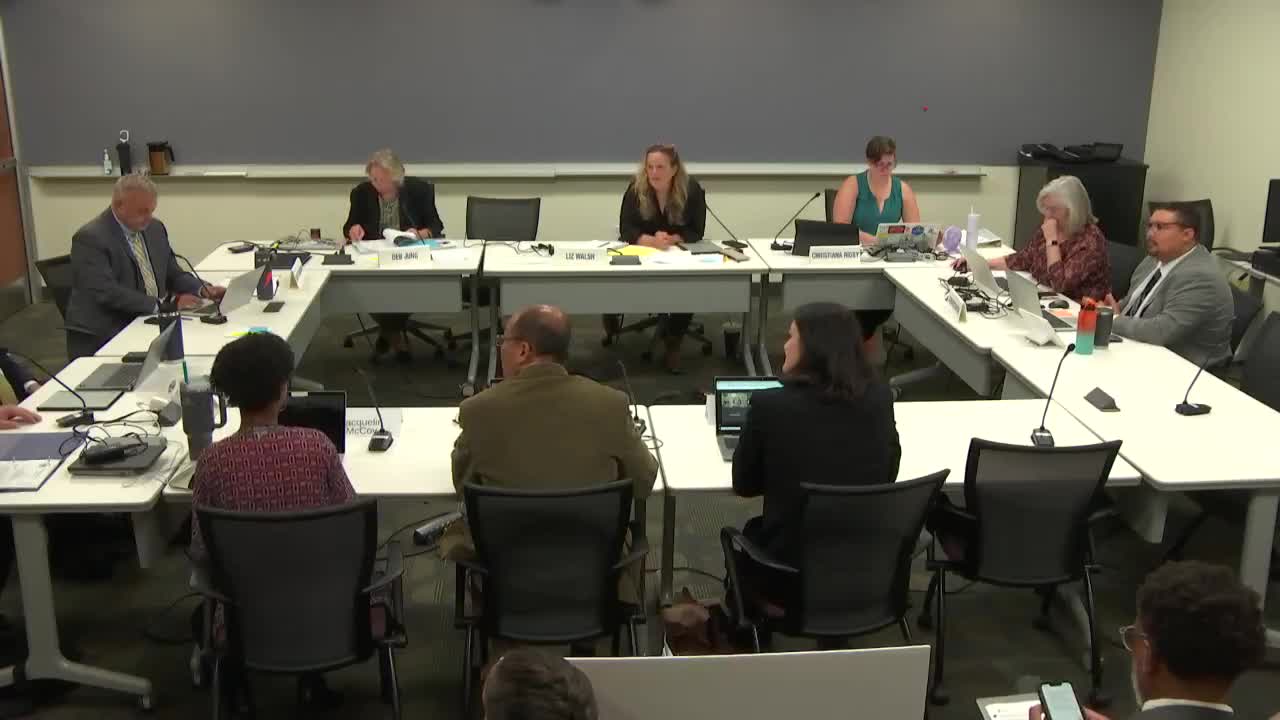
Superintendent Bill Barnes and the Howard County Board of Education and county council debated budget scenarios to close roughly a $14 million gap between the school system’s maintenance request and the county’s final funding offer, focusing on staff reductions, program changes and one‑time fund balance use with a June budget deadline looming.
Superintendent Bill Barnes told the Howard County Council and the Board of Education on Tuesday that his January budget proposal sought $67,000,000 above maintenance of effort from the county and that the county’s final funding figure left a roughly $14,000,000 gap.
That shortfall has driven the Board of Education to evaluate multiple “scenarios” for balancing the fiscal 2026 budget, including options that rely on one-time fund balance transfers and options that reduce staff. Barnes said his team developed six scenarios and that the board later considered a seventh scenario proposed by board members.
“The board last Wednesday voted to approve and take forward” a scenario for further work, Barnes said, adding that staff were preparing “technical score sheets” for implementation and that the board has until June 30 to adopt a budget. He warned that earlier clarity is needed for staffing placements and bargaining-unit notifications because “many of the staff who might be impacted by this budget… will be home” at the end of the school year.
Why it matters: the board and superintendent are deciding whether to preserve staffing and program lines now using one-time fund balance or to accept reductions that would reduce recurring costs but could trigger further shortfalls next year. Board members repeatedly pressed on program impacts, equity and the long-term fiscal consequences of tapping reserves.
What the scenarios would change
Board members and staff described two scenarios that became focal points: scenario 6 and scenario 7. School system staff said scenario 6 cuts roughly 64 full‑time-equivalent positions from the operating budget, while scenario 7 cuts about 126.5 operating positions plus 3.5 grant-funded positions that would not continue.
Chief Financial Officer Bridal Hall (transcript spelling) told the meeting that “scenario 7 was developed” after conversations with board members and that late updates caused delays in publishing that scenario to the public and council. County Council members asked whether scenario 7 was created in compliance with open‑meetings rules; board members said the scenario grew from individual meetings with staff and then was shared publicly at the board work session.
Positions added and removed in scenario 7 generated particular controversy. Staff said scenario 7 would add 27 new full‑time positions (13 athletic trainers, seven math coaches/specialists and seven reading coaches) while eliminating larger numbers of other roles in order to cover commitments and new priorities.
Board debate: programs and people
Board member Melissa McCoy (transcript: Miss McCoy) framed the debate around direct impacts on classroom instruction: “The bottom line for me is how we impact students and their outcomes,” McCoy said, and she urged minimizing disruption to staff who “directly work with students.” McCoy and others raised concerns about the plan to restructure gifted-and-talented (GT) services and to cut “grade strings” and school health or health‑assistant positions.
Board Vice Chair Dr. Chen and other board members noted community emails and widespread public engagement. Board member Andrea Chamblee (transcript: Miss Chamblee) told the council, “We don’t cut the budget. We’re advised what the budget is,” and explained constraints such as tax caps and the county’s revenue limits.
Health and safety concerns
Several speakers pressed staff on cuts to health assistants and nurses. One board member summarized data during the meeting: “42.8 percent of HCPSS students have a known chronic health impairment,” and “70 percent of enrolled students have visited a health room.” Several members warned that removing health assistants could affect day‑to‑day operations, field trips, special‑education supports and responses to emergencies.
GT and music
Edme Langford Brown, executive director for curriculum, instruction and assessment, described the proposed GT restructuring as a change in delivery rather than elimination of all program components. “There are many — most components of our GT program are inclusive,” Langford Brown said, describing four components currently offered at elementary grades: primary talent development (K‑2), instructional seminars (grades 2‑5), curriculum extension units (grades 3‑5) and mathematics supports.
Langford Brown said classroom teachers would deliver some components with support and professional learning from GT resource teachers; she added that each elementary school would have at least one GT resource teacher under the proposed model.
Fund balance, projections and the next year
Council members and staff discussed the use of one‑time fund balance as a patch and the risks of pushing costs to future years. Hall and Superintendent Barnes presented fund balance projections: the district projects roughly $5.9 million to $7 million in fund balance at year‑end (staff cited a range as estimates were updated during the discussion). County staff and several board members warned that tapping one‑time funds repeatedly would deepen the structural gap and raise next year’s required increase.
Councilmember comments and advocacy
Several county council members and the board urged stronger communication and earlier decisions in future cycles. One council member noted that other Maryland districts that do not receive the same maintenance‑of‑effort increases are able to finalize budgets earlier and that earlier clarity benefits hiring, contracts and classroom planning.
What’s next
Board members were reminded of procedural requirements: changes to the board agenda must be posted 48 hours before a Thursday adoption vote, and staff asked the board to finalize decisions so employees and bargaining units can be informed promptly.
Quotes (selected and attributed to speakers at the meeting)
- “I put forward a budget proposal to the Board of Education that requested $67,000,000 above MOE from the county,” — Superintendent Bill Barnes.
- “The bottom line for me is how we impact students and their outcomes,” — Board member Melissa McCoy.
- “We don’t cut the budget. We’re advised what the budget is,” — Board member Andrea Chamblee.
Discussion vs. decision
The meeting recorded discussion of multiple scenarios and a prior board vote to advance a scenario for adoption work; it did not record a final, binding county or board adoption of a specific FY26 budget in this joint session.
Ending
Board members and staff emphasized both the operational urgency of finalizing a budget and the longer‑term choices about whether to preserve programs now using one‑time funds or to cut recurring costs and accept more structural reductions for FY27.