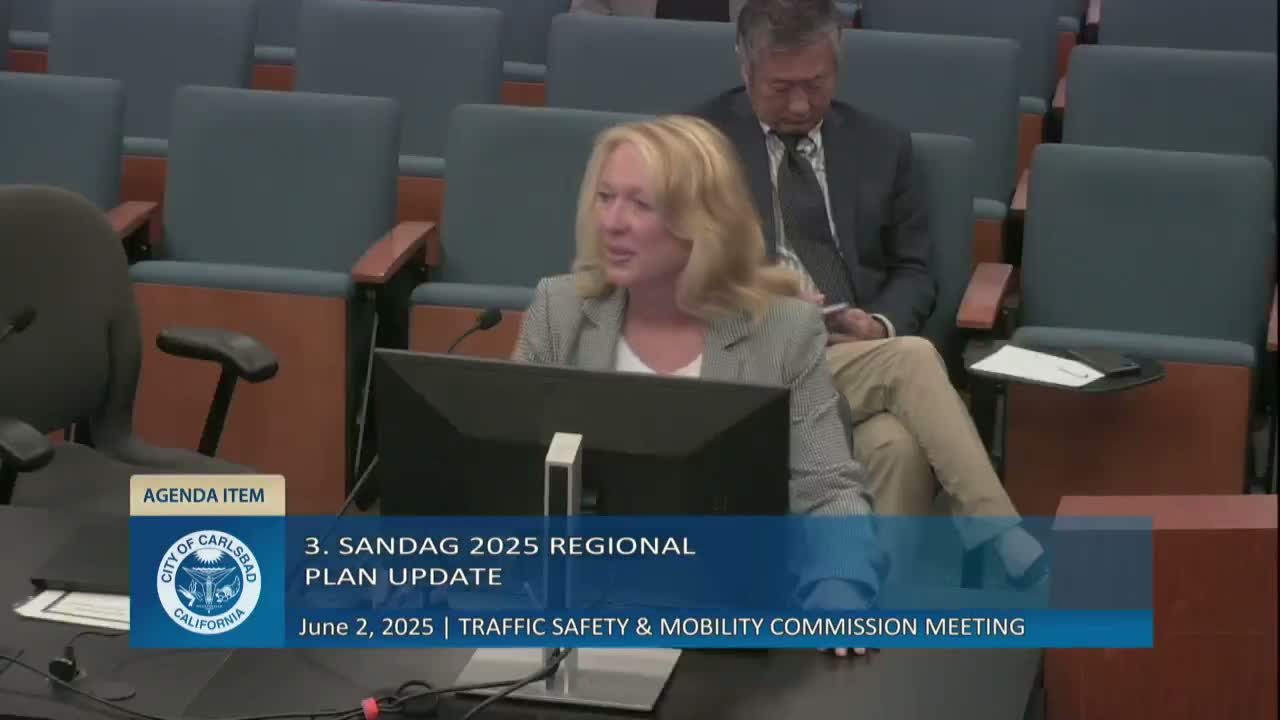
SANDAG presents draft 2025 regional plan to commission; local officials and residents raise questions on funding, rail and protected bike lanes
Loading...
Summary
SANDAG Deputy Director Jennifer Williamson presented the draft 2025 Regional Plan to the Carlsbad Traffic Safety Mobility Commission, outlining a roughly $130 billion package of projects that emphasizes greenhouse‑gas reductions, managed lanes, rail and active‑transportation improvements.
Jennifer Williamson, deputy director for mobility planning at SANDAG, presented the draft 2025 Regional Plan to Carlsbad's Traffic Safety Mobility Commission, describing the plan as a multi‑decade, multimodal program that pares back some prior large‑rail proposals and focuses on deliverable near‑term projects, greenhouse‑gas reductions and active transportation.
Williamson said the draft plan is about $130 billion, down from an earlier $165 billion figure in a prior plan cycle, and that the plan must meet a state greenhouse gas reduction target of roughly 19 percent for the reporting period used in the plan. She described emphasis areas that affect Carlsbad: managed lanes on I‑5 and SR‑78, freight and connector improvements, Sprinter and Coaster service improvements (including double tracking and grade separation work), expanded rapid bus routes, microtransit and more than 700 miles of active‑transportation gap closures in the updated Active Transportation Plan.
Local residents and commissioners raised questions. Christina McGoldrick praised the plan and urged speedy delivery, citing the pressure on local arterials when SR‑78 or the I‑5 interchange is disrupted; she supplied counts of students and e‑bike permit use in Carlsbad schools to underline the basin of local demand for safe routes. Commissioners asked about plan funding assumptions, with Williamson saying the plan uses a “reasonable funding scenario” that assumes a mix of federal, state and local funds, some local sales tax revenue, and a typical grant leverage (SANDAG assumes about $3 in grant funding for each federal/state dollar secured).
Other questions focused on rail: commissioners and residents asked about Coaster ridership recovery from COVID‑era declines, the feasibility and cost of grade separations in Carlsbad (lowering the tracks or tunnels), and Del Mar bluff stabilization and managed‑retreat alternatives. Williamson said the regional plan includes a conservative estimate for bluff stabilization alternatives and that a separate environmental process (NOP recently issued) is examining multiple options.
A long public comment from a local cyclist criticized SANDAG’s emphasis on NACTO guidance and “protected bike lanes,” arguing the national evidence is mixed and that physically separated Class 4 facilities create intersection conflicts and undercount certain crashes. Williamson acknowledged the comment and noted SANDAG’s commitment to national guidance but encouraged local jurisdictions and stakeholders to submit written comments during the plan’s public review window.
SANDAG’s schedule: the draft was released and opened for public review (a 55‑day comment window cited), with an Environmental Impact Report planned later in the summer and board action expected in December 2025. Williamson and City staff encouraged the commission and public to submit formal comments and to attend a North County presentation on June 17.
Ending: The commission heard SANDAG staff explain the plan’s local project lists and asked staff to coordinate further comments; City staff noted they will continue to work with SANDAG on specific Carlsbad projects and to bring feedback from the commission to SANDAG.