Get Full Government Meeting Transcripts, Videos, & Alerts Forever!
Get email alerts on the Municipal Budget topic
No spam. Unsubscribe anytime.
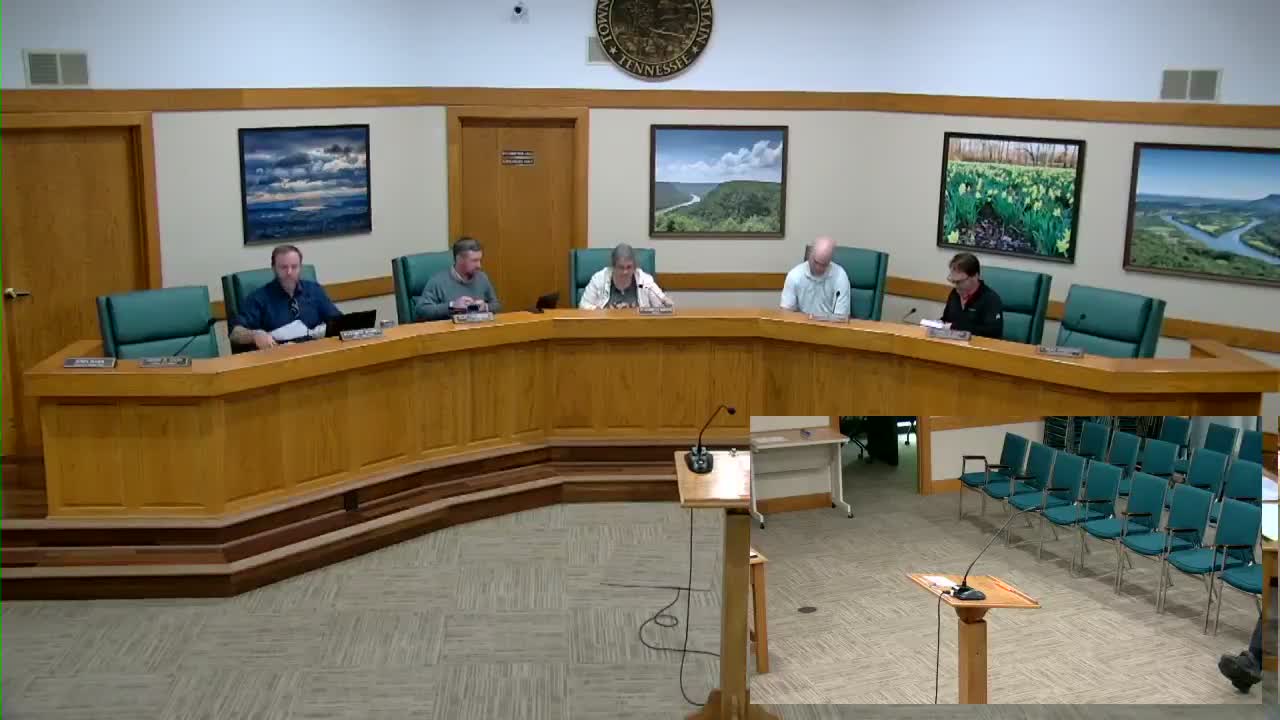
Signal Mountain leaders review 2026 budget: police raises, fire truck timing and vehicle-replacement accounting on agenda
Summary
Signal Mountain town staff and council spent a May 28 budget work session reviewing draft 2026 departmental budgets, with staff flagging planned merit raises in the police department, savings and staffing changes in fire, unresolved accounting practices for the vehicle-replacement fund, and an expected decision window about whether to buy or lease a new fire truck.
Signal Mountain town staff and council spent a May 28 budget work session reviewing draft 2026 department budgets, with staff flagging planned merit raises in the police department, savings and staffing changes in fire, unresolved accounting practices for the vehicle-replacement fund, and an expected decision window about whether to buy or lease a new fire truck.
Mister Justice, a town staff member leading the review, told the council the police budget shows an overall increase of about $98,009, driven largely by salary adjustments. "That is a $38,000 increase in salaries over last year," he said, and staff also identified roughly $23,000 in higher operations and maintenance costs and a $37,000 increase in capital, bringing the draft police budget to $2,112,677. Justice said Police Chief Williams proposed targeted merit increases and a realignment to correct pay compression at the lowest officer levels; Justice said the proposed merit adjustments were already reflected in the wages tab presented to council.
Why it matters: the council is weighing modest personnel and contract cost increases against other priorities in the general fund. Council members asked staff for a decision packet that breaks out drivers of salary-line changes — new positions, merit adjustments, COLA, and full-year versus partial-year staffing — so the council can see precisely what is pushing each department's budget line.
Fire department: staffing shifts, vehicle timing
Fire Chief Sloan and Justice presented the fire budget showing net savings compared with the prior year. Justice said much of that reflects recent turnover: several new hires are entering the pay scale at lower steps than the more experienced personnel who left, producing near-term payroll savings but reduced experience in the ranks. The department budget also showed reduced capital outlay because the town was extending the life of some vehicles.
Council pressed staff on long-range vehicle replacements, especially a frontline engine that had been estimated for replacement in 2024. Justice said the truck had an earlier estimated replacement cost of $900,000 but that market prices have risen: staff and council members cited a more current estimate of about $1.1 million. Justice reported existing reserve contributions of about $540,800 and a planned contribution this fiscal year of roughly $120,000, leaving the fund short of a full replacement cost.
Timing and next steps: council members said the town needs to decide now whether to commit to replacing the engine (the earliest realistic delivery timeline discussed was about 12–18 months). Chief Sloan and staff said they have examined alternative financing, including leasing versus purchase, and offered to prepare a cost‑benefit analysis and a timeline (down payment/contract timing) for a future work session.
Vehicle-replacement fund accounting
Council and staff spent substantial time reviewing how vehicle-replacement contributions have been recorded and transferred. Justice and "John" (a town staff member working on finance and fund transfers) said their preliminary work shows the town's vehicle-replacement payments may not have consistently been moved into the designated fund in prior years. Justice said the vehicle-replacement reserve balance shown on the April 30 statement is about $2.1 million but cautioned that the money market account holding those funds is commingled with several other accounts and that the timing and frequency of transfers (monthly, quarterly, annual) need clarification. He and John said they are auditing past transfers and will recommend a consistent transfer policy going forward.
Uniforms, policy and budgeting practice
Council discussed organization-wide inconsistencies in clothing and uniform allowances. Several council members urged a single, equitable policy (which may allow department‑specific variations) to avoid perceived arbitrariness. Justice and department chiefs described existing per-employee allotments in some departments and differences driven by job needs (for example, field staff needing more protective footwear). Council members asked for historical spending patterns to set realistic budget forecasts rather than simply budgeting the maximum policy amount; Justice said staff favors budgeting more accurate run-rate forecasts and using supplemental requests during the year for unanticipated needs.
American Rescue Plan (ARP) projects and reallocations
Staff reported the town has allocated ARP funds across several projects and that most projects are underway. Justice said the fire department ordered thermal-coupler equipment budgeted at $6,500 for training, but Chief Sloan recommended cancelling that order after discovering retrofit and installation costs that would outweigh the benefit; Justice said ARP rules allow reallocation among previously allocated ARP line items (for example, to cover identified shortfalls in pool‑bathroom repairs or other already‑allocated projects) but not to create wholly new ARP projects.
MAC operations and other items
Justice said the Municipal Activity Center (MAC) financials had been provided to town staff that day. He budgeted line items for utilities and a portion of salary and benefits anticipating some direct staffing and recommended follow-up work to clarify contractor-versus-town staffing and fee-setting policies for instructors who currently operate under independent-contractor arrangements.
Budget process and timeline
Staff told council there are two main options for adopting a budget before fiscal-year deadlines: (1) pass a continuation of the current budget (operating at one-twelfth monthly amounts) until the town receives a certified tax rate from the county assessor (expected in mid-July), or (2) adopt the new budget now with specific language committing to amend revenue/tax-rate entries once the certified rate is available. Justice warned that merit raises or COLA approved by council cannot take effect until a new budget is in place, which could require retroactive pay if the budget is delayed. Council members generally favored a continuity approach to avoid confusing residents while staff completes final revenue certification.
Meeting end and procedural action
At the end of the session a member moved to adjourn; the motion was approved by voice vote.
What council asked staff to provide next
- A decision packet that shows, by department, how salary/wage line changes break down (merit/realignment, COLA, new positions, or full‑year vs. half‑year staff). - A finance briefing on vehicle-replacement fund transfers, an audit of past transfers, and a recommended schedule and policy for future transfers and interest allocation. - A cost‑benefit memo on fire-truck acquisition options (purchase vs. lease), timeline, and any required down payment timing. - A uniform-policy proposal that sets consistent, equitable rules across departments while allowing job-based variations. - Clarification of MAC contractor arrangements and recommended code or policy language for instructor fees and contractor status.
Council scheduled follow-up work‑session items including a vehicle-replacement update, sidewalk and ARP project status updates, and a plan for publicizing completed ARP projects.